
Lighting
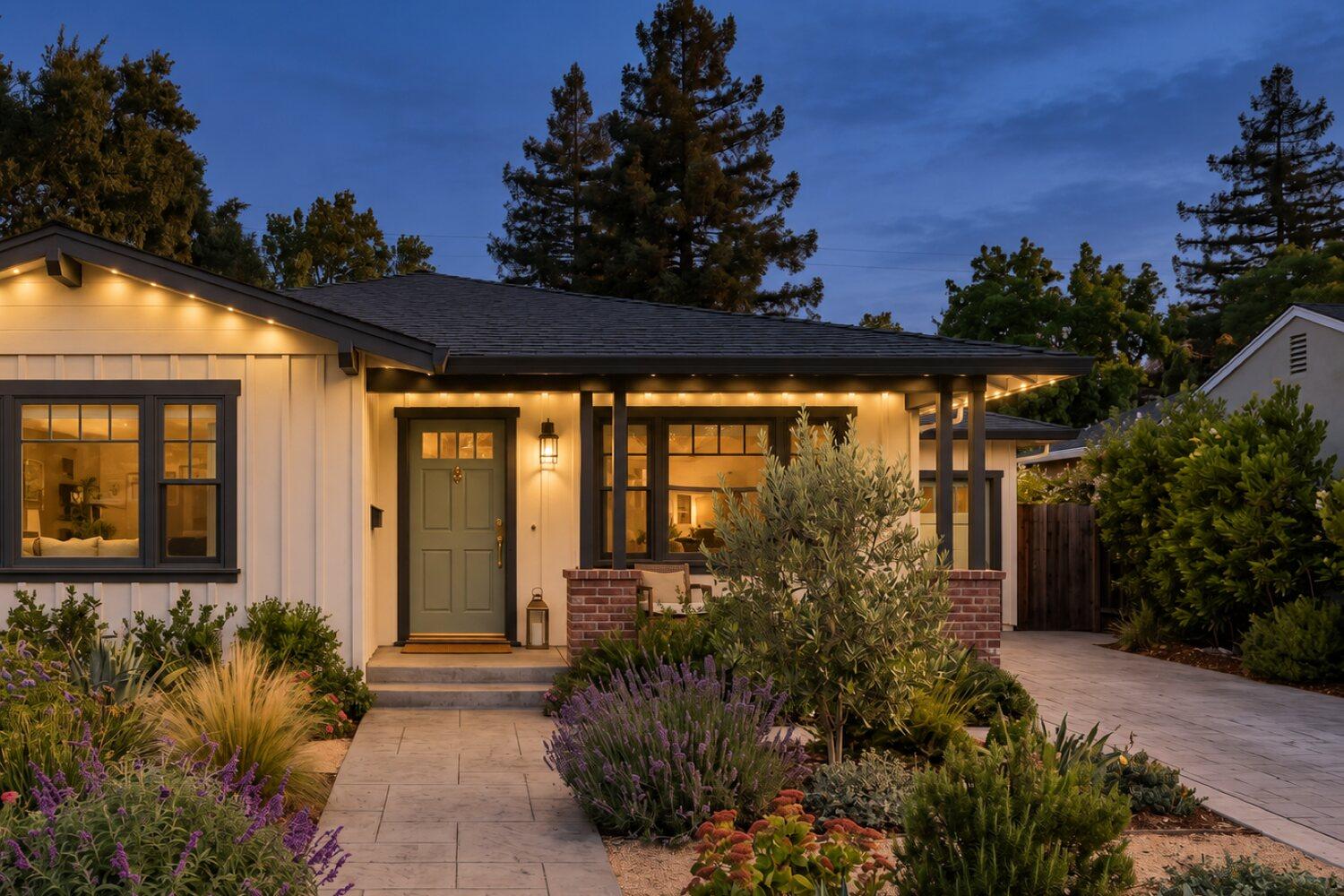
Permanent Christmas and accent lighting in Elk Grove, CA.
Most Elk Grove homes are 1990s and 2000s tile-roof tracts under an association, so permanent Christmas lights here are a layout-and-submittal job: which eaves face the street, what color the HOA approved for the fascia, and how power reaches a front eave from a garage that may sit on the alley.
What permanent lighting costs in Elk Grove
Elk Grove homeowners can budget from Bluehopper's published $20–$35 per installed linear foot and its $3,000–$7,000 range for most standard homes, both 2026 figures. Santa's Lights, which lists Elk Grove in its service area, starts permanent installs at $2,999. A Laguna West front with porch returns and a Stonelake two-story on all sides sit at opposite ends.
| Scope | Published range | What it usually includes |
|---|---|---|
| Installed, per linear foot (Bluehopper, updated Aug 21, 2026) | $20–$35 per foot | Bluehopper's published per-foot range, which it ties to roofline complexity and coverage. A Laguna West front with porch returns has more connectors per foot than a straight Stonelake eave, which pushes a quote toward the upper half of the range. |
| Most standard homes (Bluehopper, updated Aug 21, 2026) | $3,000–$7,000 | Bluehopper's typical range at $20–$35 per foot, updated August 2026. An East Elk Grove two-story lit on the front and one side falls inside it; the same house on every side, with a longer power run from the garage, can exceed it. |
| Local installer starting price (Santa's Lights, checked Sep 28, 2026) | From $2,999 | The published minimum of a Sacramento-area installer that lists Elk Grove in its service area, controller and app included. A short Camden Park front can reach this minimum even when its footage at a per-foot rate would total less. |
Ranges are published third-party figures, not 916 Exteriors prices; the written estimate is the only number that applies to your home.
How to compare these ranges
The three rows are a per-foot rate, a typical-house range and a single installer's floor, so treat them as brackets. What moves an Elk Grove number is segmentation and power: Laguna West fronts break into many short runs, and an alley garage means a longer path from controller to display.
Fascia repair on 1980s houses and a new outlet where none is reachable are separate lines, and HomeAdvisor notes an exterior outlet is usually outside the lighting price. If a Laguna-era tile relay is due, do the roof first.
Compare bids on measured footage, zones and diode type.
Sources
- Bluehopper: How much do permanent Christmas lights cost? (updated August 21, 2026)
- Santa's Lights, Sacramento area: permanent smart lighting (installs from $2,999; Elk Grove listed)
- HomeAdvisor: holiday lighting installation cost, permanent installations
- 2025 California Residential Code §R105.2, work exempt from permit (UpCodes, checked Sep 28, 2026)
- Trimlight FAQ: lifespan, controller location, HOA approval
- Gemstone Lights FAQ: running-cost estimate, IP67 track, gutter-mounted track
What changes the permanent lighting price in Elk Grove?
- Short runs in Laguna West
- Porch roofs, bays and returns break the front eave into many segments, each with cuts and connectors.
- Power path from an alley garage
- A controller at the back of the lot needs a planned route to the front eave through the attic or along the rear.
- Two-story eaves
- Stonelake and East Elk Grove upper runs need a tall ladder or lift and more setup time.
- Fascia on 1980s homes
- Soft fascia behind spiked builder gutters in Camden Park and Laguna Creek is repaired before fastening.
- HOA submittal
- Laguna West, Stonelake, Laguna Ridge and Camden reviews add paperwork and a color sample.
Compare permanent lighting systems
Choose two options to compare the upkeep, fit and installation details.
| Compare | Aluminum channel (track) system | Clip-mounted pixel string |
|---|---|---|
| Appearance | Continuous channel color-matched to fascia or trim; lights nearly invisible by day | Individual nodes on clips; bulbs and wire visible in daylight |
| Maintenance | Replace a failed node from a ladder; occasional lens cleaning | Clips and wire more exposed to sun, wind and birds |
| Where it fits | Straight eaves and fascia on most tract and custom homes | Short runs, budget installs, or rented homes |
| Installation | Channel fastened to fascia or soffit; wiring rides inside the track | Faster to hang; no channel to color-match |
View all 5 options and planning notes
Most installed systems are an aluminum channel with individually addressable LED nodes; the choices are how the nodes are mounted, which diodes they carry, and how closely they are spaced. A channel hides the wiring and nearly disappears by day. RGBW or RGBWW nodes add a dedicated white diode, which matters if warm-white accent light is the main use, because white mixed from red, green and blue alone can read cool or tinted.
| Option | Appearance | Maintenance | Where it fits | Installation notes |
|---|---|---|---|---|
| Aluminum channel (track) system | Continuous channel color-matched to fascia or trim; lights nearly invisible by day | Replace a failed node from a ladder; occasional lens cleaning | Straight eaves and fascia on most tract and custom homes | Channel fastened to fascia or soffit; wiring rides inside the track |
| Clip-mounted pixel string | Individual nodes on clips; bulbs and wire visible in daylight | Clips and wire more exposed to sun, wind and birds | Short runs, budget installs, or rented homes | Faster to hang; no channel to color-match |
| Bulb-style permanent string (C9 look) | Larger faceted bulbs that read as a classic holiday string | Bulbs replaced one at a time | Owners who want a traditional holiday look over a clean accent line | Clip or track mounted; heavier visual line by day |
| RGB nodes | Full color range; white is blended from red, green and blue | Same as RGBW; check the white setting from the street | Mostly holiday and event color scenes | Same channel and controller as RGBW |
| RGBW or RGBWW nodes | Adds a dedicated white diode for true warm or neutral white | Same as RGB | Year-round accent and dusk-to-dawn lighting in white | Same channel; costs more per node |
General characteristics only. Brightness, color temperature, IP rating and warranty come from each manufacturer's published documentation; the estimate names the system and links its specifications. 916 Exteriors does not claim dealer status for any brand.
Planning permanent lighting work in Elk Grove
Open the topics that apply to your property.
Permanent lighting in Elk Grove differs from Sacramento and Rancho Cordova. Sacramento's Land Park and Tahoe Park houses are prewar and postwar homes with rafter tails, redwood fascia and historic districts, so mounting is the hard part there. About half of Rancho Cordova's housing predates 1980, mostly ranches with older fascia, beside Anatolia's newer tile, so more of its jobs start with carpentry. Elk Grove is overwhelmingly 1990s and 2000s tile under HOAs, so the channel mounts easily and the application, the zones and the path from garage to eave decide the schedule.
Compare nearby: Sacramento permanent lighting · Rancho Cordova permanent lighting
Nearby cost guides: Permanent lighting cost in Sacramento: what to budget
What is different about permanent lighting work on Elk Grove homes?
Elk Grove is one of the youngest cities in the region: about 77% of its homes were built from 1990 on (U.S. Census Bureau, ACS 2020–2024), across Laguna, Laguna West, Laguna Creek, Stonelake, East Franklin, East Elk Grove and Laguna Ridge. That means concrete tile, stucco and painted 2x fascia on most houses, a good base for an aluminum channel fastened to the fascia and color-matched to it. It also means associations: Laguna West, Laguna Ridge, Stonelake and the Camden communities review visible exterior changes, and a permanent channel on the eave is one.
The early-1990s Laguna West plans are the most detailed rooflines to light. Porch roofs, bay projections and alley-side garages give a house many short eave runs at different heights, and a garage at the alley puts the controller at the back of the lot while the display is at the front. Plan how power travels from that garage to the front eave, whether through the attic or along the rear eave, and put it in the scope.
The 1980s houses in Camden Park and Laguna Creek often have soft fascia behind spiked builder gutters, and many had gutters only on the front elevation. A channel needs sound wood, so the board is probed and repaired first; the Elk Grove gutter page and the Elk Grove trim repair page cover that work. Sheldon, on the rural east side, is a different job entirely: ranch houses with open rafter tails and no fascia to fasten to.
How old are Elk Grove homes, and what should be inspected?
Housing age helps plan an inspection. The share of homes in each decade is census data; the notes describe materials and conditions to check at the property.
| Built | Share of homes |
|---|---|
| 1950–1959 | 1% |
| 1960–1969 | 2% |
| 1970–1979 | 6% |
| 1980–1989 | 14% |
| 1990–1999 | 27% |
| 2000–2009 | 37% |
| 2010 and later | 13% |
Elk Grove: 57,004 housing units, median year built 2000, median owner-occupied value $630,100, 74% owner-occupied. Source: U.S. Census Bureau, American Community Survey 2020–2024 5-Year Estimates, tables B25034 (year structure built), B25035 (median year built), B25077 (median value, owner-occupied), B01003, B25003 (ACS 2024 5-year).
- Sheldon and Old Townbefore 1980 (about 9%)
- Sheldon's 1960s and 1970s ranch houses have open rafter tails and low-pitch roofs, often with no fascia and no gutters, under valley oaks. There is nothing continuous to fasten a channel to, so the scope names a new fascia board, a track on a new gutter, or a clip-mounted run. Old Town Elk Grove along Elk Grove Boulevard has older wood fascia and design standards under the Special Planning Area that may apply to a visible change on a street-facing eave.
- Camden Park and Laguna Creek1980s (about 14%)
- Composition roofs on plywood with builder gutters spiked into fascia that has softened in 40 years. Many of these houses have gutters only on the front, which is the elevation usually lit. The fascia there takes the channel's fasteners, so it is checked along its full length and repaired by the foot where it gives. A composition reroof in the next few years would also disturb the eave, so ask about sequence.
- The Laguna tracts1990s (about 27%)
- Laguna, Laguna West and Laguna Creek are concrete tile over 30-year-old felt, and a lift-and-relay is due on many roofs. The fascia is usually sound, but lighting a house a year before its relay means removing the channel for the roofer. Laguna West's porch roofs and alley-side garages add short runs and a longer power path from the garage to the front eave.
- Stonelake to East Elk Grove2000s (about 37%)
- The largest share of the city: Stonelake, East Franklin, East Elk Grove and the first Laguna Ridge streets, mostly two-story tile houses with long slopes. Long eaves make efficient runs, and the upper eave is a two-story ladder or lift job. Solar arrays added in the 2010s sit above the eave and do not affect a channel below them.
- Laguna Ridge build-out2010 and later (about 13%)
- Laguna Ridge from the mid-2000s on, with synthetic underlayment, sound fascia and builder solar on homes permitted since 2020. The roofs are not due for work, so lights can go on without a sequencing worry. Ask whether drilling the fascia affects any builder warranty, and match the channel to the association-approved trim color.
Which Elk Grove neighborhoods change a permanent lighting estimate?
- Laguna West
- Early-1990s homes with porch roofs, bay projections and garages on the alley. The front elevation carries the display but is broken into short runs at two or three heights, and the controller may live in a garage at the far end of the lot. Plan the power path in writing, price the runs by segment, and submit the channel color to the association, which reviews visible changes.
- Stonelake
- Early-2000s two-stories on the open I-5 edge, where storm-driven rain and afternoon sun hit the west slopes and nothing blocks the view of the eave. That openness makes a full front-and-side layout read well from the street. Put outdoor connections on the lee side of the eave, and keep the west runs on an evening schedule in summer. The HOA reviews visible material changes.
- Laguna Ridge
- Mostly built from the mid-2000s on, with young trees, sound fascia and solar on the newest homes. It is the simplest lighting job in the city: long runs on graded lots, a garage at the front, and an approved trim color already on file with the association. The application is the main scheduling item.
- Camden Park
- 1980s houses with composition roofs and front-only builder gutters spiked into soft fascia. Check the board before anything is fastened, and consider doing the fascia and gutters in the same visit as the lights. Camden communities have association review, so confirm the application process for your street.
- Sheldon
- Rural parcels on the east side with 1960s–70s ranch houses, open eaves, valley oaks and outbuildings. A barn or shop may be the structure worth lighting as much as the house, and each is measured separately. Confirm whether the parcel is inside the city or in unincorporated Sacramento County before asking any permit question.
- Old Town Elk Grove
- Older buildings along Elk Grove Boulevard east of Highway 99, where the Special Planning Area's design standards may apply to a visible change. Wood fascia there may predate 1978, so repair that disturbs old paint falls under the EPA's lead-safe renovation rule unless an exemption applies. Keep the channel under the eave and color-matched.
How do sun, rain and trees affect permanent lighting work in Elk Grove?
Elk Grove is in climate zone 12 at about 46 feet on the valley floor. Summers are hot and dry with 100-degree days, and the south and west eaves of the Stonelake and East Elk Grove two-stories take the worst of it. Heat shortens LED life, and one manufacturer's FAQ says lights left on around the clock lose lifetime to heat, so schedule evening use. On the west side of the city the summer Delta breeze blows dust onto roof edges, which settles on fascia-mounted lenses; under-eave mounting keeps them cleaner.
About 18 inches of rain fall between November and March, much of it in atmospheric-river storms that drive rain at the eave and rake on the open southwest-facing tracts. Controllers and power supplies belong inside the garage, as manufacturers describe, and outdoor connectors belong under the eave. Laguna West and Laguna Creek have 30-year street trees and backyard redwoods over many eaves; Stonelake and Laguna Ridge are lightly treed, which keeps channels clean and the display visible.
Does permanent lighting work in Elk Grove need a permit?
City of Elk Grove Building Safety & Inspection, on Laguna Palms Way, is the building authority. The California Residential Code's exemptions cover temporary plug-in decorative lighting and equipment that cannot supply more than 50 watts, and a permanent roofline system is neither, so ask the division whether it wants a permit for the low-voltage run before the job is booked. A new outlet or circuit, such as one needed where the controller has no outlet nearby, is electrical work that needs a permit.
HOA architectural review in Laguna West, Stonelake, Laguna Ridge and the Camden communities covers visible exterior changes, and a channel on the eave is one; submit the channel color against the approved fascia color and list the elevations. In Old Town, the Special Planning Area's design standards may apply to a visible change. Elk Grove incorporated in July 2000, so records for older permits may sit with Sacramento County rather than the city.
Permit authority: City of Elk Grove Building Safety & Inspection . Whether a permit or review applies, and who pulls it, is written into the estimate.
Seeing something on your own house? Request an estimate for permanent lighting work in Elk Grove
Seasonal strings or a permanent system?
A permanent system costs more up front than a season of hired string lights. Whether it pays back depends on how many seasons you would otherwise hire out, and how often you would use it outside December.
Not sure which applies? Tell us what you are seeing and request an estimate for permanent lighting work.
What the scope includes
A complete estimate names the work, materials and exclusions so you can compare proposals.
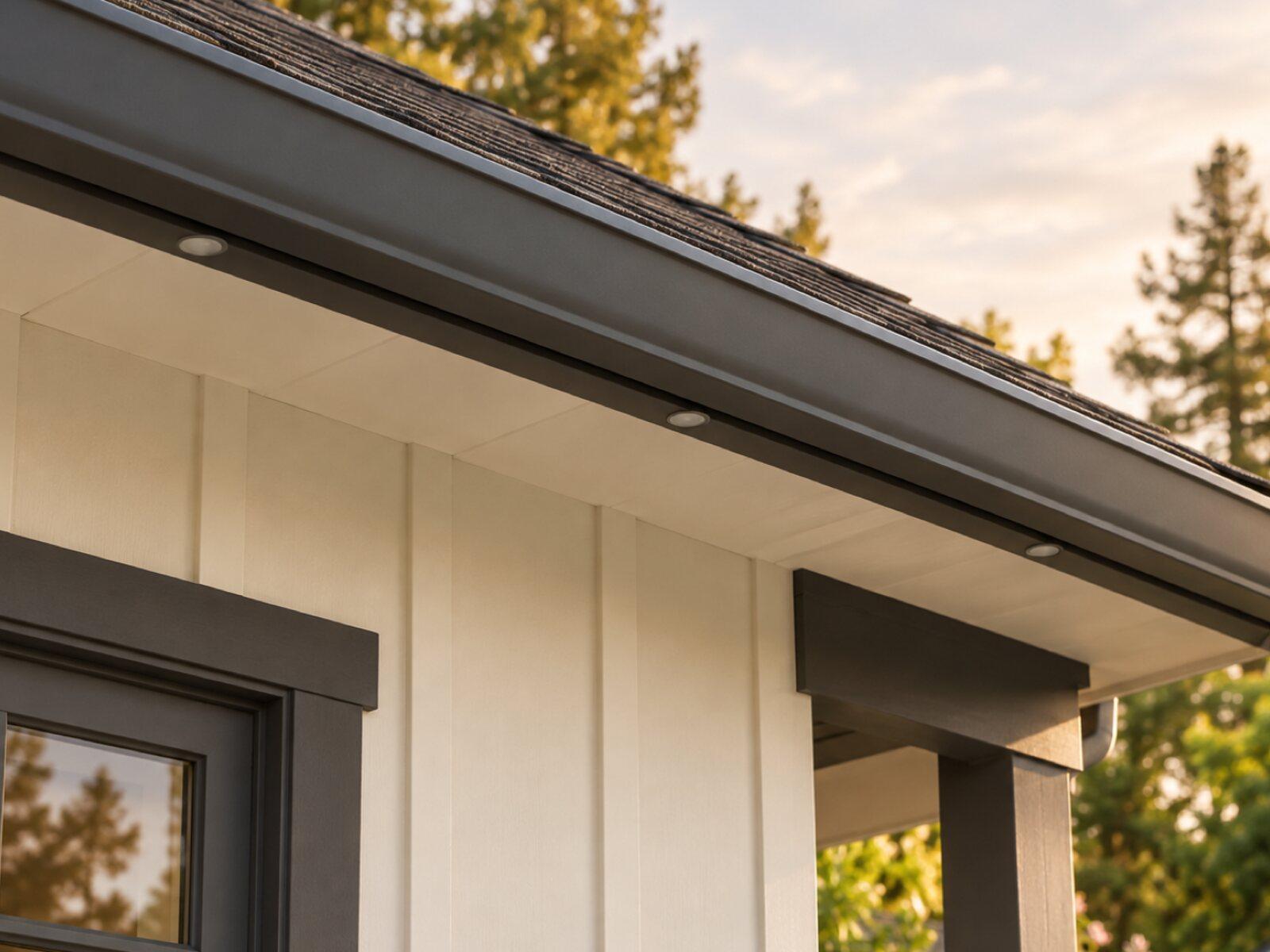
Keep a copy for your site visit or when comparing estimates.
Included in a written scope
- Site walk and a linear-foot measure of every eave, gable rake and return being lit
- Fascia, soffit and gutter condition check before anything is fastened, with any repair written as its own line
- Channel color matched to the fascia or trim, and a mounting plan for each run (under the eave or on the fascia face)
- Controller and power supply location, and the outlet each one plugs into
- Run layout by zone: front, sides, back, garage and peaks, so scenes can be set per elevation
- Programming handoff: schedules, holiday scenes, warm-white accent and dusk-to-dawn settings
Clarify before work starts
- Which elevations are included: front only, or all sides
- Whether a new exterior outlet or circuit is needed, who installs it, and who pulls that permit
- The manufacturer's product warranty versus the installer's labor warranty, in writing
- How the channel is removed and reinstalled for a future repaint, reroof or gutter replacement
How permanent lighting projects work
The stages to discuss when planning your project.
Talk through the project
Tell us what you want to repair or update. A few details about the home and what you have noticed are enough to start.
Review the home and options
A site review identifies the work involved, checks the usual trouble spots, and covers the choices that fit your home.
Agree on the scope and schedule
Review what is included, what is not, and how changes are handled before any work is scheduled.
Walk through the result
Review the completed work together, along with the applicable care and warranty information for what was installed.
Permanent lighting questions from Elk Grove homeowners
Request an estimate for permanent lighting work in Elk Grove
Do permanent Christmas lights need a permit in Elk Grove?
Ask City of Elk Grove Building Safety & Inspection before booking. The state code's exemptions cover temporary plug-in decorative lighting and very small low-voltage equipment, and a permanent roofline system is neither, so the division decides. Wiring a new outlet or circuit to power the controller is permitted electrical work regardless. If the parcel is in unincorporated Sheldon rather than the city, the question goes to Sacramento County instead. The scope should record the answer and who pulls any permit.
How do the lights get power if my Laguna West garage is on the alley?
Through a planned wire path, written into the scope. Controllers are usually mounted inside the garage and plugged into an outlet there, as manufacturers describe, and low-voltage wire runs to the first lit section. With the garage at the back of the lot, that wire either travels through the attic to the front eave or follows the rear and side eaves to reach it. Both work; the estimate should say which and include the footage.
Will the Laguna Ridge or Stonelake HOA allow permanent lights?
Submit an application and expect review, since both associations cover visible exterior changes. Include the channel color against the approved fascia color, a photo or sample of the channel, the elevations, and how the lights will be used, such as warm white in the evenings with color for holidays. Ask whether the association limits holiday color displays to certain dates. The installer's scope should state who prepares the submittal.
Should a Laguna-era tile roof be relaid before the lights go up?
If the felt is failing, yes. Laguna, Laguna West and Laguna Creek roofs from the 1990s are concrete tile on felt that is past its life, and a lift-and-relay disturbs the eave and usually the gutters. Lights installed shortly before that work may have to be removed and reinstalled. If the roof has a few years left, ask the lighting installer for a written price to remove and reinstall the channel later.
Can a Sheldon ranch house with open rafter tails get permanent lights?
Yes, with a mounting method chosen for the tails. There is no fascia to screw a channel to, so the options are adding a fascia board along the tails, mounting a track on a new gutter, or a clip-mounted run on the roof edge. Each looks different by day, so ask for a photo or sketch of the chosen method. Barns and shops can be lit too, measured and priced as separate structures.
What does it cost to run permanent lights on SMUD in Elk Grove?
Usually a few dollars a month. Manufacturers rate each light as drawing under one watt on full white, and one manufacturer puts a 150-light roofline at about $4.34 a month for six hours a night at its assumed rate. For your own figure, 150 one-watt lights for six hours use 0.9 kilowatt-hours; multiply by your SMUD rate and the number of nights you run them.
Tell us about your Elk Grove permanent lighting project.
Share what you have noticed and what you would like to change. We'll review the details and contact you about the next step.
No budget, address, or photos needed to inquire.
Other exterior services in Elk Grove
- Siding replacement in Elk Grove, CAExplore repair and replacement options for your home's exterior walls.
- Window & door replacement in Elk Grove, CAFind an updated look and a fit that works for your home.
- Roof replacement in Elk Grove, CAPlan the next step for a worn or damaged roof.
- Exterior painting in Elk Grove, CARefresh the finish, starting with the preparation underneath.
- Gutter installation in Elk Grove, CAPlan how rainwater moves from the roof and away from the home.
- Dry rot & trim repair in Elk Grove, CAAddress damaged wood and understand the work around it.