Lighting
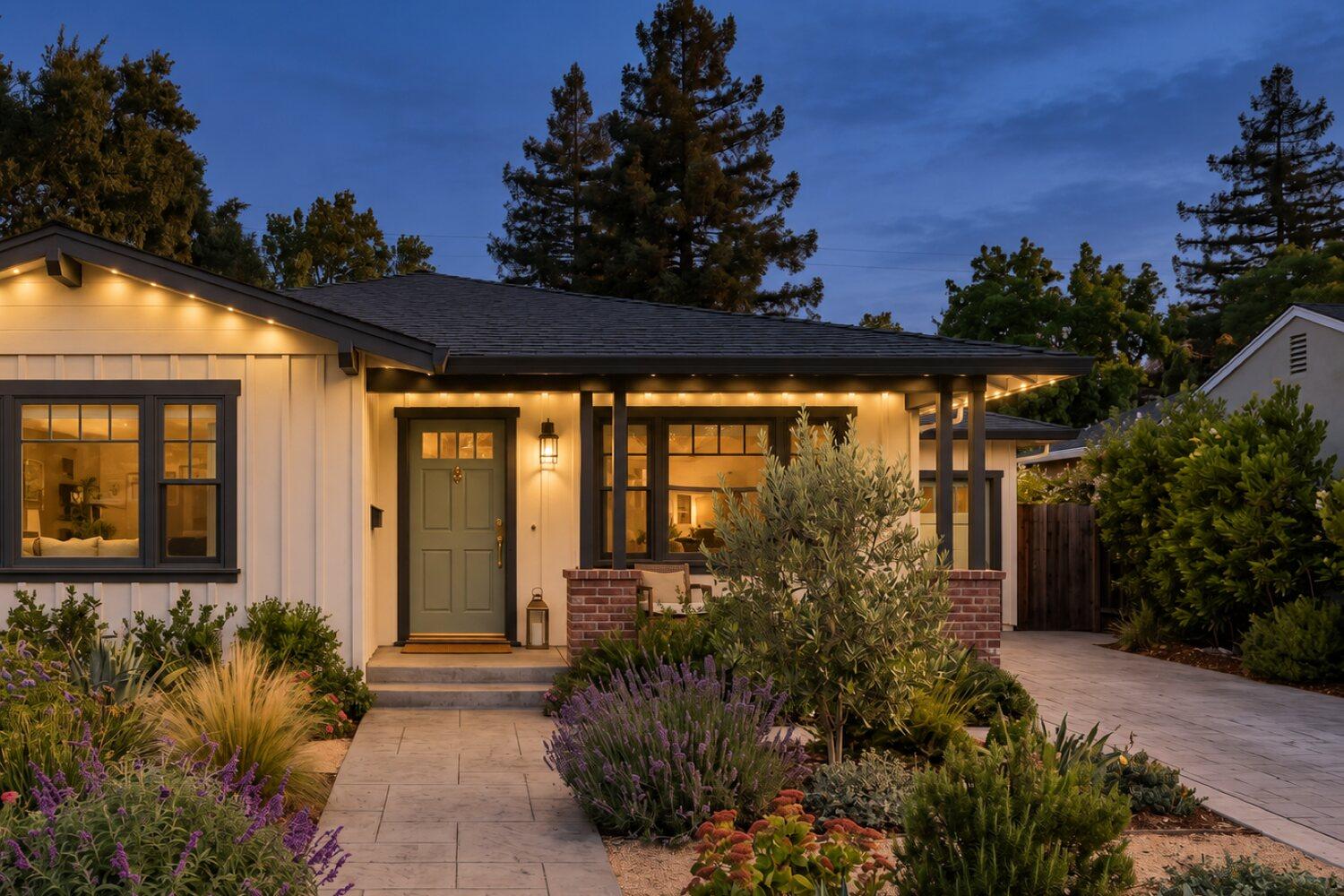
Permanent Christmas and accent lighting in Sacramento, CA.
Permanent Christmas lights in Sacramento mount to the fascia of houses built anywhere from 1910 to last year, so the plan starts with the eave: whether there is a flat board to fasten to, whether it is sound, and where the controller will plug in.
What permanent lighting costs in Sacramento
Bluehopper's 2026 guide puts permanent Christmas lights at $20–$35 per linear foot installed and $3,000–$7,000 for most homes, and Santa's Lights, a Sacramento installer, publishes a $2,999 starting price. A Curtis Park bungalow front and a two-story Pocket house on all sides land far apart.
| Scope | Published range | What it usually includes |
|---|---|---|
| Installed, per linear foot (Bluehopper, updated Aug 21, 2026) | $20–$35 per foot | Bluehopper's published installed range per foot of roofline. At those rates 100 feet of eave is $2,000–$3,500; a Tahoe Park front is well under that, a Pocket two-story on all sides well over. Ask whether the controller is inside the per-foot figure or a separate line. |
| Most homes (Bluehopper, updated Aug 21, 2026) | $3,000–$7,000 | Bluehopper's range for most standard homes at $20–$35 per foot, updated August 2026, which it says turns on roofline complexity and how much of the house is covered. A Natomas two-story with tile eaves and returns on every side is the kind of house that pushes toward the top. |
| Sacramento installer starting price (Santa's Lights, checked Sep 28, 2026) | From $2,999 | The minimum a Sacramento permanent-lighting installer publishes, with controller and app included. A short Oak Park or Tahoe Park front run can cost the minimum even when its footage times a per-foot rate would come out lower. |
Ranges are published third-party figures, not 916 Exteriors prices; the written estimate is the only number that applies to your home.
How to compare these ranges
The three figures describe different things: a per-foot rate, a typical-house total and one local installer's minimum. They do not stack.
What moves a Sacramento number is the eave: prewar rafter tails that need a fascia board or a gutter-mounted track, soft hardboard in the Pocket that needs repair first, and two-story Natomas eaves that need a lift. Power is the other variable.
A garage outlet near the ceiling is the easy case; a detached Oak Park garage or no outlet at all adds electrical work that HomeAdvisor says is usually outside the lighting price. For the seasonal comparison, Master's Holiday Lighting's July 2025 guide lists $7–$10 per foot for professional Christmas light installation in Sacramento, paid every season, so compare over several years on the same footage.
Sources
- Bluehopper: How much do permanent Christmas lights cost? (updated August 21, 2026)
- Santa's Lights, Sacramento: permanent smart lighting (installs from $2,999)
- HomeAdvisor: holiday lighting installation cost, permanent installations
- Master's Holiday Lighting: Christmas light installation cost in Sacramento (seasonal, per foot)
- 2025 California Residential Code §R105.2, work exempt from permit (UpCodes, checked Sep 28, 2026)
- Trimlight FAQ: lifespan, low voltage, controller location, HOA approval
- Gemstone Lights FAQ: IP67 track rating, gutter-mounted track, warranty
Read next: How much do permanent Christmas lights cost in Sacramento?
What changes the permanent lighting price in Sacramento?
- Eave type by era
- Rafter tails and box gutters on prewar houses need a fascia board, a gutter-mounted track or clips, each priced differently.
- Fascia repair first
- Soft hardboard in the Pocket and South Natomas and rotted redwood in Tahoe Park and Meadowview are repaired before the channel goes on.
- Two-story and tile eaves
- Natomas and Pocket two-stories need a lift or staged ladders on the upper runs and more returns per house.
- Power location
- An existing garage outlet near the ceiling is the simple case; a detached garage or no outlet adds electrical work and possibly a permit.
- Historic and HOA review
- Preservation questions in Boulevard Park or Newton Booth and applications in Natomas Park, Westlake or Riverlake add time before install.
- Canopy and access
- River Park and Elmhurst trees limit where a ladder or lift can stand and which elevations are worth lighting.
Compare permanent lighting systems
Choose two options to compare the upkeep, fit and installation details.
| Compare | Aluminum channel (track) system | Clip-mounted pixel string |
|---|---|---|
| Appearance | Continuous channel color-matched to fascia or trim; lights nearly invisible by day | Individual nodes on clips; bulbs and wire visible in daylight |
| Maintenance | Replace a failed node from a ladder; occasional lens cleaning | Clips and wire more exposed to sun, wind and birds |
| Where it fits | Straight eaves and fascia on most tract and custom homes | Short runs, budget installs, or rented homes |
| Installation | Channel fastened to fascia or soffit; wiring rides inside the track | Faster to hang; no channel to color-match |
View all 5 options and planning notes
Most installed systems are an aluminum channel with individually addressable LED nodes; the choices are how the nodes are mounted, which diodes they carry, and how closely they are spaced. A channel hides the wiring and nearly disappears by day. RGBW or RGBWW nodes add a dedicated white diode, which matters if warm-white accent light is the main use, because white mixed from red, green and blue alone can read cool or tinted.
| Option | Appearance | Maintenance | Where it fits | Installation notes |
|---|---|---|---|---|
| Aluminum channel (track) system | Continuous channel color-matched to fascia or trim; lights nearly invisible by day | Replace a failed node from a ladder; occasional lens cleaning | Straight eaves and fascia on most tract and custom homes | Channel fastened to fascia or soffit; wiring rides inside the track |
| Clip-mounted pixel string | Individual nodes on clips; bulbs and wire visible in daylight | Clips and wire more exposed to sun, wind and birds | Short runs, budget installs, or rented homes | Faster to hang; no channel to color-match |
| Bulb-style permanent string (C9 look) | Larger faceted bulbs that read as a classic holiday string | Bulbs replaced one at a time | Owners who want a traditional holiday look over a clean accent line | Clip or track mounted; heavier visual line by day |
| RGB nodes | Full color range; white is blended from red, green and blue | Same as RGBW; check the white setting from the street | Mostly holiday and event color scenes | Same channel and controller as RGBW |
| RGBW or RGBWW nodes | Adds a dedicated white diode for true warm or neutral white | Same as RGB | Year-round accent and dusk-to-dawn lighting in white | Same channel; costs more per node |
General characteristics only. Brightness, color temperature, IP rating and warranty come from each manufacturer's published documentation; the estimate names the system and links its specifications. 916 Exteriors does not claim dealer status for any brand.
Planning permanent lighting work in Sacramento
Open the topics that apply to your property.
Permanent lighting in Sacramento differs from its neighbors because of age and jurisdiction. Elk Grove is 77% post-1990 tract housing with builder fascia and HOA review in Laguna West and Laguna Ridge, so most jobs there are two-story stucco eaves with a color submittal. Arden-Arcade and Carmichael are unincorporated, so a permit question goes to Sacramento County, not the city, and their 1950s–1970s ranches sit under heavier oak canopy. Inside the city, one estimate can cover a rafter-tail bungalow in Curtis Park and a tile-roof two-story in Natomas, and the historic districts add a preservation question neither suburb has.
Compare nearby: Arden-Arcade permanent lighting · Elk Grove permanent lighting · Rancho Cordova permanent lighting
What is different about permanent lighting work on Sacramento homes?
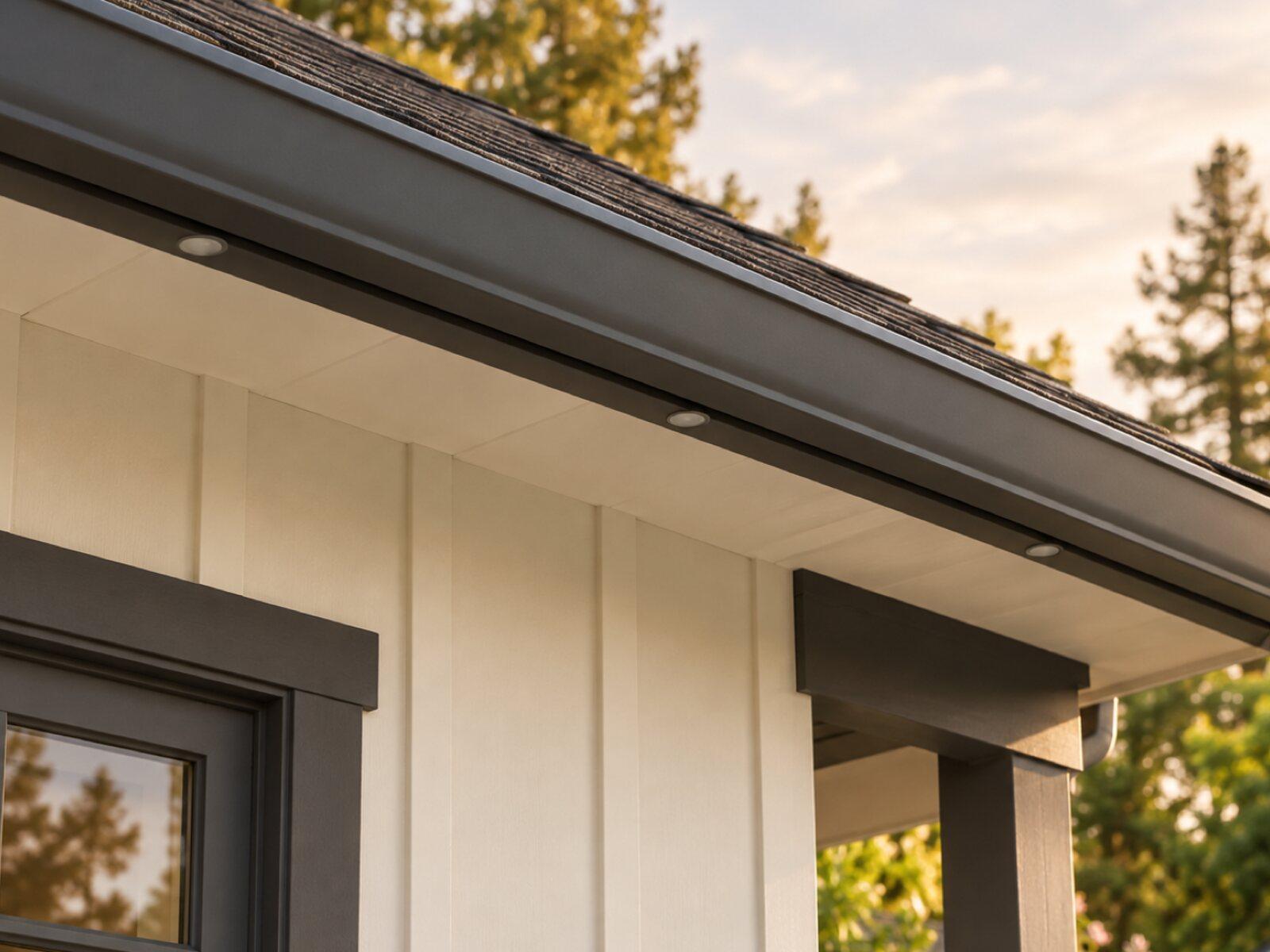
A permanent lighting system is an aluminum channel fastened under the eave or to the fascia, with individually addressable LEDs in it and a controller inside the garage. On a Sacramento house the channel is the easy part. What decides the job is the wood it fastens to. The city's housing runs from the prewar bungalows of Curtis Park and Land Park, through the 1950s and 1960s ranches of Meadowview, South Land Park and Greenhaven, to the 2000s tile-roof tracts of North Natomas, and each era presents a different eave.
About 30% of Sacramento homes predate 1960 (U.S. Census Bureau, ACS 2020–2024), and many of those roofs have exposed rafter tails with a bed molding instead of a flat fascia board, or a built-in box gutter framed into the eave. A channel needs a continuous, flat, sound surface. Where the eave has none, the choices are adding a fascia board (a visible change on a historic-district house), mounting a track to the gutter itself, which one manufacturer says it can fabricate where there is no soffit or fascia, or accepting a clip-mounted run. The estimate should say which, per elevation.
The postwar and 1970s–1980s houses are simpler to mount but often harder to trust. Hardboard fascia on the Pocket and South Natomas tracts swells and softens behind the gutter, and a channel screwed into soft hardboard pulls loose in the first windy storm. Probe the fascia before measuring for lights, and put any repair on its own line; the Sacramento dry rot and trim page covers what that repair involves, and the Sacramento gutter page covers the gutter that usually hangs on the same board.
North Natomas is the reverse case: 1990s–2000s concrete tile over stucco, with aluminum-wrapped fascia on flat clay lots. The fascia is usually sound, the eaves are long and often two stories up, and the questions are which elevations to light, how the Natomas Park or Westlake association wants the channel colored, and whether the garage has an outlet near the ceiling where the controller can live.
How old are Sacramento homes, and what should be inspected?
Housing age helps plan an inspection. The share of homes in each decade is census data; the notes describe materials and conditions to check at the property.
| Built | Share of homes |
|---|---|
| Before 1940 | 11% |
| 1940–1949 | 7% |
| 1950–1959 | 12% |
| 1960–1969 | 11% |
| 1970–1979 | 13% |
| 1980–1989 | 15% |
| 1990–1999 | 8% |
| 2000–2009 | 15% |
| 2010 and later | 8% |
Sacramento: 212,485 housing units, median year built 1977, median owner-occupied value $506,300, 52% owner-occupied. Source: U.S. Census Bureau, American Community Survey 2020–2024 5-Year Estimates, tables B25034 (year structure built), B25035 (median year built), B25077 (median value, owner-occupied), B01003, B25003 (ACS 2024 5-year).
- Prewar bungalows and revivalsbefore 1940
- Roughly 11% of Sacramento homes, concentrated in Boulevard Park, Newton Booth, Curtis Park, Land Park and Oak Park. Craftsman eaves here often have exposed rafter tails and no flat fascia, and Tudor and Spanish revival houses may carry box gutters built into the eave. There is no clean line to fasten a channel to, so the scope names the mounting method: a new fascia board, a track on the gutter, or a clip-mounted run on the roof edge. On a contributing house in a historic district, a new board or a visible channel on the street-facing eave is worth raising with Preservation staff first.
- Wartime and early postwar1940s (about 7%)
- Tahoe Park's 1945 Tahoe Terrace houses and the first River Park lots are small hip roofs with short, low eaves and 1x6 redwood fascia, often reachable from one ladder. That keeps a channel install quick, and a front-only run on a Tahoe Park cottage is one of the shortest rooflines in the city. The redwood itself is the question: decades of gutter overflow soften the bottom edge, so the fastener line should land in sound wood or the board gets replaced first.
- Postwar ranches1950s–1960s (about 23%)
- South Land Park, College Greens, Glenbrook, Meadowview and early Greenhaven ranches have long, low eaves with wide overhangs, which suits a channel mounted under the eave where it hides from the street. Many of these houses carry second- or third-generation gutters on loose spike hangers, and the South Land Park Hills mid-century houses run flat roofs with parapets and scuppers. A flat-roof parapet takes a channel on its cap or face, which is a different detail from an eave, so it gets its own line.
- Pocket and South Natomas build-out1970s–1980s (about 28%)
- The two-story houses of the Pocket, Valley Hi and South Natomas brought upper roofs draining onto lower ones, more gables, and hardboard fascia that swells behind the gutter. Lighting these houses means more short runs and returns, a second-story ladder or lift on the upper eave, and a fascia probe along every run before a hole is drilled. Riverlake and the other gated Pocket sections review visible exterior changes, so the channel color goes in the application.
- North Natomas tracts1990s–2000s (about 23%)
- Concrete tile over stucco, aluminum-wrapped fascia and long straight eaves: North Natomas from the mid-1990s through Natomas Park and Westlake is the easiest roofline in the city to light cleanly. The wrapped fascia takes a channel with fasteners that pass through the aluminum into the wood behind it, sealed at each hole. Many of these roofs carry solar arrays; the lights sit at the eave below them and do not touch the array.
- Recent infill2010 and later (about 8%)
- The newest 8% is North Natomas infill plus Midtown, Oak Park and McKinley Village lots, often narrow two-story houses with short front eaves and side yards only a few feet wide. The street-facing gable is the whole display on many of them, so a front-only run is common. Side-yard access on a zero-lot-line house decides whether the side eaves can be reached at all.
Which Sacramento neighborhoods change a permanent lighting estimate?
- Curtis Park
- Craftsman bungalows between Broadway and Sutterville Road with wide eaves, exposed rafter tails and a bed molding in place of a flat fascia. A channel has nothing continuous to grip there. The practical choice is between a painted fascia board added along the tails, which changes the look of the eave, and a track mounted to the gutter. Get both priced, with a photo of what each looks like from the sidewalk, before deciding.
- Land Park and the Fabulous Forties
- Tudors, Spanish revivals and Colonials with steep gables, dormers and valleys, and on many Land Park houses a built-in box gutter. The display tends to be the gable rakes as much as the eaves, and rakes take more cuts and connectors per foot. Box gutters and old liners are a repair question first; do not fasten a channel to an eave whose liner is leaking into the soffit.
- Boulevard Park and Newton Booth
- Boulevard Park is the largest National Register neighborhood in the city and Newton Booth sits beside it, so many houses here are contributing buildings in designated districts. A channel under the eave, color-matched and removable, reads differently from a new fascia board or a run across a street-facing gable. Ask the city's Preservation staff about the visible parts before ordering, and keep the lighting reversible.
- Tahoe Park and Oak Park
- Small houses with short, low eaves, many within reach of one ladder. A front-only run is short, which is where a published per-foot rate matters less than a minimum job charge. Oak Park's cottages often have detached garages; that is where the controller would live, so the scope has to say how power gets from the garage to the house eave.
- Pocket and Greenhaven
- Two-story 1970s–1990s houses in the river bend, with hardboard fascia on many and concrete tile on the later custom homes. Riverlake and the other gated sections review visible changes. Afternoon sun off the levee hits the west elevations hard, so a channel on a west eave should be scheduled, not left on around the clock, and the sealant at its end caps checked after the first summer.
- North Natomas, Natomas Park and Westlake
- Tile roofs, wrapped fascia and two-story eaves on flat lots, with the Natomas Park association and Westlake reviewing visible exterior changes. Match the channel to the fascia wrap color, list every elevation in the application, and note whether the lights will run in white year-round or in color only for holidays. Solar on the roof above is not an obstacle; a lift in a narrow side yard can be.
- River Park
- 1947–1950s ranches under the densest canopy in the city, between the railroad levee and the American River. The trees are the design constraint: branches over the eave block the display from the street and drop litter that sits on top of an under-eave channel's lenses. Light the elevations that can actually be seen, and keep limb clearance out of the lighting scope.
- Meadowview and South Land Park
- Long, straight, single-story eaves on 1950s–1960s ranches, which make for efficient runs and easy ladder access. The fascia is often painted redwood behind loose spike-hung gutters, and on pre-1978 houses, fascia repair that disturbs old paint falls under the EPA's lead-safe renovation rule unless an exemption applies. A combined scope that tightens the gutters, repairs the fascia and then mounts the channel avoids drilling into wood that will be replaced next year.
How do sun, rain and trees affect permanent lighting work in Sacramento?
Sacramento is in California Energy Commission climate zone 12 on the valley floor, with July highs in the 90s and 100-degree days every summer. West- and south-facing eaves take the afternoon sun until the Delta breeze arrives. That heat is what shortens LED life: one manufacturer's FAQ says running lights around the clock diminishes lifetime through heat, and that lights run 12 to 16 hours a day last about 7 to 8 years. Schedule the system for evening use, and ask for the channel's end caps and sealed connections to be checked after the first summer.
About 18 inches of rain falls between November and March, much of it in a few atmospheric-river storms with south and southwest wind. Lights and connectors on the eave need to be rated for that exposure; At least one manufacturer publishes an IP67 rating for its track system, and the brand-by-brand system comparison sets each maker's published ratings side by side. The controller and power supply should be indoors, which is where manufacturers put them, usually on a garage wall near an outlet. Any outdoor connection sits under the eave, not in the drip line.
Trees set the viewing and the maintenance. Elms, ash and oaks over Elmhurst and the Fabulous Forties, and the river canopy over River Park, hide eaves from the street and drop litter onto channel lenses. The city protects its street trees and larger native oaks, so the lighting plan works around the canopy rather than cutting it. Wildfire construction rules that shape foothill houses rarely reach a valley-floor Sacramento lot, and adding lights does not change a house's wildfire construction requirements, now the California Wildland-Urban Interface Code (Title 24, Part 7, formerly Chapter 7A); the channel should never block an eave vent.
Does permanent lighting work in Sacramento need a permit?
The California Residential Code exempts listed cord-and-plug temporary decorative lighting and electrical equipment under 25 volts that cannot supply more than 50 watts (Section R105.2). A permanent roofline system is neither temporary nor that small, so whether the City of Sacramento Community Development Department, Building Division wants a permit for the low-voltage run is the division's call; ask before the job is booked. A new exterior outlet or a new circuit to power the controller is electrical work that is not exempt, and HomeAdvisor notes that such an outlet is usually priced separately from the lights.
Historic districts add a second question. In Boulevard Park, Newton Booth, Poverty Ridge, Alkali Flat, Southside Park and the other designated districts, a visible change to a street-facing eave, such as a new fascia board or a channel across a gable, is worth checking with the city's Preservation staff before ordering, while a small, reversible, color-matched run under the eave is the least visible option. Outside the historic core, the review that applies is an HOA's: Natomas Park, Westlake, Regency Park and Riverlake review visible exterior changes, and the channel color and mounting location belong in the application.
Permit authority: City of Sacramento Community Development, Building Division . Whether a permit or review applies, and who pulls it, is written into the estimate.
Seeing something on your own house? Request an estimate for permanent lighting work in Sacramento
Seasonal strings or a permanent system?
A permanent system costs more up front than a season of hired string lights. Whether it pays back depends on how many seasons you would otherwise hire out, and how often you would use it outside December.
Not sure which applies? Tell us what you are seeing and request an estimate for permanent lighting work.
What the scope includes
A complete estimate names the work, materials and exclusions so you can compare proposals.
Keep a copy for your site visit or when comparing estimates.
Included in a written scope
- Site walk and a linear-foot measure of every eave, gable rake and return being lit
- Fascia, soffit and gutter condition check before anything is fastened, with any repair written as its own line
- Channel color matched to the fascia or trim, and a mounting plan for each run (under the eave or on the fascia face)
- Controller and power supply location, and the outlet each one plugs into
- Run layout by zone: front, sides, back, garage and peaks, so scenes can be set per elevation
- Programming handoff: schedules, holiday scenes, warm-white accent and dusk-to-dawn settings
Clarify before work starts
- Which elevations are included: front only, or all sides
- Whether a new exterior outlet or circuit is needed, who installs it, and who pulls that permit
- The manufacturer's product warranty versus the installer's labor warranty, in writing
- How the channel is removed and reinstalled for a future repaint, reroof or gutter replacement
How permanent lighting projects work
The stages to discuss when planning your project.
Talk through the project
Tell us what you want to repair or update. A few details about the home and what you have noticed are enough to start.
Review the home and options
A site review identifies the work involved, checks the usual trouble spots, and covers the choices that fit your home.
Agree on the scope and schedule
Review what is included, what is not, and how changes are handled before any work is scheduled.
Walk through the result
Review the completed work together, along with the applicable care and warranty information for what was installed.
Permanent lighting questions from Sacramento homeowners
Request an estimate for permanent lighting work in Sacramento
Do permanent Christmas lights need a permit in the City of Sacramento?
Ask the Building Division; do not assume either way. The California Residential Code's exemptions cover temporary plug-in decorative lighting and low-voltage equipment that cannot supply more than 50 watts, and a permanent roofline system fits neither. A new exterior outlet or circuit for the controller is electrical work that needs a permit whatever the answer on the lights. The written scope should state what the city said, who pulls any permit, and whether the outlet is included or priced separately.
Can a channel go on a Curtis Park bungalow with exposed rafter tails?
Not directly, because there is no flat fascia to fasten it to. The usual options are a painted fascia board added along the tails, a track mounted to the gutter, or a clip-mounted run on the roof edge. Each changes how the eave looks by day. On a bungalow in a designated historic district, the least visible and most reversible option is the one to show Preservation staff first. The estimate should price each option and include a photo or sketch of how it will look.
Are permanent lights allowed in Boulevard Park or another historic district?
Lighting is not the issue; visible alteration of a contributing building is. A color-matched channel tucked under an existing eave and removable without damage is the lightest touch. A new fascia board, a channel across a street-facing gable or a change to trim profiles is the kind of visible change to raise with the city's Preservation staff before ordering. Keep the controller inside and the wiring in the channel so nothing new appears on the facade.
How do permanent lights hold up on a west-facing Natomas eave in July?
Well, if they are scheduled. LEDs are rated in tens of thousands of hours, but heat shortens that life, and one manufacturer's FAQ says running lights around the clock diminishes their lifetime through heat. On a west eave that bakes until the Delta breeze arrives, set the system to evening and holiday schedules rather than all night, and have the installer check sealed connections and end caps after the first summer. Read the manufacturer's product warranty and the installer's labor warranty separately; they are rarely the same length.
Do I need a new outlet for permanent lights?
Usually not, if the garage has an outlet near where the controller will hang; Manufacturers describe controllers mounted inside the garage and plugged into an ordinary outlet. You need one when there is no outlet in reach, when the garage is detached, as on many Oak Park lots, or when the run is on a house side far from the garage. A new outlet is electrical work with its own permit, and HomeAdvisor notes it is usually not included in the lighting price.
Should the fascia and gutters be fixed before the lights go on?
Yes, on most houses built before 1990. A channel is only as secure as the board behind it, and the 1970s–1980s hardboard fascia in the Pocket and South Natomas, like the redwood on older Tahoe Park and Meadowview houses, is often soft behind the gutter. Repair or replace that wood, tighten or replace the gutter, then mount the lights, so nothing has to come down a year later. On pre-1978 homes, board removal that disturbs old paint falls under the EPA's lead-safe renovation rule unless an exemption applies.
Is a permanent system cheaper than hiring seasonal installers in Sacramento?
Over several seasons it can be. Master's Holiday Lighting's July 2025 guide lists $7–$10 per foot for professional Christmas light installation in Sacramento, paid every year; Bluehopper publishes $20–$35 per foot for a permanent system, paid once. On the same 150 feet, that is $1,050–$1,500 a season against $3,000–$5,250 once, so a household that hires out every year closes the gap in a few seasons. A household that hangs its own strings saves money with strings; the permanent system is buying convenience and year-round use.
Tell us about your Sacramento permanent lighting project.
Share what you have noticed and what you would like to change. We'll review the details and contact you about the next step.
No budget, address, or photos needed to inquire.
Other exterior services in Sacramento
- Siding replacement in Sacramento, CAExplore repair and replacement options for your home's exterior walls.
- Window & door replacement in Sacramento, CAFind an updated look and a fit that works for your home.
- Roof replacement in Sacramento, CAPlan the next step for a worn or damaged roof.
- Exterior painting in Sacramento, CARefresh the finish, starting with the preparation underneath.
- Gutter installation in Sacramento, CAPlan how rainwater moves from the roof and away from the home.
- Dry rot & trim repair in Sacramento, CAAddress damaged wood and understand the work around it.