Permanent Exterior Lighting
How permanent exterior lighting works on Sacramento-area homes.
One installed system under the eaves for holiday scenes, warm-white accent lighting, and dusk-to-dawn security, instead of a ladder every November.
What permanent lighting work involves
Reviewed
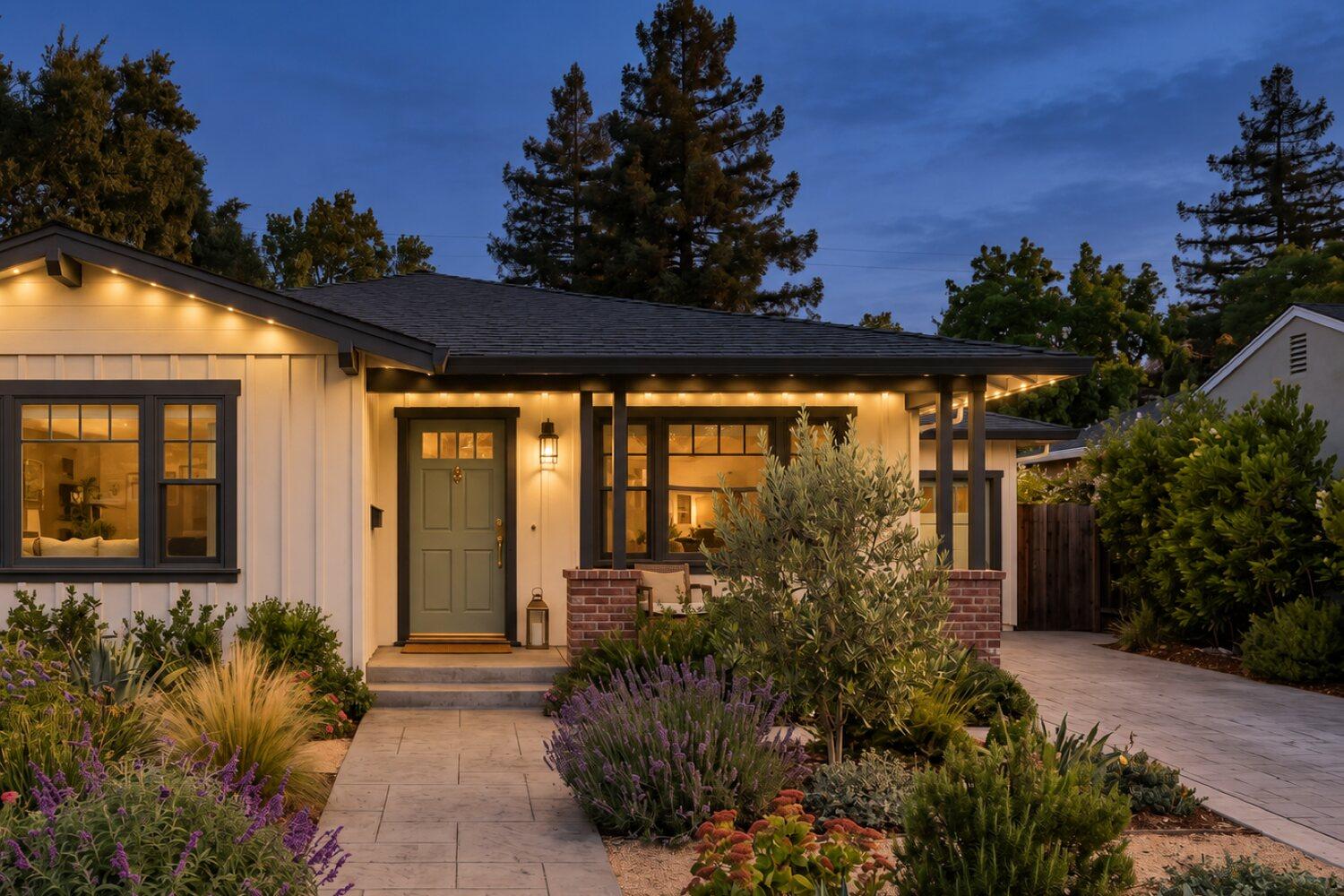
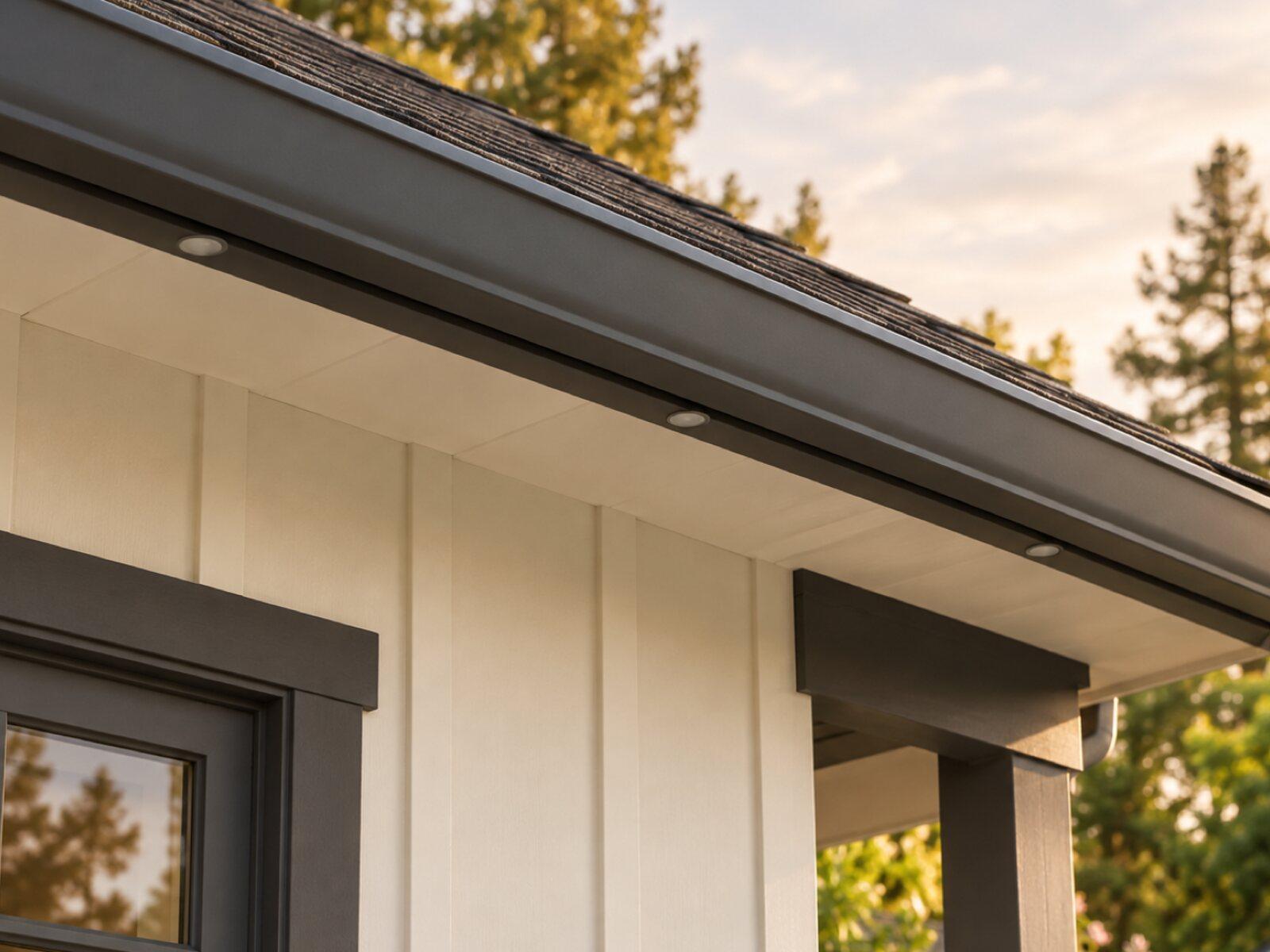
Permanent exterior lighting is a low-voltage LED system that stays on the house all year. A slim aluminum channel, color-matched to the fascia or trim, runs under the eave or along the fascia, holding individually addressable LED nodes at a fixed spacing. A controller in the garage, plugged into an ordinary outlet, drives the run, and an app sets colors, holiday scenes, timers and dusk-to-dawn schedules. One run does three jobs: the holiday display that used to mean clip-on strings every November, warm-white accent light on ordinary nights, and a security schedule that lights the eaves from sunset. It is not landscape lighting or line-voltage fixtures. On Sacramento-area homes the install is only as good as the wood behind it, so a written scope checks the fascia and gutters first, then names the channel, diode type, node spacing, power location and every elevation included.
Seasonal strings or a permanent system?
A permanent system costs more up front than a season of hired string lights. Whether it pays back depends on how many seasons you would otherwise hire out, and how often you would use it outside December.
Not sure which applies? Tell us what you are seeing and request an estimate for permanent lighting work.
What the scope includes
A complete estimate names the work, materials and exclusions so you can compare proposals.
Keep a copy for your site visit or when comparing estimates.
Included in a written scope
- Site walk and a linear-foot measure of every eave, gable rake and return being lit
- Fascia, soffit and gutter condition check before anything is fastened, with any repair written as its own line
- Channel color matched to the fascia or trim, and a mounting plan for each run (under the eave or on the fascia face)
- Controller and power supply location, and the outlet each one plugs into
- Run layout by zone: front, sides, back, garage and peaks, so scenes can be set per elevation
- Programming handoff: schedules, holiday scenes, warm-white accent and dusk-to-dawn settings
Clarify before work starts
- Which elevations are included: front only, or all sides
- Whether a new exterior outlet or circuit is needed, who installs it, and who pulls that permit
- The manufacturer's product warranty versus the installer's labor warranty, in writing
- How the channel is removed and reinstalled for a future repaint, reroof or gutter replacement
Compare permanent lighting systems
Choose two options to compare the upkeep, fit and installation details.
| Compare | Aluminum channel (track) system | Clip-mounted pixel string |
|---|---|---|
| Appearance | Continuous channel color-matched to fascia or trim; lights nearly invisible by day | Individual nodes on clips; bulbs and wire visible in daylight |
| Maintenance | Replace a failed node from a ladder; occasional lens cleaning | Clips and wire more exposed to sun, wind and birds |
| Where it fits | Straight eaves and fascia on most tract and custom homes | Short runs, budget installs, or rented homes |
| Installation | Channel fastened to fascia or soffit; wiring rides inside the track | Faster to hang; no channel to color-match |
View all 5 options and planning notes
Most installed systems are an aluminum channel with individually addressable LED nodes; the choices are how the nodes are mounted, which diodes they carry, and how closely they are spaced. A channel hides the wiring and nearly disappears by day. RGBW or RGBWW nodes add a dedicated white diode, which matters if warm-white accent light is the main use, because white mixed from red, green and blue alone can read cool or tinted.
| Option | Appearance | Maintenance | Where it fits | Installation notes |
|---|---|---|---|---|
| Aluminum channel (track) system | Continuous channel color-matched to fascia or trim; lights nearly invisible by day | Replace a failed node from a ladder; occasional lens cleaning | Straight eaves and fascia on most tract and custom homes | Channel fastened to fascia or soffit; wiring rides inside the track |
| Clip-mounted pixel string | Individual nodes on clips; bulbs and wire visible in daylight | Clips and wire more exposed to sun, wind and birds | Short runs, budget installs, or rented homes | Faster to hang; no channel to color-match |
| Bulb-style permanent string (C9 look) | Larger faceted bulbs that read as a classic holiday string | Bulbs replaced one at a time | Owners who want a traditional holiday look over a clean accent line | Clip or track mounted; heavier visual line by day |
| RGB nodes | Full color range; white is blended from red, green and blue | Same as RGBW; check the white setting from the street | Mostly holiday and event color scenes | Same channel and controller as RGBW |
| RGBW or RGBWW nodes | Adds a dedicated white diode for true warm or neutral white | Same as RGB | Year-round accent and dusk-to-dawn lighting in white | Same channel; costs more per node |
General characteristics only. Brightness, color temperature, IP rating and warranty come from each manufacturer's published documentation; the estimate names the system and links its specifications. 916 Exteriors does not claim dealer status for any brand.
What affects permanent lighting cost
Every home is different. These are the factors that move a permanent lighting estimate up or down.
- Linear feet and stories
- Every foot of eave, rake and return is priced; second-story runs add ladder or lift time.
- Roofline complexity
- Gables, hips, dormers and short returns take more cuts and connectors than one long eave.
- Fascia and gutter condition
- Soft fascia or loose gutters are fixed before the channel goes on, as a separate line.
- Power and controller location
- An existing garage outlet is the simple case; a new exterior outlet or circuit adds electrical work.
- Diodes and spacing
- RGBW nodes and tighter node spacing cost more per foot than RGB at wider spacing.
- HOA review and access
- Association paperwork, steep lots, tile roofs and mature trees all add time.
How permanent lighting projects run
What to expect while the work is underway.
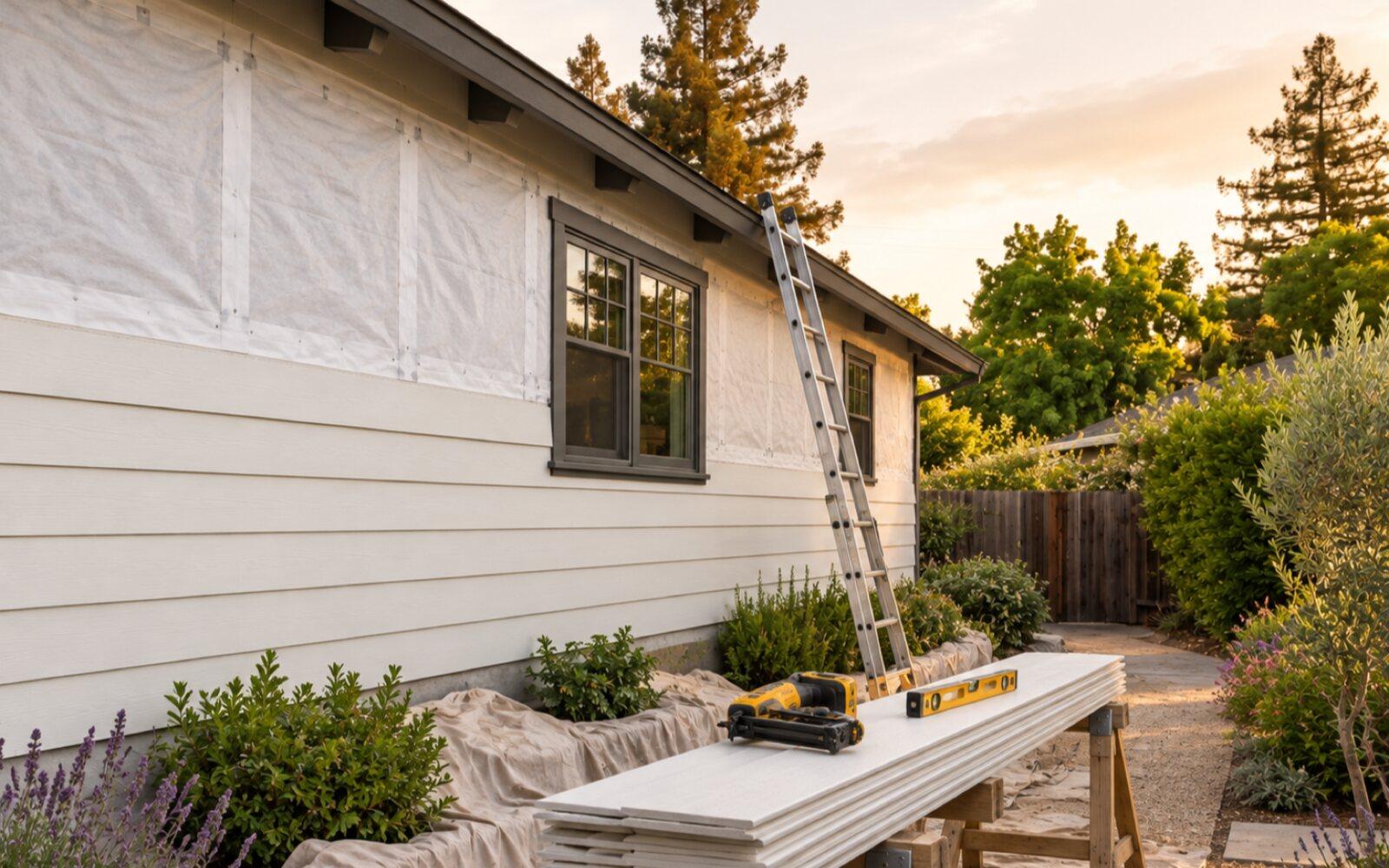
- The work is ladder work along the eaves, with drilling but little noise.
- The controller is mounted inside, usually on a garage wall near an outlet.
- Programming and a walk-through of the app happen at the end, with the lights on after dark.
Talk through the project
Tell us what you want to repair or update. A few details about the home and what you have noticed are enough to start.
Review the home and options
A site review identifies the work involved, checks the usual trouble spots, and covers the choices that fit your home.
Agree on the scope and schedule
Review what is included, what is not, and how changes are handled before any work is scheduled.
Walk through the result
Review the completed work together, along with the applicable care and warranty information for what was installed.
Questions about your project
Do permanent Christmas lights need a permit?
Sometimes, and it is the building division's call, not the installer's. The California Residential Code exempts listed cord-and-plug temporary decorative lighting and low-voltage equipment that cannot supply more than 50 watts. A permanent roofline system is neither temporary nor that small, so ask the city or county whether it wants a permit for the low-voltage run. A new outdoor outlet or circuit to power the system is electrical work that does need one. The estimate should say which applies and who pulls it.
Will my HOA allow permanent lights?
Most associations treat a permanent channel as a visible exterior change, so plan on an architectural application before install. The application usually asks for the channel color (matched to the fascia), where it mounts, and how the lights will be used. Ask whether the association limits holiday color displays to certain weeks while allowing warm-white accent light year-round, because a permanent system can do both. The written scope should say who prepares the application and include a photo of the proposed channel color.
How long do permanent lights last in Sacramento heat?
Manufacturers rate their LEDs at around 50,000 hours, and their warranties differ more than their ratings. One manufacturer's FAQ says lights run 12 to 16 hours a day, apart from the hottest summer days, last about 7 to 8 years, and that running them around the clock shortens life through heat; the brand-by-brand comparison cites each maker's figures. On a west-facing eave in a 100-degree Sacramento July, the practical rule is to schedule the lights rather than leave them on, and to read the product and labor warranty terms before signing.
Can you see permanent lights during the day?
A channel system mounted under the eave and color-matched to the fascia is hard to spot from the street in daylight; you see a thin line of trim and small round lenses if you look for them. Clip-mounted strings and bulb-style systems are more visible, because the wire and bulbs sit on the edge. On homes where the fascia color is changing, match the channel to the new color, not the old one, and schedule the lighting after the repaint.
What does a permanent system cost to run?
Less than most people expect. Manufacturers rate each light at under one watt on full white, and one of them estimates about $4.34 a month for a 150-light roofline run six hours a night at its assumed rate; the system comparison names the sources. The arithmetic for your house is simple: 150 lights at one watt for six hours is 0.9 kilowatt-hours a night. Multiply by the rate on your SMUD, Roseville Electric or PG&E bill for your own figure.
Permanent lighting by community
Sacramento County
Placer County
El Dorado County
Permanent lighting cost guides by city
Tell us about your permanent lighting project.
Share what you are noticing and what you want to change. We'll review the details and contact you about the next step.
No budget, address, or photos needed to inquire.