
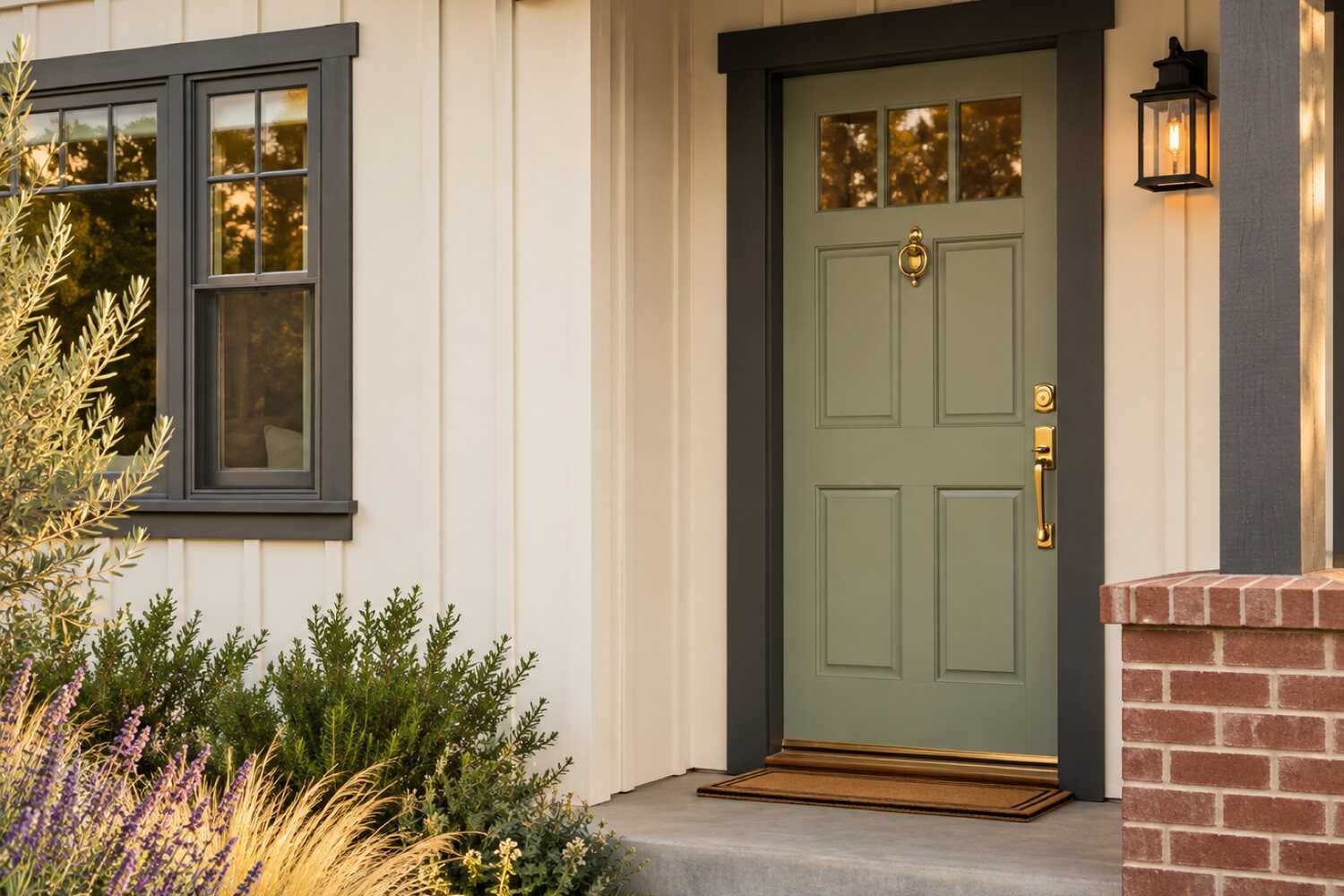
Exterior house painting in Sacramento, CA.
A Sacramento repaint should identify the coating and preparation needed on each elevation. Older central-city homes and newer Natomas properties may have different surfaces and access. Confirm the actual building year, any applicable lead-safe requirements and the condition of trim before defining repairs and finish coats.
What exterior painting costs in Sacramento
Published 2026 figures put a full exterior repaint in Sacramento at roughly $2,200–$7,000 for a 1,500–2,000 square foot house (HomeBlue) and $4,431–$7,935 for a typical project (homeyou). Facade Colorizer’s lead-safe bungalow example runs $5.50–$6.50 per square foot. Two-story staging, scraping prewar wood and lead-safe containment are the local adders.
| Scope | Published range | What it usually includes |
|---|---|---|
| HomeBlue house-size painting examples | $2,200–$5,200 for 1,500 sq ft; $2,900–$7,000 for 2,000 sq ft | HomeBlue’s Sacramento exterior-painting estimates based on its house-size model. Its $1.50–$3.50 rate should not be applied to measured wall area without confirming the denominator. The model does not specify light-prep stucco. |
| Published Sacramento painting-project range | $4,431–$7,935 | homeyou’s city exterior-painting calculation for Sacramento. The page leaves out the coat count, included repairs and house height, which is most of the spread between a Tahoe Park stucco single-story and a two-story Colonial in the Fabulous Forties. PaintRite separately gives $4,800–$9,600 for its 2,400-square-foot home example. |
| Facade Colorizer preparation examples | $5.50–$6.50 per sq ft for its RRP bungalow example | Facade Colorizer separately lists $6.50–$8.50 for multi-story work and $7–$9.50 for a three-tone Victorian. These are distinct scenarios, not one blended rate; clarify area measurement and whether its $700–$2,200 staging allowance is already included. |
Ranges are published third-party figures, not 916 Exteriors prices; the written estimate is the only number that applies to your home.
How to compare these ranges
The same floor area can describe very different painting scopes. A Tahoe Park stucco home and a Curtis Park wood-sided bungalow may differ in peeling layers, accessible wall area and preparation around exposed eaves.
Write those conditions into the bid rather than placing the house in a price tier by neighborhood alone. State the coating system, primer, finish coats, surfaces and colors.
Price damaged wood separately from coating preparation, confirm applicable lead-safe practices, and identify staging or preservation requirements. Each source above uses its own project assumptions; the estimate should translate the inspected house into quantities and work items.
Sources
- homeyou: Exterior painting in Sacramento, CA, costs
- HomeBlue: Cost to paint the exterior of a house in Sacramento
- PaintRite Pros: How much does it cost to paint the exterior of a house?
- Facade Colorizer: 2026 Sacramento exterior painting cost guide (RRP bungalow, multi-story and Victorian examples)
- U.S. EPA: Renovation, Repair and Painting Program
Read next: How much does exterior painting cost in Sacramento?
What changes the price in Sacramento
- Lead-safe containment on pre-1978 homes
- Confirm the build year and applicable handling for the painted surfaces being disturbed. Lead-safe setup and cleanup should be included where required, without inferring eligibility from the neighborhood alone.
- Coat history and scraping
- Oil under latex on prewar wood alligators and has to be scraped to a sound edge and feather-sanded; a sprayed coat over chalk on an Oak Park cottage has to come off before anything sticks.
- Two-story staging
- Fabulous Forties Colonials, Pocket two-stories, and North Natomas tracts need planks, ladders, or a lift, and the published scaffolding adder for Sacramento is $700–$2,200.
- Multi-color trim and brushwork
- Three- and four-color schemes on Midtown Victorians and Curtis Park Craftsmans are brushed, not sprayed, and the spindles, brackets, and dentil trim are priced by the hour.
- Foam trim and stucco crack repair
- Natomas Park and Westlake foam trim is patched and recoated with elastomeric before the body coat; control-joint and window-corner cracks are bridged, not filled with caulk.
- Rot found during prep
- Rafter tails, sills, fascia ends, and porch column bases on prewar and 1940s houses are written in at a unit price; see the signs of dry rot guide for what the site review looks for.
- Tight lots and masking
- Midtown alley lots and Natomas side yards a few feet wide mean the neighbor's house, windows, and cars get masked, and body coats go on by roller where spraying would drift.
- Canopy and mildew
- North walls under East Sacramento elms, Land Park camphors, and River Park oaks need a mildewcide wash and sometimes a stain-blocking primer under light colors.
- HOA and historic paperwork
- Natomas Park color submittals and any preservation question on a Boulevard Park or Newton Booth house are handled before paint is ordered, with a brushed-out sample on the wall.
Compare your finish options
Choose two options to compare the upkeep, fit and installation details.
| Compare | Acrylic exterior paint (flat or low sheen) | Acrylic exterior paint (satin or semi-gloss) |
|---|---|---|
| Appearance | Soft finish that hides surface texture | More light reflection; shows detail |
| Maintenance | Repaint on a normal cycle; touch-ups blend well | Easier to wash; shows surface flaws |
| Where it fits | Stucco and body siding | Trim, doors, and fascia |
| Installation | Brush, roll, or spray with back-rolling | Careful prep since sheen reveals texture |
View all 4 options and planning notes
Most Sacramento-area repaints use 100 percent acrylic exterior paint: a flat or low-sheen finish on the body, which hides stucco and siding texture, and a satin or semi-gloss on trim, doors, and fascia, which washes clean and shows the detail. Elastomeric coatings suit stucco with hairline cracking but not wood. Solid stain is the choice for rough-sawn wood siding and fences where a film would peel.
| Option | Appearance | Maintenance | Where it fits | Installation notes |
|---|---|---|---|---|
| Acrylic exterior paint (flat or low sheen) | Soft finish that hides surface texture | Repaint on a normal cycle; touch-ups blend well | Stucco and body siding | Brush, roll, or spray with back-rolling |
| Acrylic exterior paint (satin or semi-gloss) | More light reflection; shows detail | Easier to wash; shows surface flaws | Trim, doors, and fascia | Careful prep since sheen reveals texture |
| Elastomeric coating | Thick, uniform finish | Bridges hairline cracks; recoat compatibility matters | Stucco with minor cracking | Heavier application; not for wood siding |
| Solid stain | Opaque color that keeps some wood texture | Weathers by fading rather than peeling | Rough-sawn wood siding and fences | Penetrates rather than films over the surface |
Specific durability claims come from each product's own data sheet. Manufacturer names appear once 916 Exteriors confirms the products it uses.
Planning painting work in Sacramento
Open the topics that apply to your property.
Sacramento’s painting mix is older and more wooden than its neighbors’. About 11% of the city’s housing predates 1940, against 1% in Arden-Arcade and Carmichael and none in Elk Grove (ACS 2020–2024). Multi-coat scraping, brushwork on milled trim and lead-safe containment therefore show up on far more city jobs. Arden-Arcade and Carmichael are unincorporated and permit through Sacramento County. Roughly two-thirds of their houses are 1950s–70s ranches with stucco bodies and wide wood eaves under mature canopy, so their paint problems are eave mildew and fascia rot more than film failure. Elk Grove is 77% post-1990 stucco with HOA color rules in Laguna West and Laguna Ridge, where the job is foam-trim repair and a color submittal. West Sacramento sits across the river in Yolo County with its own building division, and 43% of its housing is 2000-or-later Southport stucco. Only Sacramento has city preservation districts and city-owned street trees over the work area.
Compare nearby: Arden-Arcade exterior painting · Elk Grove exterior painting · Rancho Cordova exterior painting
Exterior painting for Sacramento homes
Sacramento repaints break into three kinds of house. About 18% of the city’s housing predates 1950 (U.S. Census Bureau, ACS 2020–2024 5-year), and most of it is painted wood. That means redwood lap, shingle and milled trim on the grid streets of Boulevard Park, Newton Booth and Poverty Ridge, on the bungalow blocks of Curtis Park and Elmhurst, and on the larger lots of Land Park and the Fabulous Forties. Another 36% went up between 1950 and 1979. River Park, Tahoe Park, Greenhaven, Meadowview and South Natomas date from those decades, with stucco bodies and painted wood eaves, fascia and window trim. The remaining 46% is 1980s and later. In this city that mostly means the hardboard-trimmed two-stories of the Pocket and the foam-trimmed stucco of North Natomas.
Each group fails in its own way, and the failure sets the prep. Prewar wood carries many coats. Where oil sits under latex, the film alligators and lifts in sheets on the sun side. The only fix is scraping to a sound edge, feather sanding and a bonding primer, under lead-safe containment because every one of these houses predates 1978. Postwar stucco chalks. A hand wiped across a south wall in Tahoe Park comes away white, and paint over that powder peels within a season or two. That wall needs a wash and a masonry primer before color. Hardboard from the 1980s swells at the bottom edge and at every nail head where the factory finish wore through. The estimate has to say which boards get replaced before they get painted. On North Natomas stucco the foam trim bands crack at their joints and fade faster than the body, so the trim is the first thing to check.
Sun does the damage in Sacramento and rain finds it. South and west walls take afternoon sun through a summer of 100°F days. That is where caulk splits at window trim, sheen goes flat and stucco fades two shades lighter than the north side. About 18 inches of rain follow between November and March, often in a few atmospheric-river storms, and the water gets behind every failed joint. A Sacramento repaint estimate is really a preparation estimate. It should list each elevation, state what is wrong with it, and price washing, scraping, priming, caulking and wood repair as separate items. The painting service scope and the Sacramento painting cost guide show how the published ranges split between prep and finish.
Two local layers sit on top of the prep. Inside the city’s listed historic districts, repainting a painted surface is routine maintenance. The same job on a Boulevard Park or Newton Booth contributing house changes character if it strips unpainted brick, replaces trim profiles or swaps windows, and those steps need a preservation check first. The city’s Planning Land Use portal shows a property’s status by address. The ACS decade bins put about half the city before 1980, so the EPA Renovation, Repair and Painting Rule governs a large share of repaints. A bid that never mentions containment or a certified firm is missing a cost line. Compare bids on the same elevation list, the same prep description and the same product. Read the coating warranty as a product document, not a guarantee for the wall.
Housing age and what to inspect
Housing age helps plan an inspection. The share of homes in each decade is census data; the notes describe materials and conditions to check at the property.
| Built | Share of homes |
|---|---|
| Before 1940 | 11% |
| 1940–1949 | 7% |
| 1950–1959 | 12% |
| 1960–1969 | 11% |
| 1970–1979 | 13% |
| 1980–1989 | 15% |
| 1990–1999 | 8% |
| 2000–2009 | 15% |
| 2010 and later | 8% |
Sacramento: 212,485 housing units, median year built 1977, median owner-occupied value $506,300, 52% owner-occupied. Source: U.S. Census Bureau, American Community Survey 2020–2024 5-Year Estimates, tables B25034 (year structure built), B25035 (median year built), B25077 (median value, owner-occupied), B01003, B25003 (ACS 2024 5-year).
- PrewarBefore 1940 (11% of Sacramento homes)
- Sacramento’s prewar houses run from Boulevard Park’s 1905 subdivision on the old fairgrounds to the 1920s bungalows of Curtis Park and Elmhurst. Almost all of them are painted wood: old-growth redwood lap or shingle, milled window casings, porch columns and brackets. The wood is sound more often than the paint on it. A century of coats has left oil under latex, and on south and west walls the film alligators, cracks and lifts. Prep here means scraping to a sound edge, feather sanding, and spot priming bare wood with an oil or bonding primer. Any replaced trim gets back-primed. All of it predates 1978, so the estimate names lead-safe containment and cleanup. Ask for separate lines for scraping and priming, for trim brushwork, for rot repair at sills, rafter tails and column bases, and for any preservation check on a contributing house.
- Wartime and immediate postwar1940s (7%)
- The 1940s houses in Tahoe Terrace, subdivided in 1945, and on the first River Park lots sold in 1947 and 1948 are plainer. They have stucco or narrow lap bodies, minimal trim, and steel or wood sash windows. Paint fails on them at the wood, not the walls: window sills, garage door trim and the fascia along low eaves. These houses also fall inside the EPA lead rule’s date range. A good scope lists the wood pieces by elevation and prices sill and fascia replacement per foot. It also specifies a primer that bonds to both stucco and old alkyd trim paint, so body and trim cure evenly. Most are single-story, so staging is a ladder, not a lift.
- Postwar ranch1950s–1960s (23%)
- The 1950s and 1960s finished River Park, built the Greenhaven ’70 planned community from 1961, filled Meadowview and started South Natomas. The city’s 2016 mid-century survey counted more than 48,000 parcels with structures potentially built in the 1940s through 1960s. This is the largest repaint market in town. Typical bodies are stucco with a painted wood fascia, a wide eave and a wood or aluminum slider below. The 1955–56 Eichlers in South Land Park Hills add post-and-beam framing that runs outside as exposed beams and tongue-and-groove eaves. The stucco chalks and hairline-cracks. The eaves and fascia peel where the gutter overflowed. The scope should include a wash, a masonry primer where the chalk test fails, elastomeric patching on cracks, and a wood schedule for fascia ends and eave boards. On an Eichler in the South Land Park Hills historic district, designated in 2024, the color and exposed-wood treatment may need a preservation check before anyone orders paint.
- 1970s1970s (13%)
- Sacramento’s 1970s housing is mostly the second wave of Greenhaven and the Pocket, the Meadowview streets south of Florin Road and the later South Natomas subdivisions. This is the decade of T1-11 plywood and rough-sawn lap on gables and second stories over stucco first floors. Much of it wears dark stain instead of paint. Rough-sawn plywood soaks up coating, and its bottom edges and grooves wick water and swell. Where a previous owner painted over stain, the paint peels in sheets. The estimate should say which panels get replaced, which get a penetrating primer, and whether the finish is stain or paint. Two-story Pocket houses need ladders or a lift for the gable ends, and that is its own line.
- 1980s1980s (15%)
- The 1980s are the Pocket’s build-out inside the river bend, with custom houses, gated streets and lakefront lots, plus the last South Natomas subdivisions. Bodies are stucco with hardboard lap or panel on upper floors and gable ends. Windows carry foam or wood trim and a first generation of aluminum or early vinyl sliders. The hardboard is the painting problem. It swells at the bottom edge and at nail heads once the factory primer wears through, and no paint holds on a swollen edge. The scope should count replaced boards, specify a primer rated for hardboard, and call out caulking at every butt joint. Stucco on these houses is usually sound but chalky. The trim-to-stucco joint on the west side is where caulk fails first.
- 1990s1990s (8%)
- The 1990s are the smallest share. They sit mostly in North Natomas, where the first tracts opened in the mid-1990s, and in the last Pocket cul-de-sacs toward the levee. Stucco is the whole body, trim is foam over mesh, and the vinyl windows sit in stucco returns with no wood to paint. The failure points are the foam trim joints, which crack and let water behind the band, and the south and west stucco, which fades and chalks under afternoon sun. The scope should include foam-trim patching with a flexible compound and a primer where the chalk test fails. It should also say whether Natomas Park requires a color submittal. Mesh cracks at window corners get an elastomeric patch, not a bead of caulk.
- 2000s and later2000 onward (23%)
- Almost a quarter of Sacramento’s housing is 2000 or later, and nearly all of it is North Natomas. Natomas Park, Westlake and the surrounding tracts sit inside the Natomas Basin, which FEMA maps as an A99 Special Flood Hazard Area with its own flood-zone construction rules. Bodies are stucco with foam trim, and some elevations carry fiber-cement lap as an accent. Most of these homes are on their first or second repaint. The sun side is usually the only side that needs full prep: faded stucco, chalking, cracked foam joints and split caulk at window returns. A sensible scope treats the south and west elevations as full-prep and the north and east as wash-and-recoat, and prices them that way. Check the HOA color palette and submittal process before ordering. Fiber-cement accents need a compatible acrylic over the factory finish.
Painting by neighborhood in Sacramento
- Land Park
- Land Park’s blocks between Broadway and Sutterville Road wrap around William Land Park. They carry the city’s densest run of Tudor Revival, Spanish Revival and Colonial houses, many with brick or stucco bodies and painted half-timbering. A repaint there is a materials exercise. The half-timber boards want a wood primer, the stucco panels between them a masonry primer, and unpainted brick should stay unpainted. Steep gables mean planks or a lift on the street side. Every house predates 1978, so lead-safe containment goes in the scope.
- East Sacramento (Fabulous Forties)
- The Fabulous Forties are the lots between 38th and 47th Streets from J Street to Folsom Boulevard. They are the largest lots in East Sacramento and hold the city’s biggest prewar houses, most of them two-story. Painted wall area runs far above the floor area a house-size cost model assumes. Three- and four-color schemes on Colonials and Tudors take a brush, not a sprayer. Staging for second-story gables and dormers is a separate line. The city-maintained street trees overhead, including a deodar cedar more than a century old, need an Urban Forestry permit before anyone prunes them for access.
- Midtown and Boulevard Park
- Boulevard Park, from E to J Street between 16th and 24th, is about 300 buildings on the 1905 subdivision of the old state fairgrounds and racetrack. It is the largest Sacramento neighborhood on the National Register, and most of its houses are contributing resources. A repaint there stays routine only while it stays a repaint; new trim profiles, painted brick or a window change bring preservation staff in. Midtown’s alley lots put neighbors a few feet away, so body coats go on by roller or behind drift shields. The tall, narrow Victorians and Craftsmans carry the city’s heaviest brushwork per square foot.
- Curtis Park
- Curtis Park, between Sutterville Road, Broadway, Freeport Boulevard and Highway 99, mixes Victorians, Craftsman bungalows and 1920s revival subdivisions on streetcar-era lots. The bungalows are the painting problem. They have wide eaves with exposed rafter tails, shingle or lap bodies, and porch columns whose bases rot before the paint fails. The scope should show rafter-tail and column-base repair as unit prices, primer on every bare shingle edge, and a stain-blocking primer under light colors on the shaded north side. Oil-under-latex alligatoring on the sun side gets scraped, not sanded flat.
- Oak Park
- Oak Park was the city’s first suburb, platted before Boulevard Park in 1905 on numbered streets crossing numbered avenues. It carries a small listed historic district plus a wave of early-2000s investor repaints. Many of those repaints went on over chalk or loose film and are now peeling in sheets, so the prep line is the whole job: a full wash, scraping to a sound edge and a bonding primer before color. Check the address on the city’s planning portal for the Oak Park Historic District before changing trim or removing original material.
- Tahoe Park
- Tahoe Park sits just south of Highway 50 at 59th Street. Its Tahoe Terrace section north of Broadway comes from a 1945 subdivision, and the rest filled in as small single-story stucco houses. Chalking is the standard finding. The chalk test fails on south and west walls, and the fix is a wash and masonry primer, not a thicker topcoat. Low eaves mean no staging. A Tahoe Park bid should sit near the low end of the published Sacramento ranges unless fascia and sill replacement are on the list.
- South Land Park
- South Land Park Hills, between Sutterville and Florin Roads west of Freeport Boulevard, holds the city’s concentration of mid-century modern houses. That includes the 1955–56 Eichlers on South Land Park Drive, Fordham Way and Oakridge Way, which the city designated a historic district in 2024. Exposed beams, tongue-and-groove eaves and grooved siding wear stain or paint that has to match the existing coating. Beam ends that have checked need epoxy or a splice before finish. Inside the district, the color and exposed-wood treatment may need a preservation check.
- Pocket and Greenhaven
- Greenhaven began in 1961 as a 1,600-home planned community around a central greenbelt. The old brickyard clay pit became Lake Greenhaven and its lakefront lots in the 1970s, and the Pocket filled in behind it through the 1980s and early 1990s with custom houses, gated streets and a second private lake. That gives a painter three substrates on one street: 1960s stucco, 1970s T1-11 gables and 1980s hardboard. Lakefront and levee-side houses take unshaded west sun and fade first. Draw a partial repaint on the elevation list, and approve any color match to an aged coating from a sample on the actual wall.
- Natomas
- Natomas splits at Interstate 80. South Natomas was subdivided from the 1950s to the 1980s, while North Natomas opened in the mid-1990s inside the FEMA A99 flood zone. North of the freeway the surfaces are stucco and foam trim, the Natomas Park association reviews colors, and the sun side of a tract house is usually the only side that needs full prep. South of it a painter meets 1970s wood siding and 1980s hardboard, and the scope has to say which boards come off. Foam trim gets patched and recoated before the body coat, never after.
- Meadowview
- Meadowview took shape as a suburb in the 1960s at the south edge of the city, near the water tower off Interstate 5. Its houses are mostly single-story stucco with painted wood fascia and trim. The stucco chalks and the fascia peels where gutters have overflowed. With occupants home and cars in the driveway, the proposal should spell out masking, daily cleanup and where prepared surfaces sit if weather interrupts. Sprinkler overspray on the bottom two feet of stucco is a prep item, not a paint item.
- River Park
- River Park is a two-mile cul-de-sac between the railroad levee and the American River levee, with two entrances a block apart on H Street. Its first lots sold in 1947 and 1948 as California Rancho homes with fruit trees on the lot. Seventy years on, the trees shade north walls all day, so the scope carries a mildewcide wash and a stain-blocking primer under light colors. Wide eaves and board-and-batten or lap bodies mean fascia and rafter-tail repair lines. Application timing follows the product’s surface-temperature and drying limits on shaded walls that stay damp into late morning.
- Del Paso Heights and Hagginwood
- Del Paso Heights and Hagginwood sit north of the American River on former Rancho Del Paso land, outside the boundaries of the 1924–1964 city of North Sacramento. They were still unincorporated when the 1960 census counted 11,495 people in Del Paso Heights–Robla. The small houses carry mixed claddings, often a later stucco or shingle skin over original lap, and many need substrate repair before a coating will last. Ask for a coating-only bid and a repair-inclusive bid with quantities, so a low repaint total is not hiding boards that stay rotten.
- Elmhurst
- Elmhurst, established around 1908 along T Street between Stockton Boulevard and 57th Street, is not a historic district, but its elm, ash and oak canopy is among the heaviest in the city. Bungalow walls under that canopy stay damp and shaded. The north and east elevations mildew and hold moisture longer than a product’s drying window allows on a cool morning. The scope should carry a mildewcide wash, a moisture check before primer, and leaf-litter cleanup from gutters before fascia paint. Every house here predates 1978.
Sun, rain, trees and site conditions
Sacramento is on the valley floor in California Energy Commission climate zone 12. July highs sit in the low-to-mid 90s with 100°F days every summer, about 18 inches of rain fall almost entirely between November and March, and a Delta breeze drops the evening temperature. Paint here fails from the top down. Ultraviolet and heat break the film, the caulk and the sheen on south and west walls first, and the winter storms then push water through every open joint. Crews chase the shade in summer: east walls early, south walls before midday, west walls late or on a cooler day. A stucco wall in direct afternoon sun exceeds the surface-temperature limit on most product data sheets.
The tree canopy is the second condition. The city maintains the trees in its park strips and requires a permit for work on them. The same ordinance protects native oaks and sycamores over 12 inches in diameter on private land, so access follows the tree, not the other way round. Under the elm, ash and oak of Elmhurst, the camphors and elms of Land Park and East Sacramento, and the river trees along River Park, north walls mildew, drying slows, and light colors need a stain-blocking primer. Sap and leaf litter on eaves and fascia come off before primer. Sprinkler overspray on low stucco gets corrected in the scope, not painted over.
The third condition is age. The ACS decade bins put about 54% of Sacramento’s housing before 1980 and 11% before 1940, the largest prewar share of any valley-floor community in the service area. Lead-safe containment under the EPA Renovation, Repair and Painting Rule is therefore a normal cost line here, and a bid should state the build year it is working from. Inside the city’s listed historic districts, repainting is routine, but changes to trim, windows or unpainted masonry are not. In North Natomas the constraints are the HOA palette and the foam trim joints. Sun, trees and water are the local factors, and the estimate should name which one it found on each elevation.
Permits and approvals
The City of Sacramento Community Development Department, Building Division publishes its list of work that needs a building permit, and painting sits on the exempt side of it, grouped with papering, tiling and similar finish work. The same page names siding, window replacements and re-roofing as permitted work, so a painting scope that replaces siding boards, swaps a window or opens the roof edge picks up a permit for that part of the job. Replacing rafter tails, sistering a rotted beam end on a Streng post-and-beam house, or rebuilding a porch column base is structural and permitted, and the estimate should say so when the site review finds it.
The painting exemption carries a footnote on the City's own list: it does not apply inside a design review or preservation district or on a historic landmark. In Boulevard Park, Newton Booth, Poverty Ridge, Alkali Flat, Southside Park, the 20th Street district and the older blocks of Midtown, exterior changes go through preservation Site Plan and Design Review before any building permit. Routine maintenance is still exempt, and repainting a surface that was already painted generally counts as maintenance. Painting brick or stone that was never painted, removing or replacing trim or siding, or changing windows as part of the job is where preservation staff and the Preservation Commission get involved; the City's land-use portal shows a property's status by address. Outside the historic core, the color rules that exist are HOA rules, mostly the Natomas Park association and a handful of other North Natomas tracts, and those committees want a brushed-out sample on the actual wall. Title 24 has no requirement for residential exterior paint.
Federal lead rules are the other layer. About 54% of Sacramento's housing predates 1980 and 11% predates 1940 in the ACS decade bins, and the EPA Renovation, Repair and Painting Rule applies to paid work that disturbs painted surfaces in housing built before 1978 unless a documented exemption applies. The census bins straddle the 1978 line, so the bid should work from the actual build year, not the neighborhood. On a covered house the painting contractor is a certified firm, prep is wet-scraped under containment, and cleanup is HEPA. The proposal should state the build year it assumed, the handling method and the cleanup; a bid that skips the question cannot be compared fairly against one that priced it.
Permit authority: City of Sacramento Community Development, Building Division . Whether a permit or review applies, and who pulls it, is written into the estimate.
Seeing something on your own house? Request an estimate for painting in Sacramento
Repaint, spot-repair, or repair first?
Peeling paint is sometimes just old paint and sometimes a sign of moisture or failed wood. Preparation depends on which it is.
Not sure which applies? Tell us what you are seeing and request an estimate for painting.
What the scope includes
A complete estimate names the work, materials and exclusions so you can compare proposals.
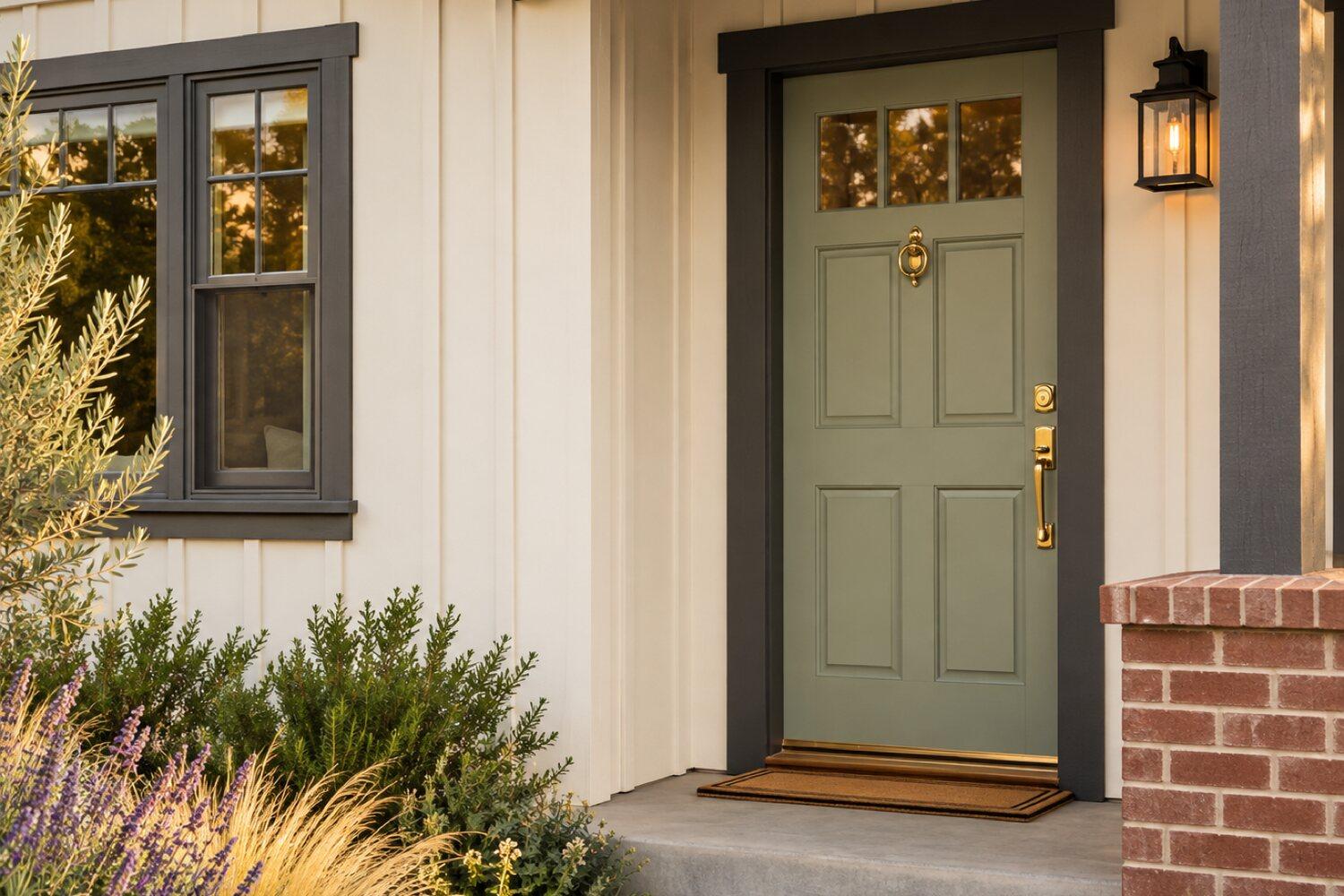
Keep a copy for your site visit or when comparing estimates.
Included in a written scope
- Pressure washing and scraping of loose or failed coating
- Repair of small wood or stucco defects and replacement of failed caulk
- Priming of bare wood, repairs, and stains
- Masking and protection of windows, fixtures, landscaping, and hardscape
- Finish coats on body and trim as written, with color and sheen confirmed before painting
- Daily cleanup and removal of masking at completion
Clarify before work starts
- Which surfaces are included: body, trim, doors, gutters, fences, and garage door
- How many finish coats and whether primer is a full coat or spot priming
- How rotted wood found during prep is handled and priced
- Whether color testing on the house is part of the scope
How a painting project works
The stages to discuss when planning your project.
Talk through the project
Tell us what you want to repair or update. A few details about the home and what you have noticed are enough to start.
Review the home and options
A site review identifies the work involved, checks the usual trouble spots, and covers the choices that fit your home.
Agree on the scope and schedule
Review what is included, what is not, and how changes are handled before any work is scheduled.
Walk through the result
Review the completed work together, along with the applicable care and warranty information for what was installed.
Painting questions from Sacramento homeowners
Do I need a permit to paint the exterior of my house in Sacramento?
Not for the paint itself. The City of Sacramento's required-permits list puts painting with papering, tiling and similar finish work on the exempt side, and names siding, window replacements and re-roofing on the permit side. So a repaint stays permit-free until the scope replaces siding boards, swaps a window or rebuilds structure such as rafter tails or a porch post base; those items get their own permit. The exemption also drops away inside a preservation district or on a landmark, where a Site Plan and Design Review question comes first. For pre-1978 houses, EPA lead-safe practice is a separate federal requirement, not a City permit.
My Land Park house was built in 1929. What does lead-safe painting mean for the job?
A 1929 Land Park house is inside the EPA Renovation, Repair and Painting Rule, which covers paid work that disturbs painted surfaces in pre-1978 housing. In practice the painting contractor is an EPA-certified firm, the ground under the work area is sheeted, scraping and sanding are done wet or with HEPA-shrouded tools, and the cleanup is HEPA vacuuming and a wipe-down before the area is released. The rule covers the whole house, not just the decorative wood, so the bid should say which surfaces will be disturbed, how they will be handled and who holds the certification. It adds setup time; it does not change the coating system.
Why is the paint on my south and west walls failing while the north side looks fine?
Because Sacramento's sun does the damage. South and west walls take the afternoon heat until the Delta breeze arrives, and a stucco wall in direct sun on a 100°F day runs well above the film's design temperature, so the binder and the sheen break down years before the shaded north side. The scope should treat the elevations differently: full scrape and prime on the failed walls, a wash and one coat where the film is sound, and a check for soft wood under the peeling at sills and fascia ends. A leak or a sprinkler can peel any wall, so the site review confirms the cause before pricing the fix.
Can a house be painted in Sacramento's summer heat?
Yes, with the schedule built around surface temperature. Paint data sheets list a maximum surface temperature, and a Sacramento stucco wall in direct afternoon sun on a 100°F day exceeds it, so the coat dries before it can level and bond. Crews work the shade: east walls early, south walls before midday, west walls late in the afternoon, on a cooler day or under shade cloth. Early mornings are also when the Delta breeze is calmest for spraying. A July job sequenced this way cures as well as an April one; what fails is a west wall sprayed at two in the afternoon.
My house is in Boulevard Park. Do I need approval to change the color?
Usually not for a color change alone. Boulevard Park is on the Sacramento Register, and the City's Preservation program treats repainting a previously painted surface as routine maintenance, which is exempt from Site Plan and Design Review. What does need review is anything beyond paint: painting brick or stone that was never painted, replacing trim or siding, or changing windows in the same project. The City's land-use portal shows whether the house is a contributing resource, and preservation staff answer scope questions by email before the work is scheduled. A noncontributing house in the district gets more latitude, but the check takes minutes and settles it.
The foam trim on my Natomas house is crumbling. Can it just be painted?
No. The foam trim on North Natomas and Natomas Park houses from the late 1990s and 2000s is expanded polystyrene under a thin base coat, and once that coat cracks at a joint or a corner, water gets behind it and the foam crumbles. Paint over a crumbling piece peels with it. The repair is to cut back to sound foam, re-mesh and base-coat the joint, or replace the piece where more than a few inches are gone, then prime and finish with an elastomeric coat that moves with the joint. The proposal should name which pieces are patched and which are replaced, since the two are priced differently.
What does it cost to paint a two-story in East Sacramento versus a single-story in Tahoe Park?
Neither the neighborhood nor the floor area sets it; the wall area, the height and the prep do. A single-story stucco house in Tahoe Park is mostly roller and spray work at ground level with light patching. A two-story wood-sided Colonial in the Fabulous Forties adds staging, which Facade Colorizer's Sacramento guide puts at $700–$2,200 for scaffolding, plus scraping of older coat layers, brushed multi-color trim and lead-safe containment on a pre-1978 house. The published Sacramento ranges on this page, roughly $2,200 to $9,600 depending on house size and source, bracket both houses; an itemized estimate for the same surfaces, coating system and exclusions is the only fair comparison.
Should stucco cracks be fixed before painting, or will the paint cover them?
Fixed first. Hairline cracks at window corners and along control joints on Natomas, Meadowview, and South Land Park stucco open and close with the seasons, and a regular acrylic body coat bridges them for about one summer before they telegraph back through. The scope should call out crack repair with an elastomeric patching compound on the cracks themselves, a masonry primer where the surface has chalked, and then the finish coats. On stucco with widespread cracking, an elastomeric body coat is an option, with the trade-off that future recoats have to be compatible with it. Ask which the bid assumes.
Tell us about your Sacramento painting project.
Share what you have noticed and what you would like to change. We'll review the details and contact you about the next step.
No budget, address, or photos needed to inquire.
Other exterior services in Sacramento
- Siding replacement in SacramentoExplore repair and replacement options for your home's exterior walls.
- Window & door replacement in SacramentoFind an updated look and a fit that works for your home.
- Roof replacement in SacramentoPlan the next step for a worn or damaged roof.
- Gutter installation in SacramentoPlan how rainwater moves from the roof and away from the home.
- Dry rot & trim repair in SacramentoAddress damaged wood and understand the work around it.