
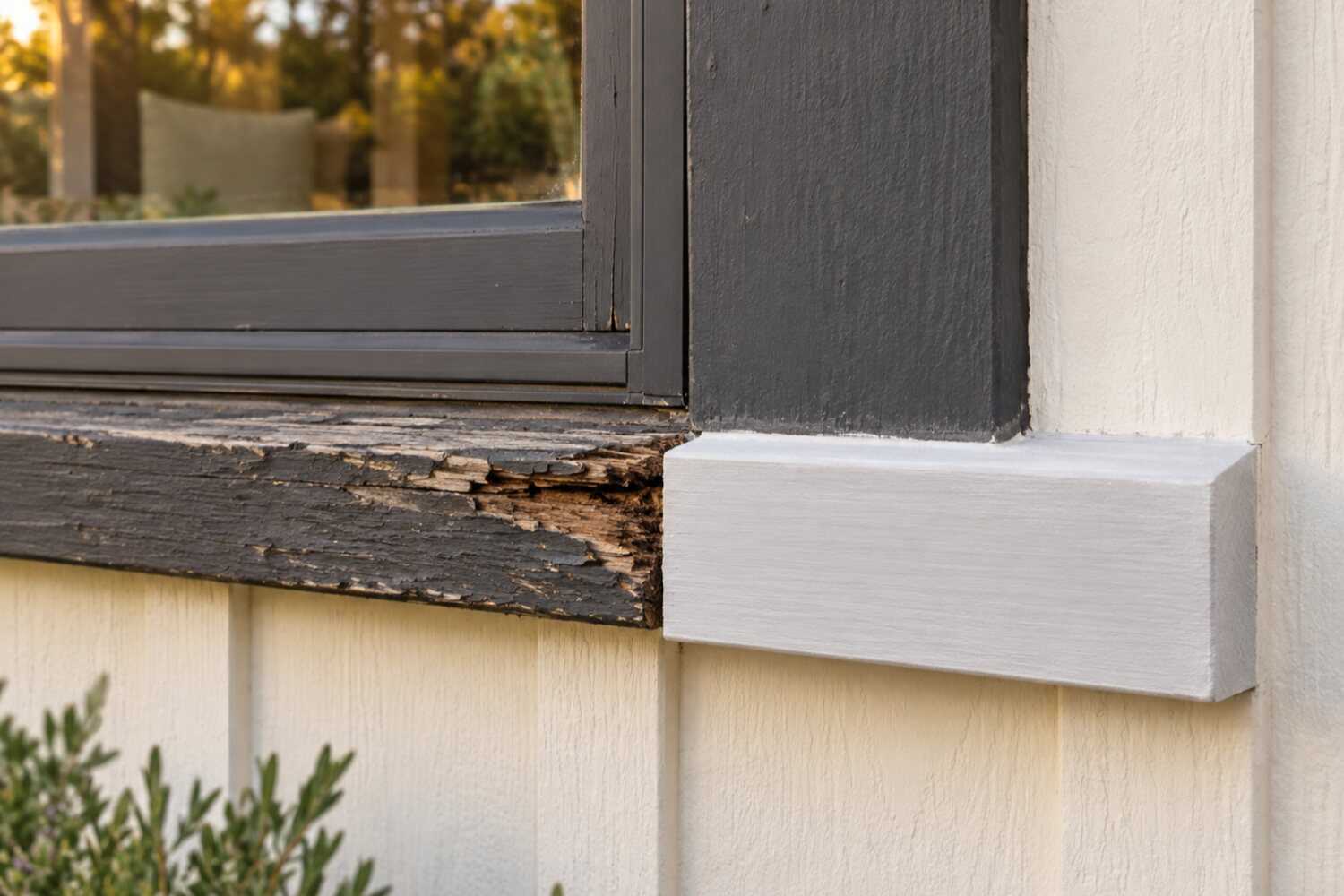
Dry rot and trim repair in Elk Grove, CA.
If trim beside stucco or beneath an eave feels soft, investigate both the damaged wood and the water source. An Elk Grove repair scope should identify access, adjoining finishes and any structural involvement.
What dry rot & trim repair costs in Elk Grove
Regional published figures put dry rot repair in Elk Grove at $140–$800 for a small trim or fascia repair, $500–$2,351 for a typical project and $2,500–$6,500 or more for structural framing (Vertex Maintenance, citing Angi 2026); Good Life Inspections places severe repairs at $5,000–$10,000 and up. Buried weep screeds, two-story eaves and the water-path fix move the number.
| Scope | Published range | What it usually includes |
|---|---|---|
| Small trim or fascia repair, regional | $140–$800 | Vertex Maintenance's Sacramento-area range for a small trim, fascia or sill repair. On an Elk Grove tract house this is the garage-jamb-bottom or single-fascia-end class of job; the inspection sets the damaged material, the water source and the finish, and the range does not include the staging a second-story eave needs. |
| Typical repair project, regional | $500–$2,351 | Vertex Maintenance's typical Sacramento-area range, citing Angi's 2026 data. Good Life Inspections separately publishes $500–$1,500 for minor repairs and $2,000–$5,000 for moderate work; keep the two publishers' categories apart. A full run of second-story fascia or a porch column on a Laguna West house lands here, plus the gutter or downspout fix that caused it. |
| Structural repair, regional | $2,500–$6,500+ | Vertex Maintenance's structural framing or sheathing category. Good Life Inspections separately places severe or structural repairs at $5,000–$10,000+. In Elk Grove this is the buried-weep-screed sill plate, the rotted deck ledger or the beam over a porch, permitted through the City and open-ended until the wall is opened; neither range promises a complete repair of a particular ledger, beam or wall. |
Ranges are published third-party figures, not 916 Exteriors prices; the written estimate is the only number that applies to your home.
How to compare these ranges
Vertex and Good Life publish Sacramento-area ranges, not Elk Grove ones, and on a 1990s or 2000s tract house the number is set less by the rotted piece than by where it sits and what caused it. Second-story fascia and barge rafters behind the builder gutters need staging that a garage jamb at driveway level does not.
A sill plate under a buried weep screed means concrete cut back and a City permit before the wall is opened, which is the most expensive class of repair a stucco two-story gets. Price the water-path fix, whether that is a gutter seam, a downspout beside the garage or a sprinkler head, in the same scope, since a repair without it rots again.
On a Sheldon or Old Town house, confirm the construction year and price the lead-safe setup per location. Photograph the visible damage, agree on a per-foot or per-sheet rate for what the opening finds, and have concealed work approved in writing before more wood comes out.
Sources
- Vertex Maintenance: Dry rot repair cost in Sacramento (Angi 2026 data; jobs including Elk Grove)
- Good Life Inspections: Dry rot repair cost in 2026 (Sacramento)
- Sacramento Gutter Guard: Fascia repair and gutter add-on costs, Sacramento
- City of Elk Grove: 2026 Development Related Fees, building permit fee schedule (updated July 1, 2026)
- U.S. EPA: Renovation, Repair and Painting Program
- California Structural Pest Control Board
Read next: How much does dry rot repair cost in Elk Grove?
What changes the price in Elk Grove
- Water-path fix
- The gutter seam, downspout, post base, or slab that caused the rot is corrected in the same scope, and on an Elk Grove house it is often the larger line.
- Buried weep screed
- A patio or walkway poured over the stucco weep screed means cutting concrete back before the sill plate can be inspected and repaired. Priced as its own item.
- Two-story fascia and barge rafters
- Most 1990s and 2000s tract rot is at second-story eaves and gable ends. Staging time is built into the per-foot rate.
- Sheathing and framing per sheet
- Rot behind a fascia or a bottom course sometimes reaches the deck or the wall sheathing. Per-sheet pricing is agreed in advance so the scope grows in writing.
- Paint match versus section repaint
- Blending new primed trim into 25-year-old faded paint rarely disappears. A sun-side fascia repaint or a trim-package repaint is the honest alternative and is priced separately.
- Lead-safe work on pre-1978 homes
- Sheldon and Old Town houses need EPA RRP containment and HEPA cleanup for every cut into painted wood, which adds setup per location.
Compare repair materials
Choose two options to compare the upkeep, fit and installation details.
| Compare | Primed finger-joint wood trim | Fiber cement trim |
|---|---|---|
| Appearance | Smooth, paint-grade profile that matches most existing trim | Smooth or wood-grain; holds paint |
| Maintenance | Repaint on the normal cycle; keep end cuts sealed | Repaint; resists rot and insects |
| Where it fits | Most trim and fascia replacements | High-exposure trim, corner boards, and fascia |
| Installation | Back-prime and seal cuts; keep off the ground | Heavier; requires proper fasteners and gaps |
View all 4 options and planning notes
Primed finger-joint wood is the usual replacement for painted trim because it matches existing profiles and takes paint well; fiber cement trim costs more and resists rot and insects on the most exposed pieces; cellular PVC is the choice where wood touches the ground or stays wet. Epoxy consolidation saves a historic profile with limited damage, but only after the water source is fixed. None of them stays dry without correct flashing.
| Option | Appearance | Maintenance | Where it fits | Installation notes |
|---|---|---|---|---|
| Primed finger-joint wood trim | Smooth, paint-grade profile that matches most existing trim | Repaint on the normal cycle; keep end cuts sealed | Most trim and fascia replacements | Back-prime and seal cuts; keep off the ground |
| Fiber cement trim | Smooth or wood-grain; holds paint | Repaint; resists rot and insects | High-exposure trim, corner boards, and fascia | Heavier; requires proper fasteners and gaps |
| Cellular PVC trim | White, smooth; can be painted light colors | Very low; expands with heat | Ground contact and constant-wet locations | Needs expansion gaps and compatible adhesives |
| Epoxy consolidation | Original piece retained and filled | Paint; inspect for movement | Historic or hard-to-match profiles with limited damage | Only when the remaining wood is stable and the source is fixed |
Which material is proposed for each location is written in the estimate, along with the flashing or sealing change that stops the water.
Planning dry rot & trim work in Elk Grove
Open the topics that apply to your property.
Rot repair in Elk Grove is a stucco-house trade, which sets it apart from the older cities nearby. Sacramento's Land Park and Oak Park bungalows rot at the siding, the window sills and the porch decks, and every cut into their pre-1978 paint is lead-safe work. Galt's old grid is similar. Rancho Cordova's 1960s hardboard tracts rot across whole lower courses. In Elk Grove the wood is a small share of the exterior, so the repairs are concentrated: fascia behind builder gutters, garage jambs in the driveway splash zone, Laguna West porch posts and the sill plate behind a buried weep screed. Slab-on-grade houses on flat, wet clay put the sill closer to the water than Sacramento's raised-foundation houses. The City of Elk Grove is the permit authority for anything structural, and the associations care how the replacement looks.
Compare nearby: Sacramento dry rot & trim repair · Rancho Cordova dry rot & trim repair
Dry rot & trim repair for Elk Grove homes
Dry rot in Elk Grove hides in the wood the builders put around the stucco. About 64% of the city's homes date from the 1990s and 2000s (ACS 2020–2024), and on a Laguna, Laguna West, Stonelake or East Franklin two-story that wood is the fascia and barge rafters behind the gutters, the hardboard gable accents and their trim, the garage door jambs, the belly band and the porch posts. Each has been wet every winter for 20 to 30 years while the stucco around it shed the water. The stucco looks fine; the wood inside the joints is gone.
The 1980s hardboard houses in Laguna Creek and Camden Park rot from the bottom course up, where sprinklers and slow-draining clay keep the lap wet. Sheldon's acreage properties add deck ledgers, post bases at grade and barn siding. Old Town Elk Grove's pre-1978 houses have rotted sills and porch trim under lead paint. And on Elk Grove lots of any age, a patio poured over the stucco weep screed has held water against the sill plate, which is the most expensive rot repair a tract house gets.
Every repair has two halves: the wood and the water. Probe each location, photograph it, name the moisture source, whether a leaking gutter seam, a downspout beside the garage, a sprinkler head or a buried screed, and fix that source in the same scope. Cut back to sound wood, splice or replace, prime the cuts and seal the joints. Where the rot reaches sheathing, framing or a ledger, the City of Elk Grove is involved and the work is priced per sheet or per foot once the assembly is open.
The signs of dry rot guide lists what to look for before the visit. Where insects are suspected, a Structural Pest Control Board licensee inspects first and the carpentry follows the treatment.
Housing age and what to inspect
Housing age helps plan an inspection. The share of homes in each decade is census data; the notes describe materials and conditions to check at the property.
| Built | Share of homes |
|---|---|
| 1950–1959 | 1% |
| 1960–1969 | 2% |
| 1970–1979 | 6% |
| 1980–1989 | 14% |
| 1990–1999 | 27% |
| 2000–2009 | 37% |
| 2010 and later | 13% |
Elk Grove: 57,004 housing units, median year built 2000, median owner-occupied value $630,100, 74% owner-occupied. Source: U.S. Census Bureau, American Community Survey 2020–2024 5-Year Estimates, tables B25034 (year structure built), B25035 (median year built), B25077 (median value, owner-occupied), B01003, B25003 (ACS 2024 5-year).
- 1980s construction1980–1989
- The 1980s share of Elk Grove housing is about 14%, and in Laguna Creek and Camden Park rot lives in the hardboard. The bottom course swells and crumbles where sprinklers hit it, the corner boards rot from the end grain and the trim under the windows goes soft. Fascia behind 40-year-old spiked gutters is often gone for several feet at each seam. Probe the lowest two feet of every wall and the sheathing behind it, since rot travels from hardboard into OSB fast. Replace boards in fiber cement instead of patching them, and price the sheathing per sheet.
- 1990s construction1990–1999
- The tract rot pattern shows at full age on the 1990s houses in Laguna, Laguna West and Laguna Creek, about 27% of the city's homes: soft fascia and barge rafters behind the gutters at the second-story eaves, rotted trim behind the hardboard gable accents, garage jambs gone at the bottom foot and porch columns rotted at the base. On many lots a later patio buried the stucco weep screed, and the sill plate behind it is soft. Probe each location with a screwdriver, trace the water and open the assembly where it sounds hollow. Fascia and trim price per foot, sheathing per sheet.
- 2000s construction2000–2009
- About 37% of Elk Grove's homes were built in the 2000s, in Stonelake, East Franklin, East Elk Grove and early Laguna Ridge, with more fiber cement and foam trim than the decade before. The wood at risk is the fascia, the garage jambs and any wood belly band or porch post. Rot there is earlier-stage: a soft fascia end at a gutter seam, a jamb foot in the driveway splash, a stain behind a foam pop-out where the flashing was skipped. Catch it at the jamb foot and it is a splice; leave it and it reaches the header trim. Two-story eaves need staging either way.
- Earlier homes: Sheldon and Old TownPre-1980
- Pre-1980 wood in Sheldon and Old Town Elk Grove rots differently. Sheldon's acreage houses have deck ledgers bolted to the wall, post bases sitting in wet clay, barn siding at grade and rafter tails under open eaves shaded by valley oaks. Old Town's houses along Elk Grove Boulevard have rotted sills, porch decks and corner boards under lead paint, so every cut is EPA RRP work. Confirm the construction year, establish structural responsibility before a ledger or beam comes out, and set a unit rate for what the opening reveals.
Dry Rot & Trim by neighborhood in Elk Grove
- Laguna West
- The porch is where the rot is in Laguna West, built in the early 1990s with front porches on most houses: column bases on the concrete, rail posts, the porch beam ends and the fascia over it. Alley-side garages add a second set of jambs in the splash zone. Replacement profiles are matched for the association, and the moisture fix, usually a sprinkler head or a downspout, goes in the same scope.
- Stonelake
- Foam trim and fiber cement accents hold up on Stonelake's early-2000s two-stories; the fascia and the west garage jamb, on the wall that takes the afternoon sun and the storm wind, are what take the water. Rot is usually a fascia end at a gutter seam or a jamb foot, caught early. Staging for the second-story eave is the cost driver, and the HOA reviews any visible profile change.
- Laguna Ridge
- Warranty status is the first question in Laguna Ridge, where most houses date from the mid-2000s on and the trim may still be covered, so a rot call there is a skipped flashing at a pop-out, a garage jamb sitting on wet concrete or a fascia end under a gutter that never drained. Check the warranty and the flashing before cutting. Match the fiber cement profile for the association.
- Camden Park
- Hardboard rots across the lowest courses and at the corner boards on the 1980s houses in Camden Park, and the sheathing behind them is often involved. A repair there is a section-by-section replacement in fiber cement with per-sheet sheathing pricing, plus the fascia behind the original spiked gutters. Sprinkler heads aimed at the wall are moved as part of the fix.
- Sheldon
- Deck ledgers, post bases at grade, barn siding and rafter tails under open eaves make up the Sheldon list, all shaded by valley oaks and standing in slow-draining clay. Termites and rot occur together there, so a Structural Pest Control Board inspection comes first when insects are suspected. Structures are listed and priced separately, and city or county jurisdiction is confirmed for structural work.
- Old Town Elk Grove
- Lead paint covers the rotted window sills, porch decks and corner boards on Old Town Elk Grove's pre-1978 houses, so every cut is EPA RRP work with containment and HEPA cleanup. Replacement profiles are matched to the original under the Special Planning Area standards, and structural work on a raised floor or porch goes through the city with plans where required.
Sun, rain, trees and site conditions
Elk Grove's rot follows its water. About 18 inches of rain fall between November and March, largely in atmospheric-river storms that overwhelm a leaking gutter seam and send water down the fascia and behind the trim. The flat valley floor and slow-draining clay then hold that water at the base of the wall for weeks, which is why garage jambs, post bases and the sill plate behind a buried weep screed fail from the bottom up. Summer sprinklers keep the same wood wet from May to October.
Summer sun is the other half. South and west trim on the Laguna, Stonelake and East Franklin two-stories bakes past 100°F, the paint film and sealant fail there first, and the next winter's rain enters the open joint. North walls under Laguna West's 30-year street trees and Sheldon's valley oaks stay damp and grow the fungus instead. Both patterns end in the same soft wood; the exposure tells the crew where to probe first.
Access and structure decide the price more than the board. Second-story fascia and barge rafters need staging; a ledger or a sill plate needs temporary support and a permit from the City of Elk Grove; a slab poured over the weep screed needs the concrete cut before the wall can be opened. Photograph, measure and agree the unit rates before the first cut so the scope grows in writing as the assembly opens.
Permits and approvals
City of Elk Grove Building Safety & Inspection is the permit authority, and the line between finish carpentry and permitted work runs through the middle of most Elk Grove rot jobs. A fascia splice, a belly-band section or the bottom foot of a garage jamb is trim. Rafter tails, a porch beam or post, a deck ledger, wall sheathing and the sill plate under a buried weep screed are structural and are inspected before they are closed up; the City's 2026 fee schedule has its own line for balcony and deck work, and opening stucco or siding to reach the framing falls under the schedule's stucco and siding permit lines. Ask the City to classify the actual scope before material comes off, and put the applicant and inspection stages in the estimate.
Private approvals run separately. Ask the Laguna West, Laguna Ridge, Stonelake or Camden association whether a matching trim replacement needs a submittal; a change of profile, a switch from wood to PVC or fiber cement trim, or a repaint in a different color goes through architectural review. In Old Town Elk Grove the Special Planning Area design standards may apply to visible trim on a contributing building. Elk Grove's pre-1978 houses are the Sheldon acreage ranches and Old Town, and cutting painted wood on one of them is EPA Renovation, Repair and Painting Rule work for an EPA-certified firm; the estimate should say so. Where termites or carpenter ants are suspected, a wood-destroying-organism inspection by a Structural Pest Control Board licensee comes before the carpentry, and treatment is a separate licensed trade.
Permit authority: City of Elk Grove Building Safety & Inspection . Whether a permit or review applies, and who pulls it, is written into the estimate.
Seeing something on your own house? Request an estimate for dry rot & trim in Elk Grove
Repair the board or fix the cause?
Replacing a rotted board without stopping the water means replacing it again. Every repair starts with finding where the moisture came from.
Not sure which applies? Tell us what you are seeing and request an estimate for dry rot & trim.
What the scope includes
A complete estimate names the work, materials and exclusions so you can compare proposals.
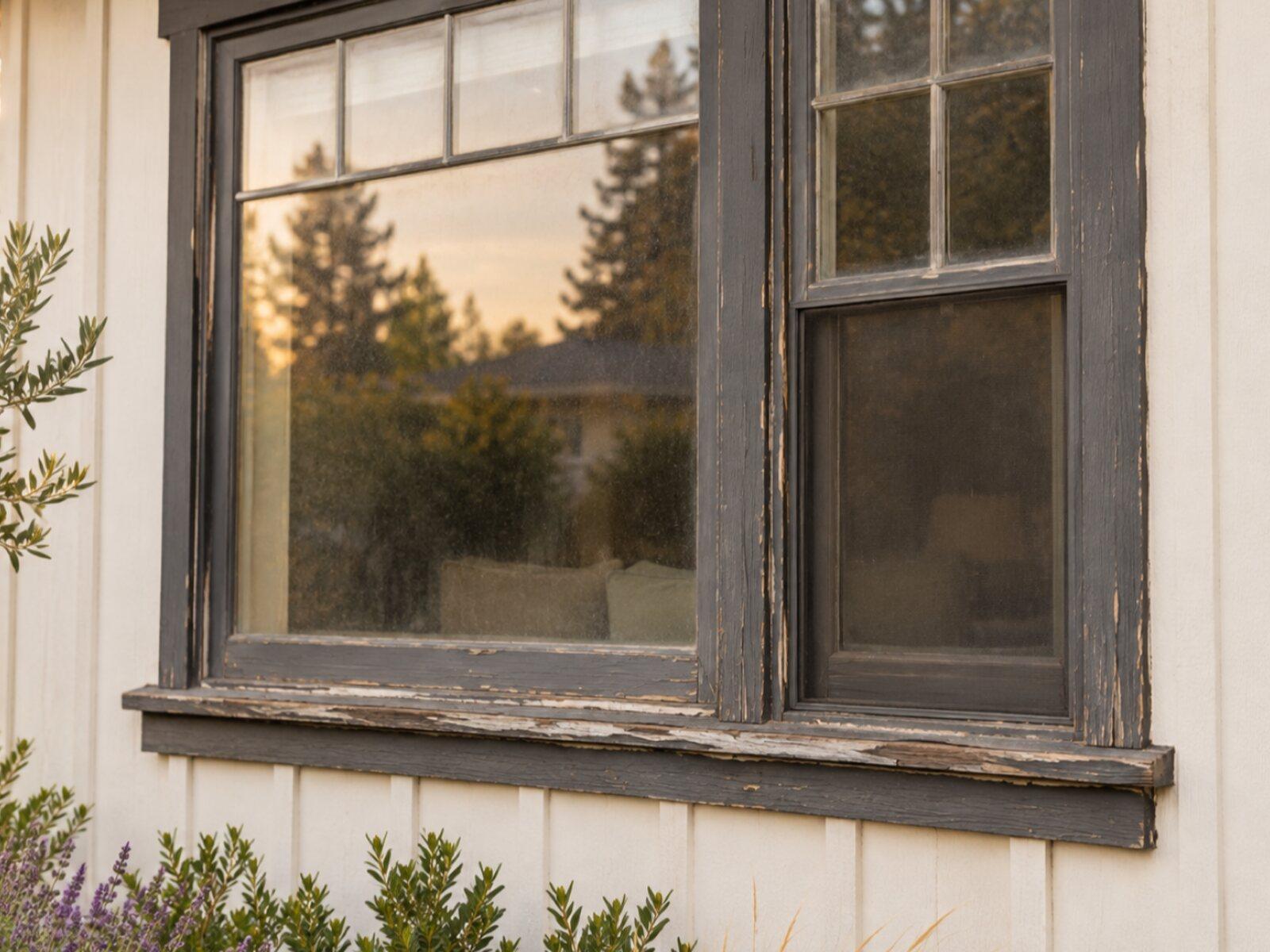
Keep a copy for your site visit or when comparing estimates.
Included in a written scope
- Probing and mapping of visible damage around the affected area
- Removal of decayed wood back to sound material
- Correction of the water path: flashing, drip caps, caulk joints, or grading, as identified
- New material installed, primed, and sealed at cuts and joints
- Finish paint on repaired areas where included, matched to existing color
- Protection and cleanup
Clarify before work starts
- How damage that extends past the visible area is priced once opened
- Whether paint on the repaired area is a match-in or a full section repaint
- Which flashing or siding changes are part of the repair
- Whether a pest inspection or report is involved
How a dry rot & trim project works
The stages to discuss when planning your project.
Talk through the project
Tell us what you want to repair or update. A few details about the home and what you have noticed are enough to start.
Review the home and options
A site review identifies the work involved, checks the usual trouble spots, and covers the choices that fit your home.
Agree on the scope and schedule
Review what is included, what is not, and how changes are handled before any work is scheduled.
Walk through the result
Review the completed work together, along with the applicable care and warranty information for what was installed.
Dry Rot & Trim questions from Elk Grove homeowners
My Elk Grove house is stucco. Where would dry rot even be?
In the wood the builder put around the stucco: fascia and barge rafters behind the gutters, the trim and hardboard or fiber cement siding on the front gable, the garage door jambs and header trim, porch posts and columns on the Laguna West-style houses, wood belly-band trim, and the sill plate at the bottom of any wall where a patio was poured over the weep screed. On a 1990s or 2000s tract house those pieces have been wet every winter for 20 to 30 years while the stucco around them shed the water. A site review probes each of them with a screwdriver.
Does dry rot repair need a permit from the City of Elk Grove?
It depends on how deep the rot goes. A fascia splice, a belly-band section or the bottom of a garage jamb is finish carpentry, and trim repair is not a permit category in the City's 2026 fee schedule. Once the repair reaches structure it is: rafter tails, a porch beam or post, a deck ledger, wall sheathing or the sill plate under a stucco wall are inspected by City of Elk Grove Building Safety & Inspection before they are closed up, and opening stucco or siding to reach them has its own permit line. Confirm the classification with the City; the estimate names who applies and what gets inspected.
The bottom of my garage door trim is soft. Is that a big repair?
Usually a small one caught early. The garage jambs on Elk Grove tract houses sit in the driveway splash zone, and the bottom six to twelve inches rot from the end grain up. The repair cuts the jamb back to sound wood, splices in a new section in primed wood, fiber cement, or PVC where it touches concrete, seals the cuts, and repaints. The cause is often a downspout beside the garage or a sprinkler; moving it is part of the scope. Left another few winters, the rot reaches the header trim and the framing behind it, and that is a different number.
What is a buried weep screed and why does it matter?
The weep screed is the metal strip at the bottom of a stucco wall that lets water out from behind the plaster; code sets it above grade and above any slab. On many Elk Grove lots a rear patio, side walkway, or planter was built after the house and now covers it, so water that should drain out sits against the sill plate and the bottom of the framing. Stucco that sounds hollow at the bottom of a wall, or a soft baseboard inside, is the sign. The repair involves cutting the slab back, opening the wall, and replacing rotted framing, which is permitted structural work and the most expensive rot repair a tract house gets.
Will you find more rot once you start?
Often, because rot travels along the grain and behind the finish; a soft fascia end usually means the back of the board is gone for several feet, and a soft post base can mean a soft beam above it. The estimate prices the visible repair and states a unit rate for what is found once the piece comes off, per foot of fascia, per piece of trim, or per sheet of sheathing. Additional damage is photographed, measured, and approved by you before more wood is removed, so the scope grows in writing rather than on the invoice.
Is this dry rot or termites? My Sheldon house has both problems.
They can look alike and often occur together, because both need moisture. Rot leaves wood soft and crumbly along the grain; subterranean termites leave mud tubes and galleries, and carpenter ants leave clean tunnels and sawdust. Sheldon's acreage houses, with wood at grade, decks, and barns, see both. If there is any sign of insects, a wood-destroying organism inspection by a Structural Pest Control Board licensee comes first, since treatment is a separate trade with its own California license, and the carpentry repair follows the treatment rather than the other way around.
Tell us about your Elk Grove dry rot & trim project.
Share what you have noticed and what you would like to change. We'll review the details and contact you about the next step.
No budget, address, or photos needed to inquire.
Other exterior services in Elk Grove
- Elk Grove siding replacementExplore repair and replacement options for your home's exterior walls.
- Elk Grove window & door replacementFind an updated look and a fit that works for your home.
- Elk Grove roof replacementPlan the next step for a worn or damaged roof.
- Elk Grove exterior paintingRefresh the finish, starting with the preparation underneath.
- Elk Grove gutter installationPlan how rainwater moves from the roof and away from the home.