
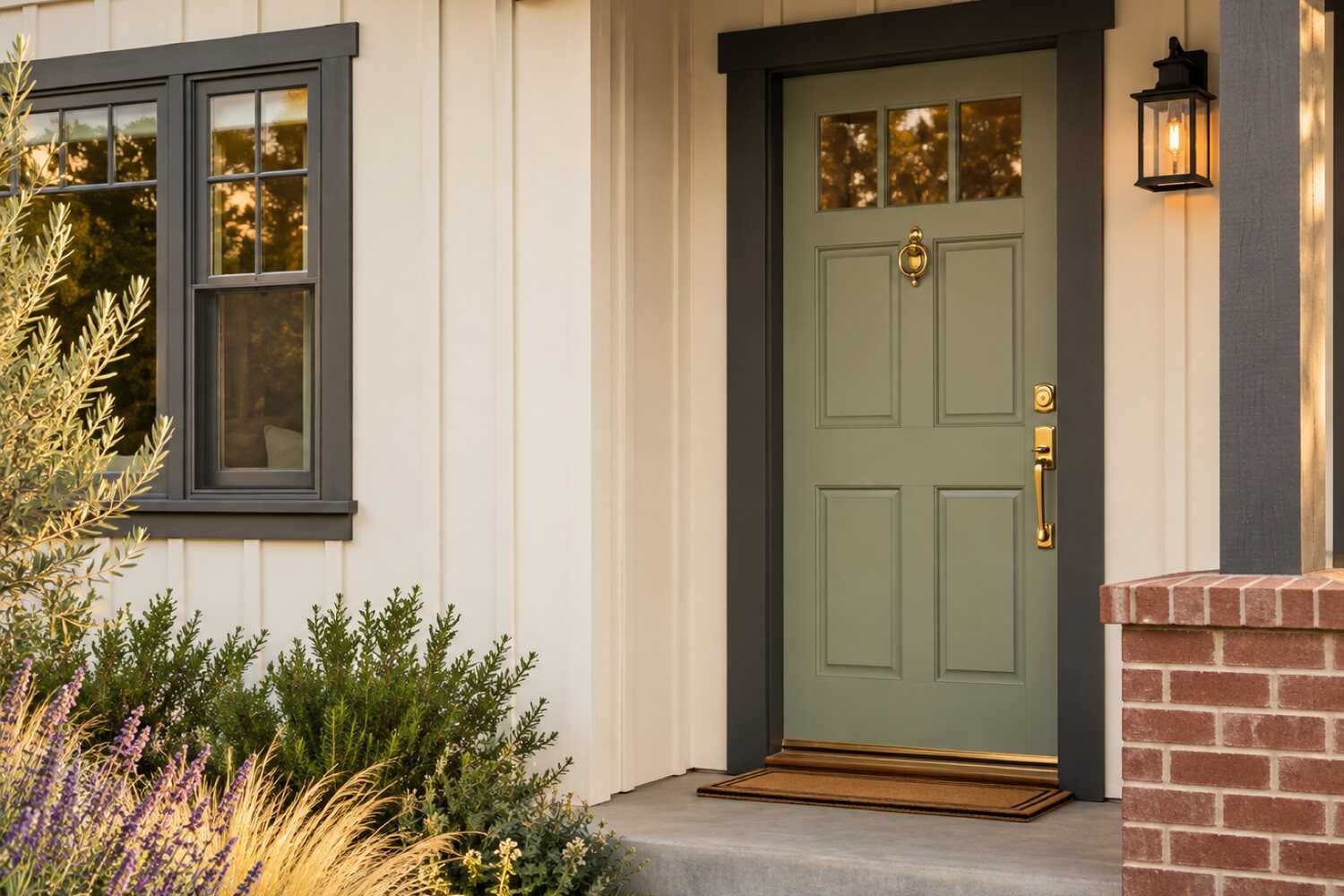
Exterior painting in Granite Bay, CA.
For Granite Bay painting, check coating history on wood, adhesion on stucco, trim condition, and shaded-wall drying before specifying preparation and finish.
What exterior painting costs in Granite Bay
Published 2026 figures put exterior painting in Granite Bay at $4,357–$7,832 for an average-size home (homeyou). HomeBlue's Sacramento examples run $4,400–$10,500 for 3,000 square feet up to $7,300–$17,400 for 5,000, and Handoff prices trim replacement at $7.03–$16.40 per foot. Wall area on the customs, stain-to-paint prep on cedar, rotted trim and HOA color rounds move the number.
| Scope | Published range | What it usually includes |
|---|---|---|
| Published exterior-painting example | $4,357–$7,832 | homeyou’s Granite Bay exterior-painting range. Its calculator displays a 1,709-square-foot quantity; that should not be treated as the home’s floor area or a complete inventory of painted surfaces. |
| HomeBlue 3,000-square-foot house example | $4,400–$10,500 | HomeBlue’s Sacramento exterior-painting house-size example, published in 2022. The separate 4,000-square-foot row is $5,800–$13,900 and 5,000-square-foot row $7,300–$17,400. These are house-size planning proxies, not measured-wall bids. |
| Trim replacement before paint, per linear foot | $7.03–$16.40 per ft | Handoff's Sacramento-region installed range for exterior trim, the usual line item on 1990s stucco homes where fascia and belly bands are rotted. |
Ranges are published third-party figures, not 916 Exteriors prices; the written estimate is the only number that applies to your home.
How to compare these ranges
The average-size figure is Granite Bay-specific from homeyou; the larger-home and trim figures are Sacramento-region numbers from HomeBlue and Handoff, because no Granite Bay source publishes size-based or trim ranges. Most Granite Bay homes are in the larger-home rows or beyond them, and the published per-square-foot figures assume a clean repaint, not a scrape-to-bare-wood prep.
What moves the number here: wall area and story count on the customs, the depth of prep on stained-then-painted cedar, the linear feet of rotted trim replaced before paint, RRP containment on pre-1978 homes, the count of colors and surfaces (body, trim, fascia, doors, shutters, garage doors, fences, cabanas, and detached shops), HOA sample rounds, and access on shaded acreage lots. None of the published figures is a 916 Exteriors price.
Sources
Read next: How much does exterior painting cost in Granite Bay?
What changes the price in Granite Bay
- Square footage and stories
- A 4,000-to-6,000-square-foot Granite Bay two-story with outbuildings has two to three times the surface of the home the published ranges assume.
- Stain-to-paint prep on cedar
- Scraping to sound coating, sanding, and bonding primer on shaded walls is the largest labor item on the 1970s and 1980s customs.
- Trim rot repair before paint
- Fascia, belly bands, pot shelves, and garage surrounds on the 1990s stucco homes are priced per foot and replaced before coating.
- Lead-safe practices
- Confirm the build year and applicable EPA RRP procedures.
- Surface count
- Detached garages, shops, pool cabanas, fences, gates, and shutters each add masking and cutting-in time on acreage properties.
- HOA color approval
- New schemes in Los Lagos, Treelake Village, and Wexford take a submittal with brushed-out samples; a same-color repaint does not.
- Shade and drying time
- North walls under oaks dry slowly after washing and need a mildewcide step; the schedule stretches on canopied lots.
- Stucco crack and foam-trim repair
- Opening and filling cracks, chalk-binding primer on the west elevation, and rebuilding foam corners are separate prep lines.
Compare your finish options
Choose two options to compare the upkeep, fit and installation details.
| Compare | Acrylic exterior paint (flat or low sheen) | Acrylic exterior paint (satin or semi-gloss) |
|---|---|---|
| Appearance | Soft finish that hides surface texture | More light reflection; shows detail |
| Maintenance | Repaint on a normal cycle; touch-ups blend well | Easier to wash; shows surface flaws |
| Where it fits | Stucco and body siding | Trim, doors, and fascia |
| Installation | Brush, roll, or spray with back-rolling | Careful prep since sheen reveals texture |
View all 4 options and planning notes
Most Sacramento-area repaints use 100 percent acrylic exterior paint: a flat or low-sheen finish on the body, which hides stucco and siding texture, and a satin or semi-gloss on trim, doors, and fascia, which washes clean and shows the detail. Elastomeric coatings suit stucco with hairline cracking but not wood. Solid stain is the choice for rough-sawn wood siding and fences where a film would peel.
| Option | Appearance | Maintenance | Where it fits | Installation notes |
|---|---|---|---|---|
| Acrylic exterior paint (flat or low sheen) | Soft finish that hides surface texture | Repaint on a normal cycle; touch-ups blend well | Stucco and body siding | Brush, roll, or spray with back-rolling |
| Acrylic exterior paint (satin or semi-gloss) | More light reflection; shows detail | Easier to wash; shows surface flaws | Trim, doors, and fascia | Careful prep since sheen reveals texture |
| Elastomeric coating | Thick, uniform finish | Bridges hairline cracks; recoat compatibility matters | Stucco with minor cracking | Heavier application; not for wood siding |
| Solid stain | Opaque color that keeps some wood texture | Weathers by fading rather than peeling | Rough-sawn wood siding and fences | Penetrates rather than films over the surface |
Specific durability claims come from each product's own data sheet. Manufacturer names appear once 916 Exteriors confirms the products it uses.
Planning painting work in Granite Bay
Open the topics that apply to your property.
Exterior painting in Granite Bay is a bigger and older job than in the cities around it. Roseville and Rocklin repaint 46% post-2000 stucco tracts. The body is one color, the trim is foam, and the prep is a wash and a crack fill. Folsom is climate zone 12 with city permits, and its 1990s and 2000s stucco rarely carries stained cedar. Loomis shares the acreage and the stained-wood stock, and half its homes predate 1980, but it is a town with its own building department. Granite Bay combines the cedar prep of the acreage with the stucco chalking of the planned communities. It adds the largest wall areas in the region, HOA color review in three communities, oak-shaded north walls that dry slowly, and pre-1978 lead-safe rules on most of the older stock.
Compare nearby: Roseville exterior painting · Rocklin exterior painting · Folsom exterior painting
Exterior painting for Granite Bay homes
Painting in Granite Bay is mostly prep, and the prep depends on the wall. Start with the acreage along Cavitt Stallman Road, Olive Ranch Road and Auburn-Folsom Road, where 1960s and 1970s houses make up 35% of the stock (ACS 2020–2024). They were stained cedar and redwood, then painted over somewhere along the way. Now the paint is letting go of the stain in sheets on the sun walls. The stucco homes of Treelake Village, Wexford, Los Lagos and Douglas Ranch (1980s and 1990s, 41%) chalk on the west elevation. They crack at the foam trim miters and rot at the belly bands and fascia. The 2000s customs (20%) mostly need a maintenance coat and trim repair.
Crews find the same three conditions across the community. Stain-to-paint cedar needs scraping to sound coating, sanding and a bonding primer. The north walls under the oaks add a mildewcide wash and a longer dry. Stucco needs crack repair and a chalk-binding primer on the west side. Any elastomeric coating from a previous job needs a compatibility test. Rotted trim (fascia, belly bands, pot shelves, garage surrounds) is replaced before paint at a per-foot rate. Paint over rot fails in a season.
The Granite Bay painting cost guide sets the published ranges against a 5,000-square-foot two-story with a pool house. That is the house the averages do not describe. The painting scope should list every surface: body, trim, eaves, doors, shutters, garage doors, fences, gates and detached buildings. It should also give the prep by surface, the primer and finish system, and the trim-replacement rate. Homes built before 1978 fall under the EPA lead-safe rule for scraping and sanding, and that covers the 1960s and most 1970s houses.
Color is a review item in three communities. The Los Lagos, Treelake Village and Wexford HOAs approve new schemes from brushed-out samples on the house. A same-color repaint is noted, not reviewed. Nothing in a repaint changes the wall's fire rating. But prep can uncover a failed wall covering or vent on a parcel in the South Placer Fire District's mapped zones, and that repair is a separate scope with Placer County Building Services. The estimate comparison guide helps line two bids up on the same surface list.
Housing age and what to inspect
Housing age helps plan an inspection. The share of homes in each decade is census data; the notes describe materials and conditions to check at the property.
| Built | Share of homes |
|---|---|
| 1950–1959 | 4% |
| 1960–1969 | 11% |
| 1970–1979 | 24% |
| 1980–1989 | 17% |
| 1990–1999 | 24% |
| 2000–2009 | 13% |
| 2010 and later | 7% |
Granite Bay: 8,003 housing units, median year built 1987, median owner-occupied value $1,135,900, 90% owner-occupied. Source: U.S. Census Bureau, American Community Survey 2020–2024 5-Year Estimates, tables B25034 (year structure built), B25035 (median year built), B25077 (median value, owner-occupied), B01003, B25003 (ACS 2024 5-year).
- 1970–1979 homes1970–1979
- The 1970s houses (24%) were stained cedar and redwood, and most were painted over decades later. That stain-to-paint history is the whole prep problem. The paint bonds to the stain, not the wood, and it lifts in sheets on the south and west walls. Scrape to a sound edge, sand, and spot-prime with a bonding primer. Expect bare wood on the sun side. Confirm the build date, because pre-1978 scraping and sanding fall under the EPA lead-safe rule. Check the bottom courses and window trim for rot before the painter starts; that is carpentry, priced per foot.
- 1980–1989 homes1980–1989
- The 1980s (17%) mixed stucco bodies with wood trim, board-and-batten gables and wrapped posts. A repaint is two prep jobs on one house. The stucco needs crack repair and a chalk-binding primer where the west wall has faded. The wood needs scraping, priming and rot replacement at the belly band, the post bases and the gable lap. Separate the two in the scope with their own primers. Check whether the trim was ever back-primed, because unprimed 1980s trim rots from the back.
- 1990–1999 homes1990–1999
- The 1990s (24%) are the stucco-and-foam years of Treelake Village, Wexford, Los Lagos and Douglas Ranch. The standard list is chalking on the west elevation, hairline cracks at window corners, cracked foam-trim miters, and rotted fascia, belly bands and pot shelves. Many of these homes have been painted once already, so an elastomeric or acrylic coating may be on the wall. Test compatibility before priming. Rebuild foam corners and replace rotted trim before the finish coat. Get HOA color approval on a new scheme.
- 2000–present homes2000–present
- Homes from 2000 on (20%) carry the builder's or a later acrylic on stucco and stone, with fiber-cement or wood trim that is usually sound. The job is a wash, spot repairs, a maintenance coat and any color change. The entry door and garage doors have taken the most sun. Keep builder coating, later touch-ups and replacement trim identifiable in the scope. Use a test patch when a color change goes darker on a west wall.
Painting by neighborhood in Granite Bay
- Los Lagos
- Los Lagos, between Auburn-Folsom Road and the lake in the northeast, has the largest stucco-and-stone customs in Granite Bay. Its HOA reviews any new color scheme. Sun-facing walls toward the water chalk first. Keep stone unpainted and mask it, and test samples on the west wall before the submittal. Count the surfaces: pool houses, outdoor kitchens and gates add up on these lots.
- Treelake Village
- In Treelake Village, the two-story stucco homes of the southwest carry wood belly bands, pot shelves and gable lap that rot before the stucco needs paint. Inspect and replace that trim at a per-foot rate first, then paint. The HOA reviews a new scheme and notes a same-color repaint. Second-story access on the rear elevations, where the lots slope toward Linda Creek, is a staging line.
- Cavitt Stallman Road and the Auburn-Folsom Road acreage
- Stain-to-paint cedar under oak canopy is the rule on the northern acreage along Cavitt Stallman Road, Olive Ranch Road and Auburn-Folsom Road. Most parcels carry detached shops, barns and pool houses. Budget scraping to sound coating and bonding primer, a mildewcide wash on the shaded north walls, and lead-safe containment on the pre-1978 houses. Measure every structure on the parcel.
- Granite Bay Hills
- Granite Bay Hills, on the south-facing slopes above Linda Creek, has stucco homes whose rear west elevations take full afternoon sun and chalk hardest. A chalk-binding primer and a lighter body color on that side are worth specifying. List every included surface. A partial repaint of the sun side should not leave a visible line against the shaded elevations.
- Wexford
- Wexford's homes on Wexford Circle, just east of Treelake Village, are stucco with arched front glass and foam trim bands, under HOA review for color. Foam miters crack and the trim bands hold water at the top edge; rebuild them before paint. A same-color maintenance coat skips the submittal. A test patch on the weathered west wall settles the blend before a whole elevation is coated.
Sun, rain, trees and site conditions
Granite Bay is climate zone 11, and the paint schedule follows the sun. Summer highs in the 90s and 100-degree stretches put a south or west stucco wall above the coating's surface-temperature limit by late morning. Those walls are painted early or from the shaded side of the day. The same sun is why west walls chalk and cedar checks. Winter rain, most of the year's total in a few storms between November and March, closes the window for weeks. Spring and fall are the working seasons. Check surface moisture on the shade walls with a meter, not by the calendar.
The oak canopy sets the dry time. Blue oak and interior live oak keep north walls damp for days after a storm and hold irrigation overspray through summer. Mildew and slow-drying primer are the north-side problems. Wash with a mildewcide, let it dry, and schedule the shaded walls last. Sprinklers that hit the siding and planters against the bottom course are the usual sources. Correct them before paint or the repaint fails at the same spots. On the sloped lots toward Linda Creek and the lake, plan ladders and staging for the downhill elevations.
A repaint does not change a wall's fire rating. But on parcels in the South Placer Fire District's mapped Fire Hazard Severity Zones, prep can uncover a failed wall covering, a rotted eave or an unscreened vent. Those fall under the 2025 wildfire code (Title 24, Part 7), and that repair is a separate scope with Placer County Building Services. OSFM's building guidance explains the code. Keep paint prep, structural repair and optional hardening on separate lines so a coating is not presented as a compliant assembly.
Permits and approvals
Placer County Building Services is the building authority for unincorporated Granite Bay. Ordinary repainting is generally permit-exempt, but confirm any accompanying siding, stucco, trim, or structural repair with the county rather than extending the painting exemption to a repair because it was discovered during preparation. Separate those tasks in the estimate, name the permit applicant where one is required, and arrange any necessary inspection before repairs are coated or concealed. On a parcel in a mapped Fire Hazard Severity Zone, a replaced eave, vent, or wall section uncovered during prep can fall under the 2025 Wildland-Urban Interface Code (formerly CBC Chapter 7A); confirm the parcel's designation with the county.
HOA architectural review is the approval that matters for painting in Granite Bay. Los Lagos, Treelake Village, and Wexford review exterior color schemes; a same-color repaint is typically noted rather than reviewed, and a change is submitted with samples. Homes built before 1978 fall under the EPA RRP Rule for scraping and sanding. Most of Granite Bay is served by PG&E, which does not affect painting except where the service mast and meter panel are masked and worked around.
Permit authority: Placer County Building Services Division . Whether a permit or review applies, and who pulls it, is written into the estimate.
Seeing something on your own house? Request an estimate for painting in Granite Bay
Repaint, spot-repair, or repair first?
Peeling paint is sometimes just old paint and sometimes a sign of moisture or failed wood. Preparation depends on which it is.
Not sure which applies? Tell us what you are seeing and request an estimate for painting.
What the scope includes
A complete estimate names the work, materials and exclusions so you can compare proposals.
Keep a copy for your site visit or when comparing estimates.
Included in a written scope
- Pressure washing and scraping of loose or failed coating
- Repair of small wood or stucco defects and replacement of failed caulk
- Priming of bare wood, repairs, and stains
- Masking and protection of windows, fixtures, landscaping, and hardscape
- Finish coats on body and trim as written, with color and sheen confirmed before painting
- Daily cleanup and removal of masking at completion
Clarify before work starts
- Which surfaces are included: body, trim, doors, gutters, fences, and garage door
- How many finish coats and whether primer is a full coat or spot priming
- How rotted wood found during prep is handled and priced
- Whether color testing on the house is part of the scope
How a painting project works
The stages to discuss when planning your project.
Talk through the project
Tell us what you want to repair or update. A few details about the home and what you have noticed are enough to start.
Review the home and options
A site review identifies the work involved, checks the usual trouble spots, and covers the choices that fit your home.
Agree on the scope and schedule
Review what is included, what is not, and how changes are handled before any work is scheduled.
Walk through the result
Review the completed work together, along with the applicable care and warranty information for what was installed.
Painting questions from Granite Bay homeowners
Should the cedar siding on my Granite Bay home be painted or stained?
Assess the actual coating history and test compatibility before deciding between paint and stain. A previously painted surface may require removal before a stain can be considered, while some existing stain systems can accept an appropriate maintenance coating. The suitable product and preparation depend on the substrate and manufacturer’s instructions, not on a universal rule that every cedar wall should receive one finish.
My Granite Bay home was built in 1974. What does that change about the paint job?
A 1974 build date puts the house under the EPA Renovation, Repair and Painting Rule, so any scraping or sanding that disturbs painted surfaces must be done by a certified firm using lead-safe practices unless a test shows the coating is lead-free. Expect containment, wet scraping, and cleanup verification in the scope, and a line for the test if one is done. The date says nothing about what is on the walls: 1974 Granite Bay customs carry cedar, T1-11, or plywood, and many were stained first and painted later. Inspect each elevation and state its preparation separately.
Does the HOA in Treelake Village or Los Lagos need to approve my paint color?
Yes, for a new scheme. Both communities, and Wexford, run architectural review that covers exterior color; a same-color repaint is usually noted to the board rather than reviewed. A new body or trim color is submitted with the approved palette reference or brushed-out samples on the house. Getting the current guidelines from the board before the estimate is written avoids a second round, and the sample step can be included in the scope.
What happens if the painter finds rot on my fascia or belly band?
On the 1990s stucco two-stories in Treelake Village and Granite Bay Hills it should be expected, and the painting scope should carry a per-foot price for fascia and trim replacement before it starts. Paint over rotted wood fails within a season. When prep finds more than the visible piece, work stops at that area, the damage is photographed and measured, and the repair is approved by you at the written rate before painting continues. See the Granite Bay dry rot and trim page for how those repairs are written.
Can a Granite Bay exterior be painted in summer?
Yes, with the schedule built around the surface rather than the calendar. Sacramento Valley summers bring 100°F-plus days, and a west wall in Granite Bay Hills can pass the coating's maximum surface temperature by early afternoon, so the crew follows the shade around the house and checks surface temperature and moisture against the product's instructions. Shaded north walls under the oaks can still be wet from washing when the sun side is ready. Record any weather-related change to the sequence in the daily log so the schedule in the estimate stays honest.
Is exterior painting on a Folsom Lake fire-zone parcel any different?
The paint job itself is the same; what changes is what the prep may uncover. On a parcel in the South Placer Fire District's mapped hazard zones, scraping can expose rotted fascia, an open eave, a failed wall covering or an unscreened vent. Replacing those can fall under the 2025 wildfire code through Placer County Building Services. The painter should stop at that area, photograph it, and price the repair as its own scope with the required assembly named. Coatings marketed as fire-retardant do not turn cedar into a rated wall. Keep the paint, the repair and any optional hardening on separate lines in the estimate.
Tell us about your Granite Bay painting project.
Share what you have noticed and what you would like to change. We'll review the details and contact you about the next step.
No budget, address, or photos needed to inquire.
Other exterior services in Granite Bay
- Siding replacement in Granite BayExplore repair and replacement options for your home's exterior walls.
- Window & door replacement in Granite BayFind an updated look and a fit that works for your home.
- Roof replacement in Granite BayPlan the next step for a worn or damaged roof.
- Gutter installation in Granite BayPlan how rainwater moves from the roof and away from the home.
- Dry rot & trim repair in Granite BayAddress damaged wood and understand the work around it.