
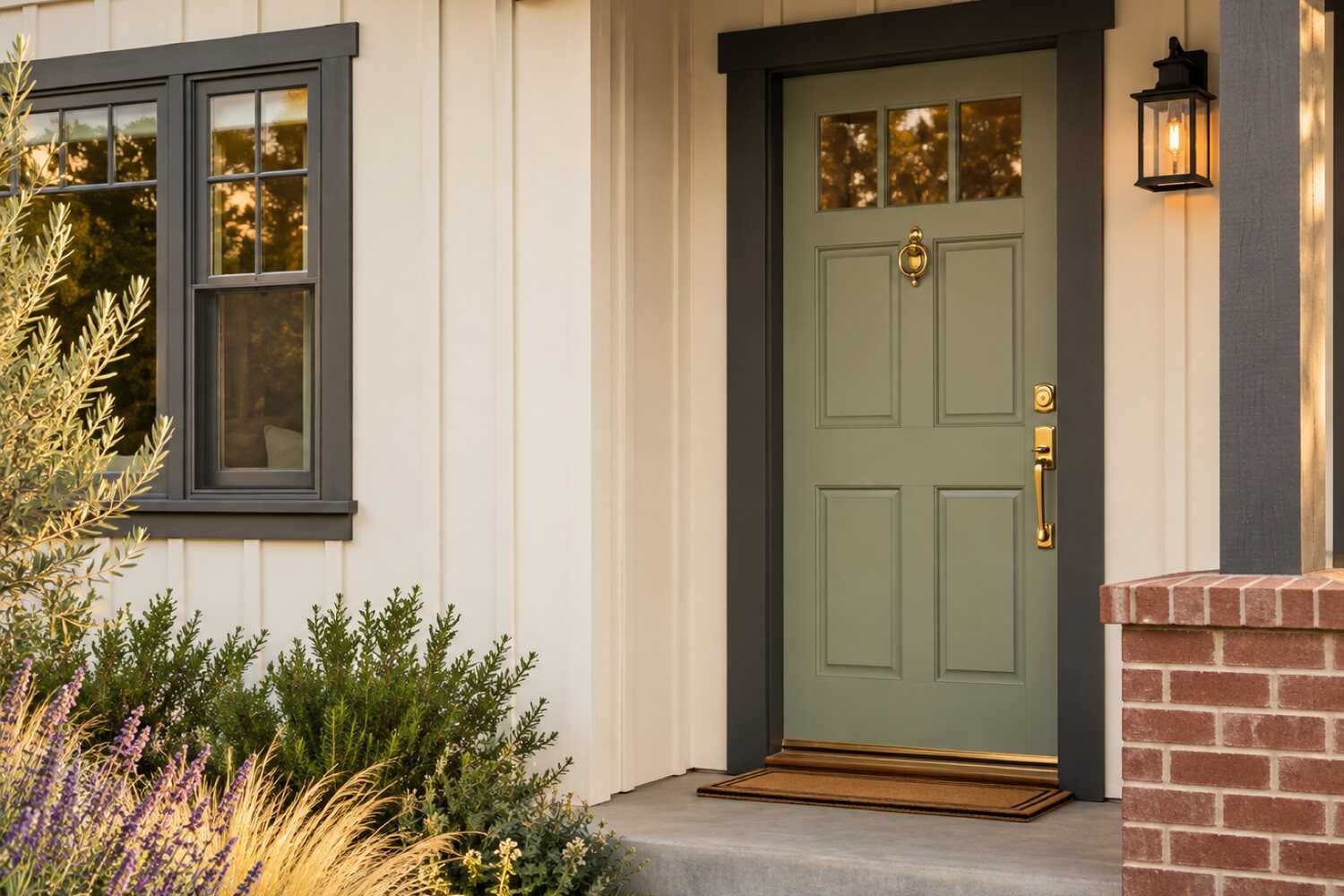
Exterior painting in Rocklin, CA.
A Rocklin repaint should describe the actual surfaces and preparation on each elevation. Compare coating condition, trim joints and access on the specific house, and confirm any association palette before selecting colors. Neither stucco appearance nor the construction era establishes a fixed repaint cycle.
What exterior painting costs in Rocklin
Published figures for exterior painting in Rocklin run $4,154–$7,427 for homeyou's 1,709-square-foot calculation, $3.80–$4.50 per square foot for a light-prep stucco job and $9,500–$15,500 for a 2,500-square-foot home in Facade Colorizer's Sacramento guide. Foam-trim recaulking, crack repair count, two-story west walls and HOA color submittals move the number.
| Scope | Published range | What it usually includes |
|---|---|---|
| Facade Colorizer light-prep stucco example, Sacramento | $3.80–$4.50 per sq ft | A regional scenario from Facade Colorizer. Confirm whether its measurement basis matches the estimate; it is not automatically a measured-wall rate. Standard and heavy wood preparation have separate rates on the page. |
| homeyou Rocklin exterior-painting calculation | $4,154–$7,427 for its 1,709 sq ft quantity | The calculator’s published quantity and range for Rocklin. The page does not say whether that is a single-story plan or how many finish coats are included, so confirm what the area measures and define preparation and repairs. |
| Facade Colorizer 2,500 sq ft home example, Sacramento | $9,500–$15,500 | The guide separately gives $11,400–$18,600-plus for 3,000-plus square feet. Its $700–$2,200 access allowance should be checked for overlap with the chosen scenario rather than added automatically. |
Ranges are published third-party figures, not 916 Exteriors prices; the written estimate is the only number that applies to your home.
How to compare these ranges
Prep, substrate and access are inspection questions, not facts established by a Rocklin neighborhood name. Compare the foam-trim and crack repairs on a Stanford Ranch home with the measured surfaces on a newer Whitney Ranch house.
Wood-sided walls need a separate assessment of loose coatings, moisture damage and applicable lead-safe practices. Association colors may change masking and finish selections, but they do not establish a fixed labor premium.
Ask each bidder to name the area measurement, primer, coats, surfaces, staging and repair allowances. The painting cost guide provides the regional source context.
Read next: How much does exterior painting cost in Rocklin?
What changes the price in Rocklin
- Two-story west elevations
- The tallest, most sun-damaged wall on most 2000s Rocklin plans needs staging and the heaviest prep.
- Foam trim recaulk and rebuild
- Every foam joint on a 1990s or 2000s stucco house gets recaulked; crumbled corners are rebuilt before coating, priced per location.
- Crack repair count
- A second repaint in Stanford Ranch can carry dozens of hairline cracks and a few hollow patches, each opened and filled before paint.
- HOA multi-color schemes
- Whitney Oaks and Whitney Ranch palettes often run three colors; each adds masking and cutting-in time.
- Mildew wash on shaded north walls
- East-side homes under oak canopy need algae treated before paint, or it comes through the new coat.
- Lead-safe work on pre-1978 homes
- Containment and certified crews on the pre-1978 houses among the roughly 15% of Rocklin homes built before 1980, mostly the wood-sided streets.
- Tile roof and stone veneer masking
- Stucco tracts with tile eaves and stone accents take more masking than a plain wood house of the same size.
Compare your finish options
Choose two options to compare the upkeep, fit and installation details.
| Compare | Acrylic exterior paint (flat or low sheen) | Acrylic exterior paint (satin or semi-gloss) |
|---|---|---|
| Appearance | Soft finish that hides surface texture | More light reflection; shows detail |
| Maintenance | Repaint on a normal cycle; touch-ups blend well | Easier to wash; shows surface flaws |
| Where it fits | Stucco and body siding | Trim, doors, and fascia |
| Installation | Brush, roll, or spray with back-rolling | Careful prep since sheen reveals texture |
View all 4 options and planning notes
Most Sacramento-area repaints use 100 percent acrylic exterior paint: a flat or low-sheen finish on the body, which hides stucco and siding texture, and a satin or semi-gloss on trim, doors, and fascia, which washes clean and shows the detail. Elastomeric coatings suit stucco with hairline cracking but not wood. Solid stain is the choice for rough-sawn wood siding and fences where a film would peel.
| Option | Appearance | Maintenance | Where it fits | Installation notes |
|---|---|---|---|---|
| Acrylic exterior paint (flat or low sheen) | Soft finish that hides surface texture | Repaint on a normal cycle; touch-ups blend well | Stucco and body siding | Brush, roll, or spray with back-rolling |
| Acrylic exterior paint (satin or semi-gloss) | More light reflection; shows detail | Easier to wash; shows surface flaws | Trim, doors, and fascia | Careful prep since sheen reveals texture |
| Elastomeric coating | Thick, uniform finish | Bridges hairline cracks; recoat compatibility matters | Stucco with minor cracking | Heavier application; not for wood siding |
| Solid stain | Opaque color that keeps some wood texture | Weathers by fading rather than peeling | Rough-sawn wood siding and fences | Penetrates rather than films over the surface |
Specific durability claims come from each product's own data sheet. Manufacturer names appear once 916 Exteriors confirms the products it uses.
Planning painting work in Rocklin
Open the topics that apply to your property.
Exterior painting in Rocklin differs from the towns around it in substrate and sign-off. Roseville is the same stucco-tract city with the same foam-trim prep, but color review lives with different associations, its Heritage District downtown has formal design review where Rocklin's Old Town has only the Quarry District guidelines, and the permit desk for any rot repair found during prep is Roseville's. Loomis and Granite Bay put far more wood on the walls: acreage houses under oak canopy with lap and board-and-batten that need scraping, algae treatment and often lead-safe work, on lots where a lift can reach the eaves. Rocklin's typical repaint is a two-story stucco house with a shaded north wall under a few oaks, a west wall that has chalked, and an HOA palette to match.
Compare nearby: Exterior painting in Roseville · Exterior painting in Granite Bay
Exterior painting for Rocklin homes
Repainting in Rocklin is mostly a stucco job on a house that is 20 to 35 years old. About 54% of the city's homes were built in the 1990s and 2000s (ACS 2020–2024), which puts most repaint requests on Stanford Ranch, Whitney Oaks and Whitney Ranch houses that are on their first or second coat over builder stucco, foam trim and a lap accent at the gables. The prep on those houses is not sanding; it is cracks, caulk and foam: hairline stucco cracks at every window corner, split caulk at every foam-trim joint, crumbled foam corners at the belly band, and chalk on the west wall that has to be washed off before anything sticks.
The wood houses are the other Rocklin repaint, and they are older and fewer. The 1970s and 1980s T1-11 and hardboard streets around Springview Drive need scraping, edge sealing and spot priming on swollen bottom edges. Sunset Whitney's 1960s ranch homes and the quarry-era houses on Front Street and Pacific Street carry many layers of lead-era paint on old-growth lap, so the prep is lead-safe containment first and a decision about how much to strip second.
Two things decide the schedule here more than anywhere on the valley floor: heat and the HOA. West and south stucco in July reads well above the coating's surface limit by early afternoon, so crews chase shade around the house and start on the east side. Whitney Oaks and Whitney Ranch keep palettes and want a submittal for any color change, and a brushed sample on the sunny and shaded sides gets that approval faster. Painting itself needs no City permit; rot found during prep at a rafter tail or sheathing does.
The painting service scope lists what a complete bid itemizes and the regional cost guide gives the outside benchmarks. A Rocklin bid should name the crack and foam repair count, the coating system by substrate, the number of coats, the surfaces included and excluded, and the staging for the two-story walls.
Housing age and what to inspect
Housing age helps plan an inspection. The share of homes in each decade is census data; the notes describe materials and conditions to check at the property.
| Built | Share of homes |
|---|---|
| Before 1940 | 1% |
| 1950–1959 | 1% |
| 1960–1969 | 3% |
| 1970–1979 | 10% |
| 1980–1989 | 13% |
| 1990–1999 | 26% |
| 2000–2009 | 28% |
| 2010 and later | 18% |
Rocklin: 26,993 housing units, median year built 1998, median owner-occupied value $703,400, 68% owner-occupied. Source: U.S. Census Bureau, American Community Survey 2020–2024 5-Year Estimates, tables B25034 (year structure built), B25035 (median year built), B25077 (median value, owner-occupied), B01003, B25003 (ACS 2024 5-year).
- Before 1970pre-1970
- About 5% of Rocklin homes predate 1970 (ACS 2020–2024): Front Street, Pacific Street and the Rocklin Road grid, plus the late-1950s Sunset Whitney ranch tract. These are wood houses with many coats of paint, some of it lead-based, on lap and board-and-batten that has stayed sound for sixty years where the drip caps held. Prep is containment, scraping to a firm edge, back-priming any board that gets replaced, and an oil or bonding primer on bare wood before a 100% acrylic topcoat. The estimate names the lead-safe steps and prices rotten bottom courses and sills as carpentry, not as paint.
- 1970s and 1980s1970–1989
- About 23% of homes are 1970–1989, the T1-11 and hardboard belt around Springview Drive, Midas Avenue and the first Stanford Ranch phases. Paint fails there at the bottom 12 inches of every panel and at every hardboard butt joint, where the substrate has swollen and the old coating has lifted. The right prep is scrape, seal the raw edges, prime the bare spots with a stain-blocking primer, and caulk the vertical grooves where they meet trim; a swollen panel does not flatten under paint and is priced as a siding repair. Two coats of a flat or low-sheen acrylic hide that texture better than satin.
- 1990s1990–1999
- About 26% of the city is 1990s Stanford Ranch stucco with foam trim and a lap accent, now on its second or third repaint. Crews find hairline cracks at window corners on the west and south walls, hollow patches where earlier repairs did not bond, split caulk at every foam joint and hardboard accents chalked to bare fiber. Prep is a crack count with elastomeric patch on the hairlines, a bonding primer on any hollow repair, a full recaulk of the foam, and a masonry primer where the stucco has chalked. The finish is a flat or low-sheen 100% acrylic, not an elastomeric over unresolved cracks.
- 2000s2000–2009
- About 28% of homes are 2000s builds in Whitney Oaks, Whitney Ranch and late Stanford Ranch, most on their first repaint, with three-color HOA schemes, stone veneer at the entry and tile roofs to mask. The stucco is sound; the work is foam-trim caulk, a handful of west-wall cracks, chalk removal, and the extra cutting-in that a body, trim and accent scheme adds. The HOA color submittal is part of the job, and the bid should show the three colors, the masking for stone and tile, and staging for the two-story west wall.
- 2010 and later2010–present
- The 2010-and-later share is about 18%, mostly Whitney Ranch, and a repaint there is usually early: a color change, a sun-faded south wall, or fiber-cement trim whose factory finish has dulled. Prep is a wash and light caulk, but the association's palette governs the color and fiber-cement trim wants a coating the manufacturer approves. The estimate keeps it short and says what it is not doing.
Painting by neighborhood in Rocklin
- Stanford Ranch
- Most Rocklin repaints happen in Stanford Ranch, the 3,000-acre 1980s-to-2000s master plan, where the phases nearest Stanford Ranch Road are on their third coat while the West Stanford Ranch Road side is on its second. The bid there is a crack and foam-joint count first, then coats, with the west two-story wall staged and washed of chalk before primer.
- Whitney Oaks
- Whitney Oaks homes wrap the golf course on rolling ground under mature oaks, with an HOA palette and rear walls that drop away over a slope. Repaint there means algae treatment on the shaded north wall, staging for the two-story rear elevation, and a color submittal to the association before the order.
- Whitney Ranch
- Whitney Ranch is the newest master plan, 2000s and 2010s stucco and fiber cement along Whitney Ranch Parkway with a strict palette. Most repaints there are first repaints or color changes; the association's approval is the gate, and fiber-cement trim gets a manufacturer-approved coating.
- Springview
- The 1970s and 1980s T1-11 and hardboard houses around Springview Drive and Johnson-Springview Park are Rocklin's scrape-and-prime repaints. The bottom edges of the panels and the hardboard joints set the prep hours, and swollen material is priced as a siding repair before paint.
- Sunset Whitney
- Lead-era paint on wide lap and board-and-batten is what Sunset Whitney's ranch houses carry; the neighborhood went up in the late 1950s and 1960s around a golf course that is now the city's recreation area, under trees that shade the north side all winter. Repaint there is lead-safe containment, algae treatment, and a strip-or-encapsulate decision per elevation.
- Old Town Rocklin
- The most paint layers in the city are on Old Town's quarry-era wood houses along Front Street and Pacific Street. Prep is lead-safe scraping to a firm edge with oil primer on bare old-growth wood, and the Quarry District's design guidelines are worth a call before a visible color change on a street-facing elevation.
Sun, rain, trees and site conditions
Rocklin is climate zone 11 at about 250 feet, and its painting season is set by the same heat that fails the coatings. July and August afternoons put west and south stucco far above the surface temperature most acrylics allow, so the crew works the east and north sides after lunch and the west wall in the morning; that wall is also the one that has chalked, cracked at the window corners and split its foam-trim caulk, so it gets the heaviest prep. Fall and spring are the clean windows; winter work waits for surface moisture to drop after the atmospheric-river storms that run November through March.
Shade is the other half. Whitney Oaks, Clover Valley and Sunset Whitney sit under blue oak, live oak and some gray pine, and the north wall under that canopy grows green algae and holds moisture into May; painting over it seals the growth in and it comes back through. Those walls are washed with a mildewcide, rinsed and dried before primer, and the bid says so as its own step. Sprinklers that hit the stucco and planters built above the weep screed keep the bottom two feet of a wall wet on Rocklin's slow-draining hardpan ground, and that band is where paint peels first.
Association rules shape more Rocklin repaints than the City does. Painting needs no building permit, but Whitney Oaks and Whitney Ranch keep palettes and require a submittal for a color change, and parts of Stanford Ranch do the same; a two-foot brushed sample on the sunny and shaded sides is what gets approved fastest. On the east edge in the city's mapped fire hazard zones, paint changes nothing about the assembly, but rot found during prep at a vent or eave can raise a code question for the City.
Permits and approvals
Exterior painting does not need a building permit from the City of Rocklin; painting is the first item on the Building Division's list of residential work that is exempt. Repairs discovered during prep can need one: replacing rotted rafter tails, sheathing, or framing is structural work permitted through the city's eTRAKiT system, while swapping a fascia or trim board like for like is finish carpentry and normally is not. The estimate separates the paint scope from any repair line that would carry a permit.
HOA color approval is the real review in Rocklin. Whitney Oaks and Whitney Ranch keep palettes and require a submittal for any color change, and parts of Stanford Ranch do the same. Repainting the existing color usually needs no approval; changing it does, and the submittal goes faster with a two-foot brushed sample on the sunny and shaded sides of the house. Approval comes before paint is ordered, not after.
About 15% of Rocklin's housing predates 1980 (ACS 2020–2024), and on the houses in that group built before 1978, which is Old Town, Sunset Whitney and the earliest Springview-area streets, scraping or sanding painted surfaces falls under the EPA Renovation, Repair and Painting Rule: the firm must be EPA-certified, containment and cleanup are part of the scope, and the Renovate Right pamphlet goes to the homeowner. Rocklin is PG&E territory, so painting eaves and fascia near the service drop keeps the utility's clearances, and the meter panel is masked, not painted.
Permit authority: City of Rocklin Building Services . Whether a permit or review applies, and who pulls it, is written into the estimate.
Seeing something on your own house? Request an estimate for painting in Rocklin
Repaint, spot-repair, or repair first?
Peeling paint is sometimes just old paint and sometimes a sign of moisture or failed wood. Preparation depends on which it is.
Not sure which applies? Tell us what you are seeing and request an estimate for painting.
What the scope includes
A complete estimate names the work, materials and exclusions so you can compare proposals.
Keep a copy for your site visit or when comparing estimates.
Included in a written scope
- Pressure washing and scraping of loose or failed coating
- Repair of small wood or stucco defects and replacement of failed caulk
- Priming of bare wood, repairs, and stains
- Masking and protection of windows, fixtures, landscaping, and hardscape
- Finish coats on body and trim as written, with color and sheen confirmed before painting
- Daily cleanup and removal of masking at completion
Clarify before work starts
- Which surfaces are included: body, trim, doors, gutters, fences, and garage door
- How many finish coats and whether primer is a full coat or spot priming
- How rotted wood found during prep is handled and priced
- Whether color testing on the house is part of the scope
How a painting project works
The stages to discuss when planning your project.
Talk through the project
Tell us what you want to repair or update. A few details about the home and what you have noticed are enough to start.
Review the home and options
A site review identifies the work involved, checks the usual trouble spots, and covers the choices that fit your home.
Agree on the scope and schedule
Review what is included, what is not, and how changes are handled before any work is scheduled.
Walk through the result
Review the completed work together, along with the applicable care and warranty information for what was installed.
Painting questions from Rocklin homeowners
How often does stucco in Rocklin need repainting?
Judge it by the coating rather than a fixed interval. On a Stanford Ranch or Whitney Oaks house the west wall goes first, since it takes full afternoon sun through summers that pass 100 degrees: chalk that comes off on a hand, hairline cracks that have opened, and foam-trim caulk joints that have split are the signs a repaint is due, and they show up on that elevation years before the shaded north side needs anything. A first builder coat from the 1990s is almost always past those signs. When only the sun-facing side has failed, a single-elevation repaint in the existing color is a reasonable scope.
Do I need HOA approval to repaint in Whitney Oaks or Whitney Ranch?
For a color change, yes; for a repaint in the existing approved color, usually no, but the association's current rules decide and they differ between the two communities and among Whitney Ranch's sub-associations. Both keep a palette, and the submittal for a new scheme names the body, trim and accent colors, usually with a brushed sample on the house. Approval comes before paint is ordered, since a custom-tinted order is not returnable. A close match to the existing color is not the same thing as the existing color to a reviewer, so when in doubt, submit. The City of Rocklin has no permit role in a repaint.
Should I use elastomeric paint on my Stanford Ranch stucco?
Only on a house whose cracks are hairline and whose stucco is dry, and even then it is a judgment call. Elastomeric bridges the fine stress cracks common on 1990s Stanford Ranch stucco and sheds rain well, but it is a thick, low-permeability film: on a wall that is taking on water from a planter above the weep screed or a failed window flashing, it traps that moisture and blisters. It also needs a clean, sound substrate and a heavier application than an acrylic. Fix the water source first, patch the cracks, and then choose between elastomeric and a premium 100% acrylic based on the crack count.
Can you paint in Rocklin's summer heat?
Yes, with scheduling around the sun. Rocklin summers bring weeks over 100 degrees, and acrylic coatings carry a manufacturer's ceiling on surface temperature, so a west-facing stucco wall in mid-afternoon runs far hotter than the air and is out of range even when the forecast is not. Crews follow the shade around the house, starting on the west side in the morning and moving to the east and north elevations through the afternoon, and stop an elevation when the surface reads too hot for the product. Delta-breeze evenings help. The schedule should allow a hot day to push an elevation back.
My north wall has green algae under the oaks. Does that get painted over?
No. Algae and mildew on a shaded Rocklin wall have to be washed with a treatment that kills the growth, rinsed, and dried before any paint goes on; painting over it seals live growth under the coating and it comes back through within a season or two. It is a normal part of prep on Whitney Oaks, Clover Valley, and Springview homes and is listed as its own step in the scope. Trimming branches back from the wall and adjusting sprinklers that hit it slow the regrowth after the repaint.
Does exterior painting in Rocklin need a permit?
No. Painting is on the City of Rocklin Building Division's list of projects that do not need a building permit, alongside papering, tiling, cabinets and similar finish work. Repairs found during prep can need one: replacing rotted rafter tails, sheathing or framing is structural and is permitted through the city's eTRAKiT system, while swapping a piece of fascia or trim like for like is not. HOA color review in Whitney Oaks, Whitney Ranch and parts of Stanford Ranch is separate from the city. The estimate keeps the paint scope apart from any repair line that would carry a permit, so nothing is buried in a lump sum.
Tell us about your Rocklin painting project.
Share what you have noticed and what you would like to change. We'll review the details and contact you about the next step.
No budget, address, or photos needed to inquire.
Other exterior services in Rocklin
- Siding replacement in RocklinExplore repair and replacement options for your home's exterior walls.
- Window & door replacement in RocklinFind an updated look and a fit that works for your home.
- Roof replacement in RocklinPlan the next step for a worn or damaged roof.
- Gutter installation in RocklinPlan how rainwater moves from the roof and away from the home.
- Dry rot & trim repair in RocklinAddress damaged wood and understand the work around it.