
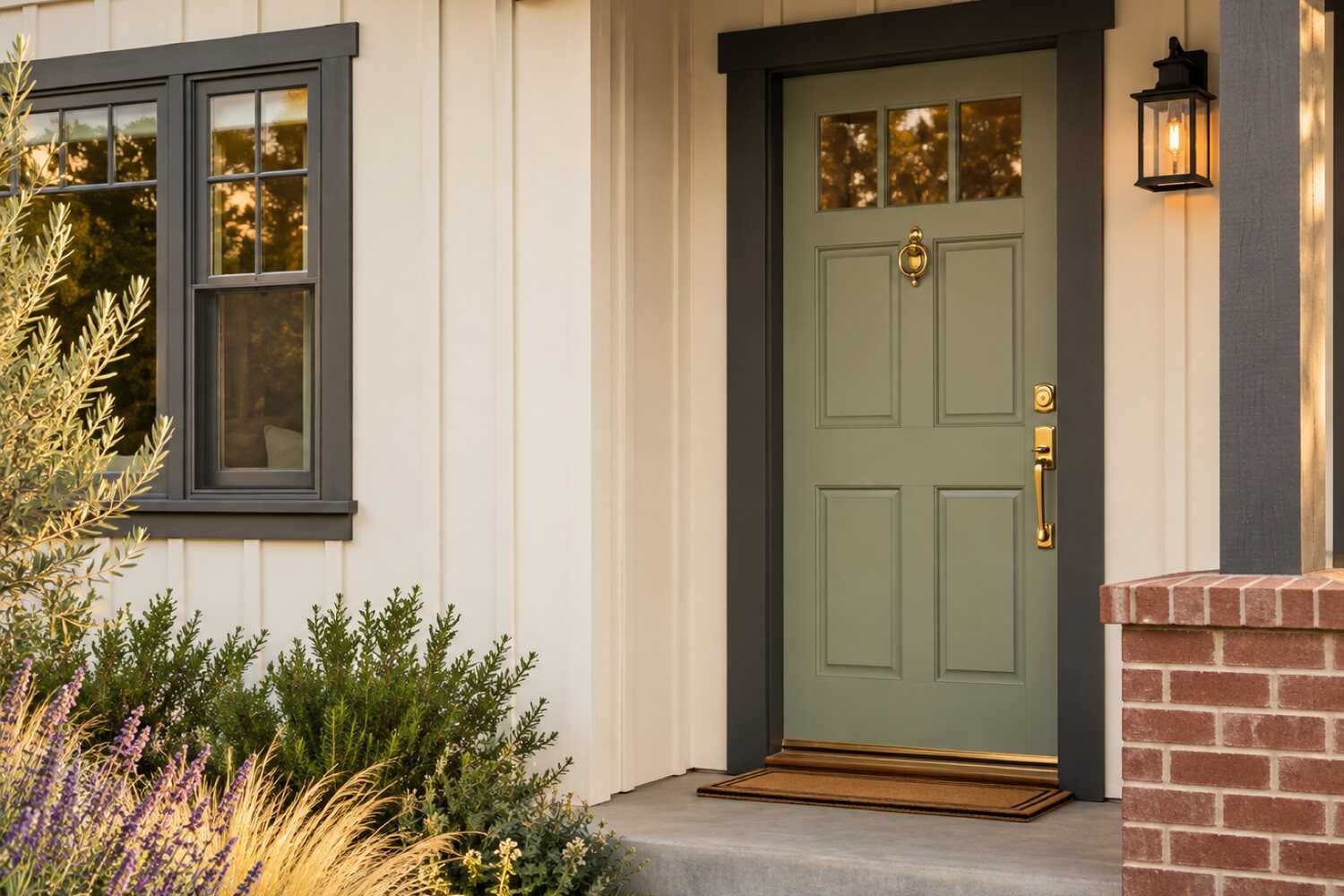
Exterior painting in Rancho Cordova, CA.
Older painted wood and newer stucco can need different preparation in Rancho Cordova; confirm the substrate, coating condition, and building date before pricing the repaint.
What exterior painting costs in Rancho Cordova
Published figures put exterior painting in Rancho Cordova at $4,511–$8,065 (homeyou); HomeBlue's Sacramento examples run $2,200–$5,200 for a 1,500-square-foot house and $2,900–$7,000 for 2,000 square feet, and Facade Colorizer's 2026 heavy-prep guide reaches $7,600–$12,400 at 2,000 square feet. Lead-safe scraping on pre-1978 wood, two-story stucco staging and HOA color review move the number.
| Scope | Published range | What it usually includes |
|---|---|---|
| HomeBlue regional house-size reference | $2,200–$5,200 for its 1,500 sq ft house example | HomeBlue’s 2022 Sacramento example for a 1,500-square-foot house; its 2,000-square-foot row is $2,900–$7,000. The closest local match is a single-story stucco house in Sunridge Park or Kavala Ranch with light prep, and whether trim, fascia, and doors are inside the number is a question for each bid. |
| Published Rancho Cordova painting example | $4,511–$8,065 | homeyou’s Rancho Cordova exterior-painting range, shown against a calculator quantity of 1,709 square feet. That is painted wall area rather than floor area, and the page’s project counter is not a record of completed local jobs; use the range as a reference point for a mid-size Cordova Meadows or Lincoln Village ranch, not as a quote. |
| Heavy prep: pre-1978 wood, lead-safe, or two-story | $4.50–$6.50 per sq ft, plus $700–$2,200 staging | Facade Colorizer's 2026 Sacramento tiers: standard prep on a wood-siding ranch $4.50–$5.50 per square foot, heavy prep with lead-safe scraping $5.50–$6.50, scaffolding or a lift for two and three stories $700–$2,200, and RRP containment adding $400–$1,200 to a typical repaint. A 2,000-square-foot house on the same guide runs $7,600–$12,400. |
Ranges are published third-party figures, not 916 Exteriors prices; the written estimate is the only number that applies to your home.
How to compare these ranges
In Rancho Cordova the number moves with the year built more than the square footage. A 1,600-square-foot Anatolia stucco house and a 1,600-square-foot Lincoln Village T1-11 house are the same size and not the same job: the T1-11 house carries lead-safe containment, scraping to a sound edge, sealing every panel bottom, extra paint on the rough face, and brushwork on open eaves, and it can cost half again as much.
Two-story walls in Anatolia and Zinfandel add lift or ladder time but spray fast with no trees in the way. Multi-color Craftsman trim in Capital Village is brushwork by the hour.
Foam trim recoating and control-joint patching are what separate one stucco bid from another. The figures above are published third-party ranges for Rancho Cordova and the Sacramento region, not 916 Exteriors prices; the exterior painting cost guide breaks down the regional numbers by prep level.
Sources
- homeyou: Exterior painting in Rancho Cordova, CA, costs
- HomeBlue: Cost to paint the exterior of a house in Sacramento, California
- Facade Colorizer: Exterior painting Sacramento, CA, 2026 cost guide
- PaintRite Pros: How much does it cost to paint the exterior of a house? (Sacramento)
- U.S. EPA: Renovation, Repair and Painting Program
- Anatolia Homeowners Association: Architectural Control Committee
- City of Rancho Cordova: Building and Safety
- U.S. Census Bureau: ACS 2020–2024 5-year, Rancho Cordova housing by year built
Read next: How much does exterior painting cost in Rancho Cordova?
What changes the price in Rancho Cordova
- Lead-safe prep on pre-1978 homes
- Every house on the old grid built before 1978 carries containment, HEPA cleanup, and a certified crew; it is a line in the scope, not a surprise.
- T1-11 and rough-sawn faces
- Grooved plywood and rough-sawn boards drink more paint per square foot than smooth lap or stucco, and every panel bottom is sealed.
- Oil under latex
- Alligatored paint stacks on the 1950s and 1960s houses are scraped to a sound edge and primed with a bonding or oil primer before any finish.
- Single-elevation requests
- A west-facing garage front alone costs more per square foot than the whole house because setup, masking, and containment are the same.
- Two-story stucco with lifts
- Anatolia and Zinfandel two-stories add lift or ladder time on the body and fascia, offset by fast spraying on treeless lots.
- HOA color review
- Anatolia and Zinfandel approvals add calendar time; a same-color repaint is the quickest submission.
- Multi-color trim schemes
- Capital Village's Craftsman columns, brackets, and casings are brushwork in two or three colors and priced by the hour.
- Rot found during prep
- Sills, corner boards, and fascia that fail the probe are priced at a unit rate and approved before painting continues.
Compare your finish options
Choose two options to compare the upkeep, fit and installation details.
| Compare | Acrylic exterior paint (flat or low sheen) | Acrylic exterior paint (satin or semi-gloss) |
|---|---|---|
| Appearance | Soft finish that hides surface texture | More light reflection; shows detail |
| Maintenance | Repaint on a normal cycle; touch-ups blend well | Easier to wash; shows surface flaws |
| Where it fits | Stucco and body siding | Trim, doors, and fascia |
| Installation | Brush, roll, or spray with back-rolling | Careful prep since sheen reveals texture |
View all 4 options and planning notes
Most Sacramento-area repaints use 100 percent acrylic exterior paint: a flat or low-sheen finish on the body, which hides stucco and siding texture, and a satin or semi-gloss on trim, doors, and fascia, which washes clean and shows the detail. Elastomeric coatings suit stucco with hairline cracking but not wood. Solid stain is the choice for rough-sawn wood siding and fences where a film would peel.
| Option | Appearance | Maintenance | Where it fits | Installation notes |
|---|---|---|---|---|
| Acrylic exterior paint (flat or low sheen) | Soft finish that hides surface texture | Repaint on a normal cycle; touch-ups blend well | Stucco and body siding | Brush, roll, or spray with back-rolling |
| Acrylic exterior paint (satin or semi-gloss) | More light reflection; shows detail | Easier to wash; shows surface flaws | Trim, doors, and fascia | Careful prep since sheen reveals texture |
| Elastomeric coating | Thick, uniform finish | Bridges hairline cracks; recoat compatibility matters | Stucco with minor cracking | Heavier application; not for wood siding |
| Solid stain | Opaque color that keeps some wood texture | Weathers by fading rather than peeling | Rough-sawn wood siding and fences | Penetrates rather than films over the surface |
Specific durability claims come from each product's own data sheet. Manufacturer names appear once 916 Exteriors confirms the products it uses.
Planning painting work in Rancho Cordova
Open the topics that apply to your property.
Exterior painting in Rancho Cordova differs from Carmichael, Folsom and Sacramento mostly in prep and paperwork. Carmichael and Fair Oaks across the river have custom ranches under oak canopy, where the north walls carry mildew and the shaded redwood needs a different primer than anything on a treeless lot. Folsom has Historic Folsom design review on Sutter Street and 1990s stucco elsewhere. Sacramento's Land Park and East Sacramento bungalows are multi-color trim jobs under Preservation Commission rules in the designated districts. Rancho Cordova has no historic district and no canopy on its newer half. What it has is half a city of pre-1978 wood that needs lead-safe scraping, a repaint season that runs most of the year on flat ground, and HOA color review in Anatolia, the Villages of Zinfandel and Capital Village.
Compare nearby: Exterior painting in Folsom, CA · Exterior painting in Sacramento, CA · Exterior painting in Carmichael, CA
Exterior painting for Rancho Cordova homes
A Rancho Cordova repaint is two different jobs depending on which side of Highway 50 the house is on. Half the housing predates 1980 (28% from the 1950s–1960s, 22% from the 1970s) and sits on the older grid in Cordova Meadows, Lincoln Village and the Coloma Road streets (U.S. Census Bureau, ACS 2020–2024 5-year). Those walls are redwood lap, hardboard and T1-11 under fifty years of paint. Thirty percent was built after 2000 in Anatolia, the Villages of Zinfandel, Sunridge Park and Kavala Ranch, where the walls are stucco with foam trim under one or two builder coats. The first job is a preparation job; the second is a washing and color job.
On the older grid crews find oil-based paint under later latex, alligatored on the south wall and lifting on the west garage front. T1-11 grooves hold loose paint above a bottom edge that no one ever sealed. Hardboard has swollen at the nail heads, and fascia and corner boards are soft enough to fail a probe. On any house confirmed to predate 1978 that prep is lead-safe work under the EPA rule, with containment and a certified crew. On the stucco tracts the finding is chalk: the builder coat has broken down under UV on the south and west walls, foam trim has hairline cracks at its joints, and control joints have opened. New paint over chalk peels, so the crew washes, tests and primes those walls before color.
The painting scope should list every surface and its preparation separately, because the difference between two Rancho Cordova bids is almost always in the prep line, not the paint line. It should state the primer for each substrate and how the crew seals T1-11 bottom edges and hardboard joints. It should give a unit rate for rot found during prep, with approval before painting continues, and name which colors go to an HOA. On the old grid, small carpentry repairs are expected and belong in the painting scope; the dry rot and trim page covers how they are done.
Housing age and what to inspect
Housing age helps plan an inspection. The share of homes in each decade is census data; the notes describe materials and conditions to check at the property.
| Built | Share of homes |
|---|---|
| 1940–1949 | 1% |
| 1950–1959 | 11% |
| 1960–1969 | 17% |
| 1970–1979 | 22% |
| 1980–1989 | 11% |
| 1990–1999 | 7% |
| 2000–2009 | 17% |
| 2010 and later | 13% |
Rancho Cordova: 29,313 housing units, median year built 1979, median owner-occupied value $477,600, 58% owner-occupied. Source: U.S. Census Bureau, American Community Survey 2020–2024 5-Year Estimates, tables B25034 (year structure built), B25035 (median year built), B25077 (median value, owner-occupied), B01003, B25003 (ACS 2024 5-year).
- 1950s–1960s homes1950s–1960s (28% of homes)
- Oil paint went on originally, and several latex coats now sit over it, on the 1950s and 1960s ranches in Cordova Meadows and the first postwar tract at Folsom Boulevard and Zinfandel Drive. The stack alligators on the south wall, peels in sheets on the west garage front and holds on the shaded north side. Crews scrape to a sound edge, spot-prime with a bonding or oil primer and seal the bottom course, all under lead-safe containment where the build date is confirmed before 1978. Price the scraping by elevation, not by the house, because the four sides are in four conditions.
- 1970s homes1970s (22% of homes)
- The 1970s T1-11 and hardboard in Lincoln Village and the later Cordova Meadows streets drink more paint than smooth lap. The grooves and rough face need spraying and back-rolling, and every panel bottom needs primer and sealer so it stops wicking. Hardboard gets sanding and primer at each swollen nail head and joint. Where the bottom foot of a panel is soft, the crew replaces it before painting, and a two-story model adds ladder or lift time on the body and fascia. The scope should say which panels get paint and which get replaced first.
- 1980s–1990s homes1980s–1990s (18% of homes)
- The 18% of houses from the 1980s and 1990s pair stucco bodies with hardboard gables and pop-outs, often with an elastomeric coat added at some point over the stucco. The hardboard gables need the same sanding and priming as the 1970s houses; the stucco needs chalk testing and a compatible primer over any elastomeric. Record which surfaces got which coating in the past. Separate the gable prep from the body wash so the bid shows where the labor goes.
- 2000s and after homes2000s and after (30% of homes)
- One or two builder coats on stucco is what Anatolia, the Villages of Zinfandel, Sunridge Park, Kavala Ranch and Capital Village started with, and the first repaint is usually the first one that gets primer. Chalk on the south and west walls, cracks at foam trim joints and open control joints are the findings; Capital Village adds multi-color Craftsman trim that is brushwork by the hour. A color change goes to the HOA where one exists, and a same-color repaint is the shortest submission. The scope should state wash, chalk test, primer where chalk remains, crack patching and finish coats as separate lines.
Painting by neighborhood in Rancho Cordova
- Cordova Meadows
- Redwood lap and hardboard under a street-tree canopy is Cordova Meadows, single-story 1950s–1960s housing where the trees shade one side of each house and leave the other in full sun. The shaded wall has mildew and sound paint; the sun side has alligatored oil stacks. Test both sides, scrape and prime the failed side under lead-safe containment, and price prep per elevation.
- Lincoln Village
- Lincoln Village's 1960s–1970s T1-11 and hardboard houses, many of them two stories, are the most paint-hungry walls in the city. Every panel bottom gets sealer, the grooves get back-rolled and the upper story adds staging. Soft panel bottoms come out before the sprayer comes out, and they go on their own line.
- The Coloma Road streets
- The Coloma Road streets sit under the oaks and cottonwoods of the American River Parkway, and their north and east walls stay damp into late spring. Mildew under the paint and slow-drying wood are the findings. The shaded side needs a wash with a mildewcide, a longer dry time and a primer chosen for damp redwood. Schedule the shaded elevations for the driest part of the season.
- Anatolia
- Anatolia is 2000s stucco with foam trim on flat, treeless lots, and its Architectural Control Committee requires written approval for a color change with a review that can take up to 45 days. Chalk on the south and west walls is the standard finding. Wash, test for remaining chalk, prime where it is still heavy, patch the foam-trim cracks and submit the color early so the schedule is not waiting on the committee.
- Capital Village
- Porch columns, brackets, casings and lap-sided gables in two or three colors are the Capital Village job: Craftsman-styled small-lot homes and townhomes with an association that reviews the palette. The body sprays quickly; the trim is brushwork by the hour. Price the trim scheme by the piece, confirm what the townhome association covers, and keep the approved colors on file with the scope.
Sun, rain, trees and site conditions
Rancho Cordova is climate zone 12 on flat ground at about 90 feet, with July highs in the low-to-mid 90s and days over 100°F every summer. A west wall on a treeless Anatolia or Sunridge Park lot passes the surface temperature most coatings allow by early afternoon in July and August, so summer work follows the shade around the house. April through June and September through October are the easy months. Chalking on the south and west sides of the stucco tracts and alligatored paint on the west garage fronts of the old grid are the direct result of that sun.
The wet season runs November through March and delivers about 18 inches, much of it in a few atmospheric-river storms. Bare wood opened by scraping cannot sit through one of those. Winter work on the old grid goes one elevation at a time and only when the forecast allows. On the Parkway streets the shaded walls hold moisture above the coating's limit for days after rain; meter the surface before priming.
Trees matter on the north side of the highway and not on the south. Under the Cordova Meadows canopy and along Coloma Road the shaded elevations carry mildew and need a mildewcide wash; on the 2000s tracts there is nothing to wash off but chalk and dust. Wind is not a factor on this flat ground, and there is no freeze-thaw, so the paint system fails from sun and moisture alone.
Permits and approvals
Repainting a previously painted house does not need a permit from the City of Rancho Cordova Building & Safety division. The paperwork on a Rancho Cordova paint job is federal instead: the specific property’s construction date matters, and on covered pre-1978 work the EPA Renovation, Repair and Painting rule applies to any scraping or sanding of painted surfaces. That means an EPA-certified firm, the Renovate Right pamphlet delivered before work starts, containment on the ground and plantings, and lead-safe cleanup. Rot repair found during prep that reaches framing, rafter tails, or sheathing does need a permit, and the estimate says so when it is priced.
Title 24 has no requirement for residential exterior paint. The review that does apply on the 2000s tracts is the HOA's: Anatolia's Architectural Control Committee requires prior written approval for exterior changes and says review can take up to 45 days, the Villages of Zinfandel has its own committee, and Capital Village's association reviews its townhomes. For a Sunridge Park house, read the recorded restrictions before assuming no color review applies. Rancho Cordova incorporated in 2003, and SMUD is the electric utility; neither changes a paint job, but the SMUD service mast and meter on the wall are masked and worked around, never painted over.
Permit authority: City of Rancho Cordova Building & Safety . Whether a permit or review applies, and who pulls it, is written into the estimate.
Seeing something on your own house? Request an estimate for painting in Rancho Cordova
Repaint, spot-repair, or repair first?
Peeling paint is sometimes just old paint and sometimes a sign of moisture or failed wood. Preparation depends on which it is.
Not sure which applies? Tell us what you are seeing and request an estimate for painting.
What the scope includes
A complete estimate names the work, materials and exclusions so you can compare proposals.
Keep a copy for your site visit or when comparing estimates.
Included in a written scope
- Pressure washing and scraping of loose or failed coating
- Repair of small wood or stucco defects and replacement of failed caulk
- Priming of bare wood, repairs, and stains
- Masking and protection of windows, fixtures, landscaping, and hardscape
- Finish coats on body and trim as written, with color and sheen confirmed before painting
- Daily cleanup and removal of masking at completion
Clarify before work starts
- Which surfaces are included: body, trim, doors, gutters, fences, and garage door
- How many finish coats and whether primer is a full coat or spot priming
- How rotted wood found during prep is handled and priced
- Whether color testing on the house is part of the scope
How a painting project works
The stages to discuss when planning your project.
Talk through the project
Tell us what you want to repair or update. A few details about the home and what you have noticed are enough to start.
Review the home and options
A site review identifies the work involved, checks the usual trouble spots, and covers the choices that fit your home.
Agree on the scope and schedule
Review what is included, what is not, and how changes are handled before any work is scheduled.
Walk through the result
Review the completed work together, along with the applicable care and warranty information for what was installed.
Painting questions from Rancho Cordova homeowners
Do I need a permit to paint my house in Rancho Cordova?
No. Repainting a previously painted house is not permitted work with the City of Rancho Cordova Building & Safety division. Two other rules do apply. On homes built before 1978, with applicability confirmed for the property and work, the federal EPA Renovation, Repair and Painting rule governs any scraping or sanding, so the firm must be EPA-certified and use containment. And if prep uncovers rot that reaches framing, rafter tails, or sheathing, that repair is permitted work on its own. Confirm the current requirement with the division if the job includes anything beyond paint.
Is lead paint a problem on my 1960s Cordova Meadows house?
Assume yes until a test says otherwise. A 1960s Cordova Meadows house predates the 1978 lead-paint ban, and the original oil-based coats under the later latex are the layers most likely to contain lead. The EPA Renovation, Repair and Painting rule covers paid work that disturbs painted surfaces on pre-1978 housing, so scraping and sanding are done by an EPA-certified firm with ground containment, HEPA cleanup, and the Renovate Right pamphlet delivered before work starts. A certified lead test on the actual paint can release the job from those steps if it comes back negative. The lead-safe plan and the adhesion prep are written as separate lines.
Why is my Anatolia stucco chalky, and what does it mean for the repaint?
Chalk is the paint's binder breaking down under UV, leaving loose pigment on the surface, and it happens fastest on the south and west walls of a treeless lot. New paint over chalk peels, so the wall is pressure-washed, tested by hand for remaining chalk, and primed with a bonding or masonry primer where it is still heavy before the finish goes on. Hairline cracks at the window corners are patched at the same time. The color itself goes to Anatolia's Architectural Control Committee for written approval before the job is scheduled if it is changing.
Can T1-11 be painted, or does it need to be replaced first?
Painted, if the panels are sound above the bottom foot. The prep is what makes the difference: the grooves and rough face are scraped and sanded where the paint has lifted, the bottom edge of every panel is primed and sealed so it stops wicking, and the finish is sprayed and back-rolled so it fills the texture. Where the bottom foot is soft, delaminated, or swollen, that panel or that wall is replaced before painting, and the siding page covers how that is done. A painted-over soft panel fails within a season.
Do I need HOA approval to repaint in Anatolia or the Villages of Zinfandel?
For a color change, yes. Anatolia's Architectural Control Committee requires prior written approval for all exterior modifications, meets twice a month, and says review can take up to 45 days; the Villages of Zinfandel has its own review. A repaint in the existing approved color is the simplest case and is usually a quick submission. Brushed-out samples on the actual wall, on both the sunny and shaded sides, make the application clearer for the committee. Where a Sunridge Park parcel has no recorded association, a repaint needs only the owner’s decision; the recorded restrictions confirm that.
When is the best time of year to paint a house in Rancho Cordova?
Spring through fall, which is most of the year here. April through June and September through October are the easiest: warm, dry, and below the surface temperatures that make July and August afternoons unworkable on a west wall. Summer painting still works by following the shade around the house. November through March is the wet season, and while dry weeks happen, bare wood opened by scraping cannot sit through a storm, so winter work is sequenced one elevation at a time and only when the forecast allows.
What happens if you find dry rot while prepping my house?
Small repairs are expected on any wood-sided house on the old grid and are written into the painting scope at a unit rate: a sill, the bottom of a corner board, a section of fascia. When prep uncovers more, such as a soft T1-11 panel bottom or a run of fascia, the crew stops at that area, photographs it, prices it at the written rate, and you approve it before painting continues. The dry rot and trim page explains how those repairs are done and priced in this city.
Tell us about your Rancho Cordova painting project.
Share what you have noticed and what you would like to change. We'll review the details and contact you about the next step.
No budget, address, or photos needed to inquire.
Other exterior services in Rancho Cordova
- Siding replacement in Rancho CordovaExplore repair and replacement options for your home's exterior walls.
- Window & door replacement in Rancho CordovaFind an updated look and a fit that works for your home.
- Roof replacement in Rancho CordovaPlan the next step for a worn or damaged roof.
- Gutter installation in Rancho CordovaPlan how rainwater moves from the roof and away from the home.
- Dry rot & trim repair in Rancho CordovaAddress damaged wood and understand the work around it.