
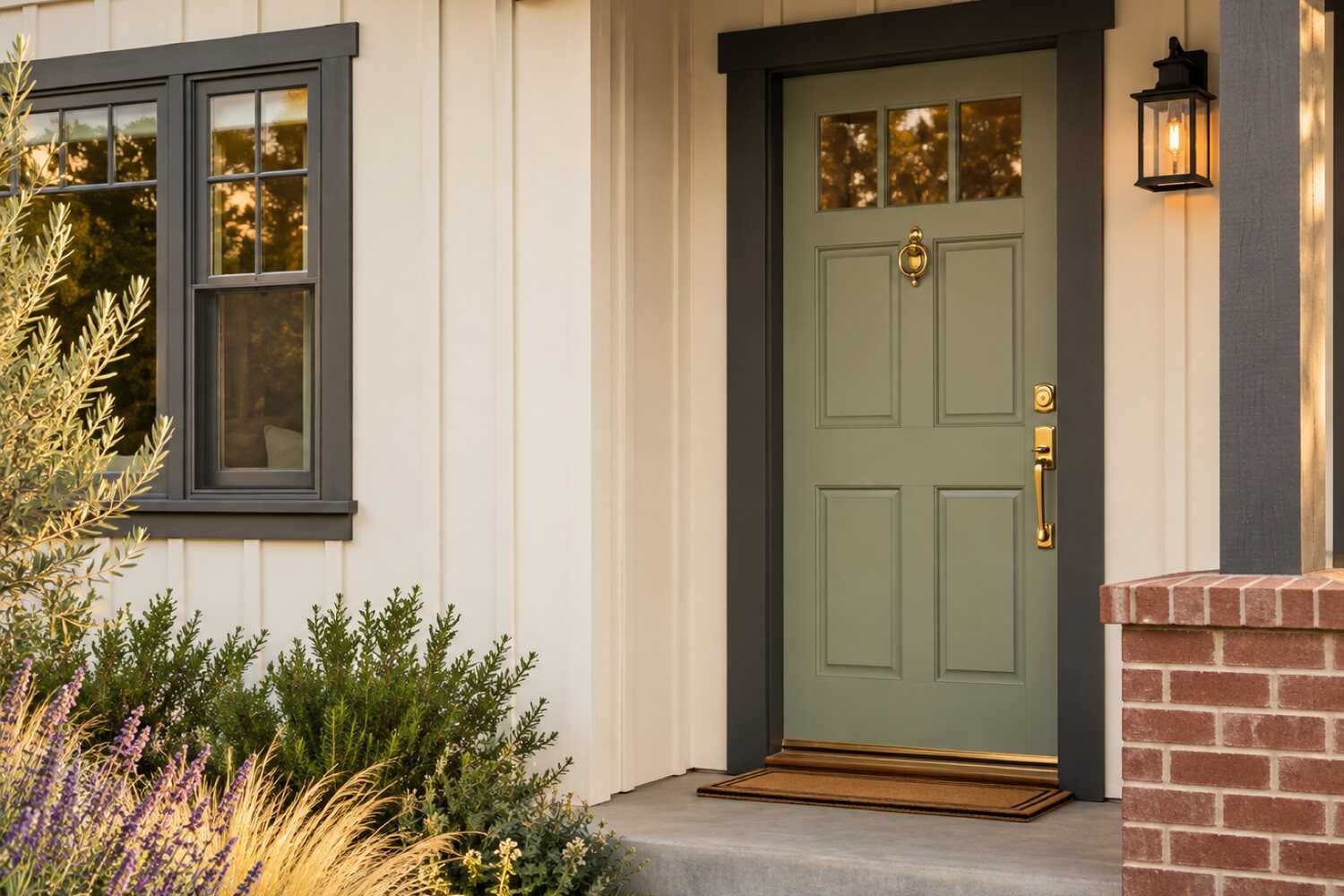
Exterior painting in Citrus Heights, CA.
Where a Citrus Heights home has wood or panel siding, preparation should address the actual coating and substrate. Paint, flashing and the wall's drainage system play different roles in managing moisture.
What exterior painting costs in Citrus Heights
Published 2026 figures put exterior painting in Citrus Heights at $4,520–$8,080 (homeyou's city range) and $5,700–$12,400 for a 1,500- to 2,000-square-foot house (Facade Colorizer, Sacramento). Prep on chalked T1-11 and swollen hardboard, lead-safe containment on pre-1978 houses and second-story west walls move the number.
| Scope | Published range | What it usually includes |
|---|---|---|
| Published Citrus Heights painting model | $4,520–$8,080 | homeyou's Citrus Heights exterior-painting headline. The page states no house size, story count or prep level, so it cannot be tied to a single-story 1970s T1-11 house or a two-story 1980s stucco house without the publisher's assumptions. |
| Regional model, 1,500 sq ft house | $5,700–$9,300 | Facade Colorizer's 2026 Sacramento guide, a 1,500 sq ft house-size example. The size is floor area, not paintable wall area, and the model does not know whether the surface is T1-11 with grooves to seal or a smooth stucco body; the prep line in a Citrus Heights estimate is where those two differ. |
| Regional model, 2,000 sq ft house | $7,600–$12,400 | Facade Colorizer's 2026 Sacramento guide, a 2,000 sq ft house-size example. The source separately puts scaffolding on two- and three-story homes at $700–$2,200; on a 1980s two-story Citrus Heights house with a five-foot side yard the access line may be ladder or lift work instead, so ask whether the bid includes it before adding it. |
Ranges are published third-party figures, not 916 Exteriors prices; the written estimate is the only number that applies to your home.
How to compare these ranges
A model total says nothing about prep, and prep is where a Citrus Heights repaint is won or lost. The 1970s T1-11 houses, about 40% of the city, need groove sealing, edge priming and scraping of swollen hardboard butt ends before any body coat.
The 1980s stucco two-stories need crack repair at window corners and control joints plus replacement of hardboard trim that no longer holds paint. The 1990s and Stock Ranch stucco needs the least.
Access on a two-story west wall in a narrow side yard, the number of surfaces named (body, fascia, garage door, patio cover, fences), and lead-safe containment on a house confirmed built before 1978 are the other local drivers. Wood replacement found during prep is priced per piece with an approval step.
The surface schedule is what makes the source figures comparable with a bid; none of them is a 916 Exteriors quote.
Sources
- homeyou: Exterior painting in Citrus Heights, CA, costs
- Facade Colorizer: Exterior painting Sacramento, CA, 2026 cost guide
- City of Citrus Heights: Permit requirements and exemptions
- City of Citrus Heights: CHB0600 Projects requiring a building permit (PDF)
- U.S. EPA: Renovation, Repair and Painting Program
Read next: How much does exterior painting cost in Citrus Heights?
What changes the price in Citrus Heights
- T1-11 and hardboard prep
- Groove sealing, edge priming, and scraping swollen butt ends on a 1970s house is the largest single block of hours in a Citrus Heights repaint.
- Lead-safe containment
- For homes confirmed to predate 1978, scraping and sanding work needs EPA RRP containment and cleanup; the property record's construction year, not the tract's decade, decides which houses that covers.
- Trim replacement during prep
- Hardboard corner boards and gable panels that cannot hold paint are replaced per piece, priced in the estimate before the color is chosen.
- Two-story west walls
- The 1980s two-story stucco tracts put the worst wall at ladder or lift height on a narrow side yard.
- Stucco crack repair
- 1980s and 1990s stucco bodies take an elastomeric patch at window corners and control joints before the body coat.
- Surface count
- Garage door, fascia, gutters, fences, and the patio cover common on 1970s lots are each named in the scope or they are not included.
Compare your finish options
Choose two options to compare the upkeep, fit and installation details.
| Compare | Acrylic exterior paint (flat or low sheen) | Acrylic exterior paint (satin or semi-gloss) |
|---|---|---|
| Appearance | Soft finish that hides surface texture | More light reflection; shows detail |
| Maintenance | Repaint on a normal cycle; touch-ups blend well | Easier to wash; shows surface flaws |
| Where it fits | Stucco and body siding | Trim, doors, and fascia |
| Installation | Brush, roll, or spray with back-rolling | Careful prep since sheen reveals texture |
View all 4 options and planning notes
Most Sacramento-area repaints use 100 percent acrylic exterior paint: a flat or low-sheen finish on the body, which hides stucco and siding texture, and a satin or semi-gloss on trim, doors, and fascia, which washes clean and shows the detail. Elastomeric coatings suit stucco with hairline cracking but not wood. Solid stain is the choice for rough-sawn wood siding and fences where a film would peel.
| Option | Appearance | Maintenance | Where it fits | Installation notes |
|---|---|---|---|---|
| Acrylic exterior paint (flat or low sheen) | Soft finish that hides surface texture | Repaint on a normal cycle; touch-ups blend well | Stucco and body siding | Brush, roll, or spray with back-rolling |
| Acrylic exterior paint (satin or semi-gloss) | More light reflection; shows detail | Easier to wash; shows surface flaws | Trim, doors, and fascia | Careful prep since sheen reveals texture |
| Elastomeric coating | Thick, uniform finish | Bridges hairline cracks; recoat compatibility matters | Stucco with minor cracking | Heavier application; not for wood siding |
| Solid stain | Opaque color that keeps some wood texture | Weathers by fading rather than peeling | Rough-sawn wood siding and fences | Penetrates rather than films over the surface |
Specific durability claims come from each product's own data sheet. Manufacturer names appear once 916 Exteriors confirms the products it uses.
Planning painting work in Citrus Heights
Open the topics that apply to your property.
Painting in Citrus Heights is heavier on prep than in the cities around it. Antelope's 1990s stucco and Roseville's 2000s tracts take a wash, a crack patch and two coats. Citrus Heights has the region's largest share of 1970s panel siding, and the hours go into grooves, edges and bare wood. Fair Oaks and Orangevale carry more 1950s and 1960s wood lap under oak canopy, so lead-safe scraping and mildew are their drivers. Painting needs no permit from the City of Citrus Heights, but replacing failed siding during prep does. Few Citrus Heights tracts carry HOA color rules; the condominium and planned-unit developments along the corridors are the exception.
Compare nearby: Exterior painting in Fair Oaks, CA · Exterior painting in Carmichael, CA · Exterior painting in Roseville, CA
Exterior painting for Citrus Heights homes
Exterior painting in Citrus Heights is mostly a prep job on T1-11 and hardboard. The 1970s and 1980s together account for about 61% of the city's homes (ACS 2020–2024), in the tracts around Sunrise Mall, Greenback Lane and Old Auburn Road. Their panel siding has no weather resistance of its own; the paint film is the barrier. When the film opens in the grooves and at the cut ends, the wood takes water, and the next coat has to go onto sound, sealed, primed material or it fails in a season.
Crews find the same pattern from Birdcage Heights to the streets around Rusch Park: the west and south walls chalked to powder, the T1-11 grooves open where the film is thinnest, hardboard butt ends and corner boards swollen from the bottom, and fascia peeled to bare wood at the sunny corners. North walls under the older trees carry mildew instead. The prep list is written by wall, not by house.
The stucco houses from the 1980s and the 1990s infill are a different scope: hairline cracks at window corners and control joints, elastomeric patching, and hardboard trim that needs replacing before the body coat. The wood-lap houses from the 1950s and 1960s on the Sylvan Road acre lots predate 1978, so scraping there runs under the EPA lead-safe rule with containment and cleanup in the scope.
The estimate lists washing, scraping, groove sealing, priming, caulking and the pieces to replace, then the coating, sheen and surfaces coat by coat. The Sacramento painting cost guide sets the outside benchmarks. The measured surfaces and the prep schedule decide whether a bid matches this house.
Housing age and what to inspect
Housing age helps plan an inspection. The share of homes in each decade is census data; the notes describe materials and conditions to check at the property.
| Built | Share of homes |
|---|---|
| Before 1940 | 1% |
| 1940–1949 | 2% |
| 1950–1959 | 8% |
| 1960–1969 | 11% |
| 1970–1979 | 40% |
| 1980–1989 | 21% |
| 1990–1999 | 10% |
| 2000–2009 | 6% |
| 2010 and later | 2% |
Citrus Heights: 34,946 housing units, median year built 1977, median owner-occupied value $454,600, 61% owner-occupied. Source: U.S. Census Bureau, American Community Survey 2020–2024 5-Year Estimates, tables B25034 (year structure built), B25035 (median year built), B25077 (median value, owner-occupied), B01003, B25003 (ACS 2024 5-year).
- Postwar construction1950s–1960s (about 19% of homes)
- Lead paint is the rule on the 1950s and 1960s houses, about 19% of Citrus Heights homes: wood-lap ranches on the acre lots along Sylvan Road, Old Auburn Road and behind Auburn Boulevard. Their paint predates 1978, so any scraping or sanding runs under the EPA Renovation, Repair and Painting rule with containment and cleanup written into the scope. Crews find many coats of oil and latex layered on redwood lap, alligatored on the south side and peeling in sheets where latex went over chalked oil. The prep there is scraping to a sound edge, spot-priming with a bonding primer and replacing the split boards, priced per elevation.
- 1970s build-out1970s (about 40% of homes)
- T1-11 and hardboard define the 1970s houses, about 40% of the city's homes, and the paint is the only thing between that wood and the weather. The west wall chalks first, the grooves open along the plies and the hardboard swells at every cut end. A repaint that lasts starts with a wash, scraping to a firm edge, sealing the open grooves, priming bare wood with a bonding primer and replacing the pieces that cannot hold paint. Houses built before 1978 in this decade bring lead-safe work into the prep. The actual construction year is checked, since the decade bins do not settle it.
- 1980s construction1980s (about 21% of homes)
- About 21% of Citrus Heights housing is 1980s two-story stucco with hardboard gables and trim. The stucco body needs a wash, elastomeric patching at window corners and control joints, and a masonry primer where it has chalked. The hardboard is the problem: swollen trim bottoms and gable lap that no longer hold paint get replaced before the color goes on. Second-story west walls sit at ladder or lift height over a narrow side yard, which is priced as access.
- Later tracts and infill1990s–2000s (about 16% of homes)
- The lightest prep is on the 1990s and 2000s houses, about 16% of the city's homes: stucco infill on split lots and the Stock Ranch tract south of Arcade Creek. These take: a wash, crack repair, resealing the foam trim bands and the lap-to-stucco joints, and two coats. The original builder paint on the foam trim has usually failed first on the sunny side. The estimate separates trim sealant work from the body coat and confirms the accent material before choosing a primer.
Painting by neighborhood in Citrus Heights
- Birdcage Heights
- Birdcage Heights, the tract country south of Greenback Lane built as Sunrise Mall opened, has the city's largest run of T1-11 and hardboard walls, and its single-story houses put every wall within ladder reach. The prep hours there go into the west and south grooves and the swollen corner boards. The estimate states the groove sealing and bare-wood priming by wall.
- Sylvan Old Auburn Road
- The oldest paint in the city is in Sylvan Old Auburn Road, around Sylvan Corners. The 1950s and 1960s wood-lap houses that predate 1978 sit there on the old acre lots, mixed with later houses on the lots split behind them. Lead-safe scraping applies to the older houses and not their neighbors, so the estimate checks each construction year and prices containment only where it applies.
- Rusch Park area
- Road grime is the prep issue around Rusch Community Park on Auburn Boulevard, where 1960s and 1970s ranches front a busy road. The street-facing wall carries a film that a plain rinse does not remove. The scope specifies a detergent wash on that elevation before any primer and inspects the fascia at the boulevard corners, which peel first.
- Park Oaks
- Park Oaks is the southwest corner of the city, south of Greenback Lane and west of Dewey Drive to Manzanita Avenue, with Brooktree Creek along its edge and the Carmichael line beside it. Shaded creek-side walls there carry mildew instead of chalk. The prep on those elevations is a mildewcide wash and full drying time, priced separately from the sun-side scraping.
- Stock Ranch
- Foam trim bands and composite gable accents cover Stock Ranch, the Ryland Homes tract along Stock Ranch Road built after 2003. Its original builder coat is at the age where the trim sealant has split on the south side. The repaint there is light on scraping and heavy on resealing joints and patching cracks, with the accent product confirmed before a primer is chosen.
- Northwest Citrus Heights
- Northwest Citrus Heights sits west of Interstate 80 between Antelope Road and the rail line, and its west-facing walls take the afternoon sun with little canopy. Freeway-side elevations also collect exhaust film. The scope there sequences the wash and the west wall for the cooler part of the day and lists the sunny-side prep separately.
Sun, rain, trees and site conditions
Citrus Heights is in climate zone 12 on the flat valley floor. Summer highs run in the low to mid 90s with 100-degree days every year. By early afternoon a T1-11 west wall in that sun is far above the surface temperature at which acrylic paint bonds and levels. Summer work follows the shade around the house; spring and fall widen the window. The coating data sheet's temperature and recoat limits govern the schedule, not the calendar.
About 18 inches of rain falls between November and March, mostly in a few atmospheric-river storms, and it goes straight into any groove or butt end the film has left open. Winter painting waits for dry wood, measured with a meter on the shaded walls. North walls under the older trees on the Sylvan Road lots and along Arcade and Brooktree creeks carry mildew that needs a mildewcide wash and full drying before primer.
The lots are small and flat, so sprinkler spray and mulch reach the bottom of the siding on most 1970s houses. That bottom foot is where paint fails first and where the wood has often gone past painting. The scope states which pieces get replaced before the color, and who replaces them, and it notes any protected oak whose canopy limits ladder placement under the City's tree rules.
Permits and approvals
Painting needs no permit in Citrus Heights. The City of Citrus Heights Building & Safety Division's exemption list names painting, papering and similar finish work, and its CHB0600 project table marks painting as exempt for residential work. The line is crossed when prep turns into replacement: the same table exempts wood-siding repair only under 10% of the total exterior wall area and marks new or replacement siding and stucco as permitted work, so a repaint that swaps out more than that, or that uncovers rot in sheathing or framing, has a permitted part. The estimate names any repair that would cross the line and who applies through the city's online portal if it does.
About 62% of Citrus Heights homes date from before 1980 by the ACS decade counts, and the construction year on the property record decides whether the 1978 line is crossed. On a house confirmed built before 1978, scraping and sanding that disturbs the old paint falls under the EPA Renovation, Repair and Painting rule: a certified firm, containment, cleanup and documentation, itemized in the prep scope.
Most 1970s and 1980s Citrus Heights tracts have no HOA, so the color scheme is the owner's call. The condominium and planned-unit developments along the main corridors are the exception; their CC&Rs usually carry a palette and a sample step, and that approval is confirmed before paint is ordered.
Permit authority: City of Citrus Heights Building & Safety Division . Whether a permit or review applies, and who pulls it, is written into the estimate.
Seeing something on your own house? Request an estimate for painting in Citrus Heights
Repaint, spot-repair, or repair first?
Peeling paint is sometimes just old paint and sometimes a sign of moisture or failed wood. Preparation depends on which it is.
Not sure which applies? Tell us what you are seeing and request an estimate for painting.
What the scope includes
A complete estimate names the work, materials and exclusions so you can compare proposals.
Keep a copy for your site visit or when comparing estimates.
Included in a written scope
- Pressure washing and scraping of loose or failed coating
- Repair of small wood or stucco defects and replacement of failed caulk
- Priming of bare wood, repairs, and stains
- Masking and protection of windows, fixtures, landscaping, and hardscape
- Finish coats on body and trim as written, with color and sheen confirmed before painting
- Daily cleanup and removal of masking at completion
Clarify before work starts
- Which surfaces are included: body, trim, doors, gutters, fences, and garage door
- How many finish coats and whether primer is a full coat or spot priming
- How rotted wood found during prep is handled and priced
- Whether color testing on the house is part of the scope
How a painting project works
The stages to discuss when planning your project.
Talk through the project
Tell us what you want to repair or update. A few details about the home and what you have noticed are enough to start.
Review the home and options
A site review identifies the work involved, checks the usual trouble spots, and covers the choices that fit your home.
Agree on the scope and schedule
Review what is included, what is not, and how changes are handled before any work is scheduled.
Walk through the result
Review the completed work together, along with the applicable care and warranty information for what was installed.
Painting questions from Citrus Heights homeowners
Do I need a permit to paint my house in Citrus Heights?
No. The City of Citrus Heights Building & Safety Division lists painting, papering and similar finish work as exempt, and its project table marks painting as exempt for houses. The exception is when prep turns into replacement. The same table exempts wood-siding repair only under 10% of the total exterior wall area and marks siding replacement as permitted work, so a repaint that swaps out more than that, or that uncovers rot in sheathing or framing, has a permitted part. The estimate names any repair that would cross that line and who would apply through the city's online permit portal if it does.
Why is prep such a big part of a repaint on my 1970s house?
Because T1-11 and hardboard have no water resistance of their own; the paint film is the barrier. On a Citrus Heights house from the 1970s the west wall has chalked, the T1-11 grooves have opened where the film is thinnest, and the hardboard butt ends have swelled. Painting over that without scraping, sealing the grooves, priming bare wood, and replacing pieces that cannot hold paint produces a job that fails in a season. The estimate lists the prep steps by wall so you can compare it with another bid on the same terms; the estimate comparison guide shows what to look for.
Does lead paint apply to my house?
It applies if the house was built before 1978 and the prep disturbs the old paint. About 62% of Citrus Heights homes date from before 1980 by the ACS decade counts, but the 1978 line falls inside the 1970s bin, so the construction year on the property record is what decides it. On a covered house the EPA Renovation, Repair and Painting rule requires a certified firm, containment of the scraping and sanding, cleanup and documentation. Those are hours in the prep scope, and a bid that skips them is not comparable with one that includes them. Ask for the method and certification in writing.
Can you paint in the summer here?
Yes, with sequencing. Citrus Heights summers put the west wall of a 1970s house well above the surface temperature at which acrylic paint bonds and levels, so summer work follows the shade around the house: east walls in the morning, north walls midday, west walls in the evening or under shade cloth, south walls on the cooler days. Most manufacturers publish a surface-temperature range on the data sheet, and the crew works to it. Spring and fall are easier, but a summer job done in the right order lasts just as long.
Should I paint or re-side?
Paint if the siding is sound and the prep is honest; re-side if it is not. Press the bottom edge of the T1-11 and the lowest hardboard courses and the bottoms of the corner boards. If they are firm, a proper repaint with groove sealing and edge priming buys years. If they are soft, thick, or crumbling on more than a wall, paint over them fails within a season, and the money belongs in siding replacement with the paint included in that scope. The site review maps the soft spots, and the estimate can show both paths.
Do I need HOA approval for my color?
Usually not in Citrus Heights. Most of the 1970s and 1980s tracts, including Birdcage Heights and the Rusch Park area, have no homeowners association, so the color is your call. The condominium and planned-unit developments along the main corridors are the exception and generally have a palette in their architectural rules. If your title report shows CC&Rs, the color is submitted before scheduling; brushed-out samples on the house make that approval easier and let you see the color on the sunny and shaded sides first.
Tell us about your Citrus Heights painting project.
Share what you have noticed and what you would like to change. We'll review the details and contact you about the next step.
No budget, address, or photos needed to inquire.
Other exterior services in Citrus Heights
- Siding replacement in Citrus HeightsExplore repair and replacement options for your home's exterior walls.
- Window & door replacement in Citrus HeightsFind an updated look and a fit that works for your home.
- Roof replacement in Citrus HeightsPlan the next step for a worn or damaged roof.
- Gutter installation in Citrus HeightsPlan how rainwater moves from the roof and away from the home.
- Dry rot & trim repair in Citrus HeightsAddress damaged wood and understand the work around it.