
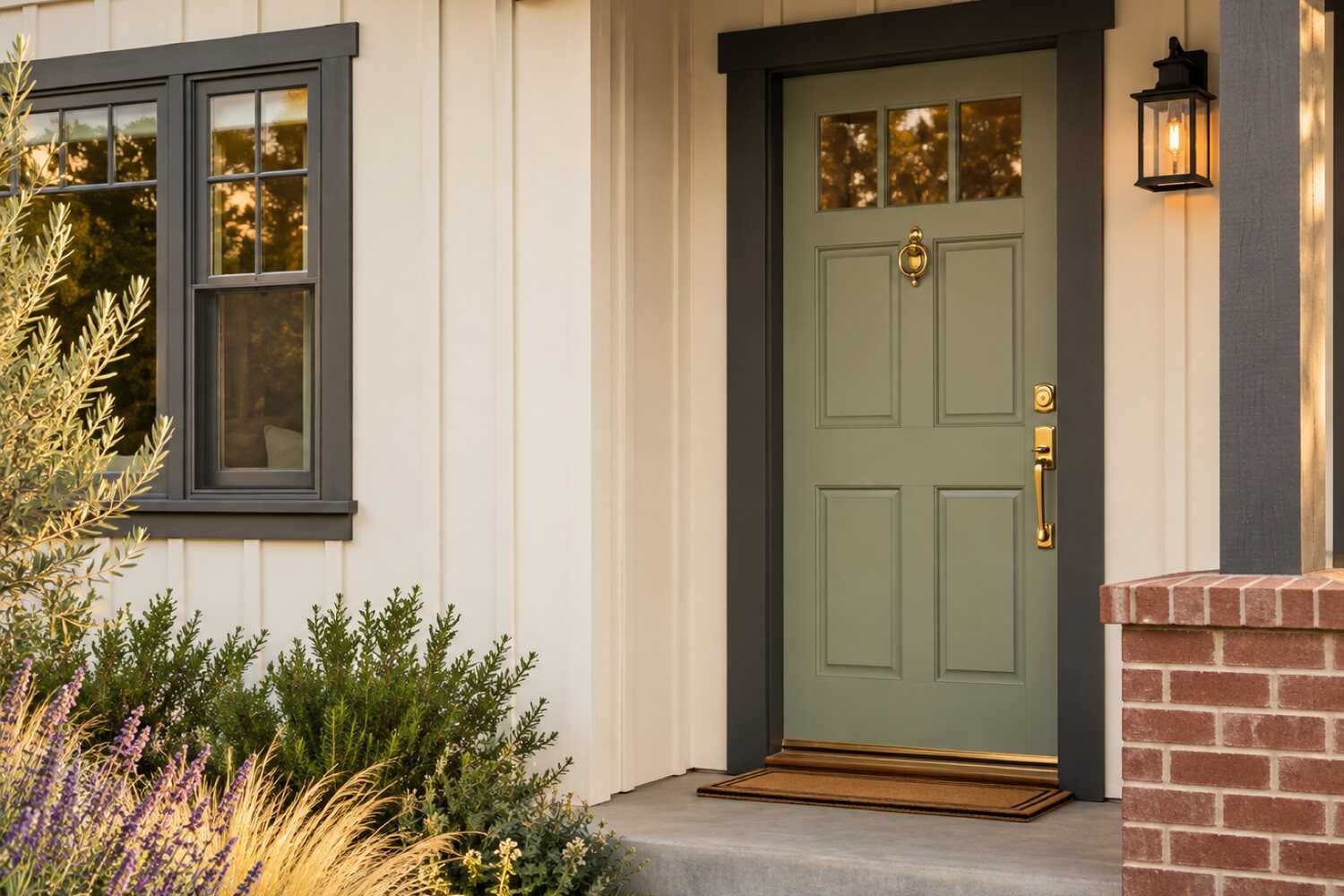
Exterior painting in Arden-Arcade, CA.
For an Arden-Arcade repaint, inspect the actual wood, stucco, and existing coatings, then establish preparation and any applicable lead-safe work before choosing the finish.
What exterior painting costs in Arden-Arcade
Published Sacramento figures put an exterior repaint in Arden-Arcade between about $2,200 and $7,000 for a 1,500–2,000-square-foot house (HomeBlue) and $5,000–$12,400 in Facade Colorizer's 2026 guide, which adds a $400–$1,200 lead-safe preparation allowance. Grayed redwood, beam-end rot on the 1960s contemporaries, canopy shade and pre-1978 prep move the number.
| Scope | Published range | What it usually includes |
|---|---|---|
| HomeBlue 1,500-square-foot house example | $2,200–$5,200 | HomeBlue’s 2022 Sacramento reference for a 1,500-square-foot house, roughly a Del Paso Manor ranch. Facade Colorizer separately lists $5,000–$8,000 for a 1,400-square-foot single-story ranch in its 2026 guide; the gap between the two is four years and the difference between a wash-and-spray on sound stucco and real prep on wood. |
| HomeBlue 2,000-square-foot house example | $2,900–$7,000 | HomeBlue’s 2022 Sacramento reference for a 2,000-square-foot house. Facade Colorizer separately gives $7,600–$12,400 for a 2,000-square-foot home in its 2026 guide. A two-story Sierra Oaks redwood house with beam ends to pick out and battens to back-brush lands in the second range, not the first. |
| Lead-safe preparation allowance, Sacramento reference | $400–$1,200 | Facade Colorizer’s published lead-safe preparation allowance, which applies to the roughly three-quarters of Arden-Arcade houses that predate 1980 whenever the prep disturbs paint. Its scaffolding or lift allowance is a separate $700–$2,200 and comes up on two-story Sierra Oaks and Arden Oaks homes and under tree canopy. |
Ranges are published third-party figures, not 916 Exteriors prices; the written estimate is the only number that applies to your home.
How to compare these ranges
There are no published Arden-Arcade-specific painting figures, so these are Sacramento-region ranges, and the spread between the two sources is itself the lesson: the low end assumes a wash-and-spray on sound stucco, the high end assumes real prep on wood. In Arden-Arcade the number is driven by the redwood.
Sanding grayed vertical boards, back-brushing behind battens, stain-blocking primer, and rot repair at beam ends and fascia put a Wilhaggin contemporary at the top of the range or above it. Lead-safe prep applies to most houses here, since about 77% of the housing predates 1980, and it adds containment and cleanup time to every day of scraping.
Tree canopy slows the work on the shaded sides and complicates ladder and lift access. A one-story stucco ranch in Del Paso Manor with a two-color scheme sits near the low-to-middle of the range; a two-story redwood home in Sierra Oaks with four colors and beam-end repair does not.
Read next: How much does exterior painting cost in Arden-Arcade?
What changes the price in Arden-Arcade
- Redwood prep
- Sanding, back-brushing behind battens, and stain-blocking primer on grayed vertical redwood in Arden Park, Wilhaggin, and Sierra Oaks.
- Lead-safe work on pre-1978 homes
- Check EPA RRP applicability before disturbing older painted surfaces.
- Rot at beam ends and fascia
- Exposed structure under flat-roof edges on 1960s contemporaries commonly needs repair before primer, priced per piece once probed.
- Tree canopy and shade
- Mildewcide wash, longer dry times, and full priming on north walls under oaks and redwoods, plus slower access.
- Number of colors
- Three- and four-color midcentury schemes with picked-out beam ends and fascia take more cut-in time than a two-color rental scheme.
- Stucco crack repair and bottom-foot patching
- 1950s stucco needs crack routing, elastomeric patching, and a bonding primer on chalked walls before the body coat.
Compare your finish options
Choose two options to compare the upkeep, fit and installation details.
| Compare | Acrylic exterior paint (flat or low sheen) | Acrylic exterior paint (satin or semi-gloss) |
|---|---|---|
| Appearance | Soft finish that hides surface texture | More light reflection; shows detail |
| Maintenance | Repaint on a normal cycle; touch-ups blend well | Easier to wash; shows surface flaws |
| Where it fits | Stucco and body siding | Trim, doors, and fascia |
| Installation | Brush, roll, or spray with back-rolling | Careful prep since sheen reveals texture |
View all 4 options and planning notes
Most Sacramento-area repaints use 100 percent acrylic exterior paint: a flat or low-sheen finish on the body, which hides stucco and siding texture, and a satin or semi-gloss on trim, doors, and fascia, which washes clean and shows the detail. Elastomeric coatings suit stucco with hairline cracking but not wood. Solid stain is the choice for rough-sawn wood siding and fences where a film would peel.
| Option | Appearance | Maintenance | Where it fits | Installation notes |
|---|---|---|---|---|
| Acrylic exterior paint (flat or low sheen) | Soft finish that hides surface texture | Repaint on a normal cycle; touch-ups blend well | Stucco and body siding | Brush, roll, or spray with back-rolling |
| Acrylic exterior paint (satin or semi-gloss) | More light reflection; shows detail | Easier to wash; shows surface flaws | Trim, doors, and fascia | Careful prep since sheen reveals texture |
| Elastomeric coating | Thick, uniform finish | Bridges hairline cracks; recoat compatibility matters | Stucco with minor cracking | Heavier application; not for wood siding |
| Solid stain | Opaque color that keeps some wood texture | Weathers by fading rather than peeling | Rough-sawn wood siding and fences | Penetrates rather than films over the surface |
Specific durability claims come from each product's own data sheet. Manufacturer names appear once 916 Exteriors confirms the products it uses.
Planning painting work in Arden-Arcade
Open the topics that apply to your property.
Repainting in Arden-Arcade means more bare redwood and more lead-safe prep than in the neighboring communities. Carmichael's housing is a decade newer on average (median build 1972), so its typical repaint is hardboard, T1-11 and stucco with wood trim, with a smaller pre-1978 share. North Highlands has a similar 1950s share but on plainer stucco and plywood tracts where a wash-and-spray is closer to the norm. The City of Sacramento's East Sacramento and Land Park streets have prewar lap and multi-color schemes under Preservation Commission review in the designated districts. Arden-Arcade is 1950s redwood lap and brick fronts, 1960s vertical redwood with beam ends that need probing and often repair, and heavy canopy that slows drying on the north sides. The prep is the price, and it is heavier here than on either side.
Compare nearby: Exterior painting for Sacramento homes · Exterior painting for Carmichael homes
Exterior painting for Arden-Arcade homes
Exterior painting in Arden-Arcade is a redwood trade. About 57% of the community's homes date from 1940 through 1969 (U.S. Census Bureau, ACS 2020–2024 5-year). That stock is redwood lap on the 1950s ranches around Marconi Avenue and Watt Avenue, and brick veneer fronts with painted wood above them in Arden Park. In Wilhaggin and Sierra Oaks it is vertical redwood with exposed beam ends on the post-and-beam contemporaries. Stucco shows up on the early ranches near El Camino Avenue and on the 1970s apartments along Fulton, Howe and Watt avenues.
Crews find the same three conditions across those houses. The redwood has grayed and checked on the south and west, and the old paint has chalked to powder. Any bare wood bleeds tannin through a new coat unless it gets a stain-blocking primer. The beam ends and fascia under the flat-roof edges on the contemporaries are soft where the roof drained over them, and painting over that is not an option. The 1950s stucco has hairline cracks at the window corners and a crumbling bottom foot where the sprinklers hit. Steel casements need a rust-inhibitive primer; aluminum sliders get masked, not painted.
Prep is the job. On a Del Paso Manor ranch that means a wash, crack routing and patching the bottom foot of stucco. The trim gets scraped and sanded under lead-safe containment, then two coats of acrylic. On a Wilhaggin contemporary it means sanding the vertical boards, back-brushing behind the battens, and stain-blocking primer. Crews probe every beam end and repair the soft ones as a separate line before any finish goes on. The estimate lists every surface, the prep for each, the primer, the finish system and the number of colors. The painting page covers the systems; the Arden-Arcade painting cost guide lists the published ranges.
About 77% of the homes predate 1980. The EPA Renovation, Repair and Painting rule applies to scraping and sanding on most of them once the build year clears the 1978 check. Repainting itself needs no permit from Sacramento County Building Permits & Inspection; a structural repair found during prep does, and it gets its own line.
Housing age and what to inspect
Housing age helps plan an inspection. The share of homes in each decade is census data; the notes describe materials and conditions to check at the property.
| Built | Share of homes |
|---|---|
| Before 1940 | 1% |
| 1940–1949 | 6% |
| 1950–1959 | 30% |
| 1960–1969 | 21% |
| 1970–1979 | 19% |
| 1980–1989 | 12% |
| 1990–1999 | 5% |
| 2000–2009 | 3% |
| 2010 and later | 3% |
Arden-Arcade: 40,578 housing units, median year built 1966, median owner-occupied value $560,200, 46% owner-occupied. Source: U.S. Census Bureau, American Community Survey 2020–2024 5-Year Estimates, tables B25034 (year structure built), B25035 (median year built), B25077 (median value, owner-occupied), B01003, B25003 (ACS 2024 5-year).
- 1950–1959 homes1950–1959 (about 30% of homes)
- Painted redwood lap, or stucco with redwood trim, covers the 1950s ranches that make up 30% of Arden-Arcade. Brick veneer runs across the front, and the windows are wood sash or steel casements. Crews find chalked paint, checked boards on the south and west, tannin bleed on any bare redwood, and rust at the casement sills. The bottom foot of stucco crumbles from sprinkler spray. Prep is a wash, sanding the lap to a sound edge, stain-blocking primer on bare wood, rust-inhibitive primer on the steel, and crack routing and patching on the stucco. Crews mask the brick instead of painting it. Nearly all of these houses fall under the EPA lead-safe rule, so containment is part of the trim prep. The estimate prices body, trim, eaves and sash separately.
- 1960–1969 homes1960–1969 (about 21% of homes)
- The 1960s contemporaries, part of the 21% built that decade, are vertical redwood board-and-batten or resawn plywood with exposed beam ends, wide flat-roof fascias and clerestory walls. Many started with stain, not paint, and a stain-to-paint history changes the primer. Crews find grayed boards, loose battens, and soft beam ends and fascia where the roof edge drained over them. Crews probe every beam end at the estimate and price the soft ones as repair before paint. Prep is sanding the boards, back-brushing behind each batten, stain-blocking primer, and a separate primer for any stucco or block accent wall. Three- and four-color schemes with picked-out beams take more cut-in time than a two-color ranch.
- 1970–1979 homes1970–1979 (about 19% of homes)
- T1-11 and stucco cover much of the 1970s stock, about 19% of the housing: the two-story apartments along Fulton, Howe and Watt avenues and infill houses. Crews find the plywood swollen at the bottom edge and the horizontal joints, sprayed builder coatings worn through on the sun side, and stucco chalked to powder. Prep means cutting back or replacing swollen plywood, sealing the cut edges, priming bare wood, and a bonding primer on the chalked stucco. On a rental building the scope runs per building and per elevation, with tenant access, masking and drying time planned. A mid-tone two-color scheme hides chalk longer than white or dark colors.
- 1980–present homes1980–present (about 23% of homes)
- Homes from 1980 on, about 23% of the total, are replacement houses on older lots, small infill tracts, and older houses that were re-sided or re-trimmed later. The surfaces are stucco with foam trim, hardboard lap, or fiber cement, and the paint is usually a builder or previous-owner acrylic in one or two colors. Crews check adhesion, foam-trim cracks, and whether the hardboard is swelling at the joints. Prep is lighter than on the redwood houses: wash, spot prime, caulk the foam-trim joints, and two coats. On any condominium or planned-unit site the association approves color and sheen first, and the estimate matches the approved scheme.
Painting by neighborhood in Arden-Arcade
- Del Paso Manor
- Del Paso Manor is small one-story 1940s and 1950s ranches near Marconi Avenue and Eastern Avenue, stucco or lap with a brick planter. It is the fastest repaint in the community. A two-color body-and-trim scheme, crack repair, bottom-foot stucco patching and lead-safe trim prep cover most houses. Steel casements get a rust-inhibitive primer, and the work is reachable from stepladders.
- Arden Park
- Brick veneer fronts and redwood lap on the sides and rear define Arden Park's larger 1950s and 1960s ranches. Deep eaves carry exposed rafter tails, and mature trees hang over the roof. Crews mask the brick and check the lap above it for rot before paint. Eaves and rafter tails are a separate line, because the tails soak when gutters overflow and need probing before primer.
- Wilhaggin
- Post-and-beam contemporaries with vertical redwood, exposed beam ends and flat-roof fascias fill Wilhaggin, along the Parkway around Lake Wilhaggin Drive. Crews probe every beam end before the estimate, back-brush behind the battens as part of the prep, and use stain-blocking primer as standard. These houses sit at the top of the published ranges or above them because of the repair line.
- Sierra Oaks and Sierra Oaks Vista
- Between Fair Oaks Boulevard and the river, Sierra Oaks and Sierra Oaks Vista are 1940s and 1950s ranches next to later custom homes under the heaviest canopy in the community. North walls grow mildew and stay damp into late spring, so those elevations get a mildewcide wash and full prime and go last in the sequence. Multi-color custom schemes and two-story elevations add cut-in and lift time.
- Arden Oaks
- Arden Oaks is large-lot custom homes with long elevations that mix redwood, stucco, brick and later trim, often with more than one previous coating system. A test patch settles primer compatibility before the whole elevation gets coated, and crews plan lift access around mature trees. The estimate prices each substrate and each color separately, because a single house can carry five.
- Fulton Avenue, Howe Avenue and Watt Avenue rentals
- The 1970s walk-ups along Fulton, Howe and Watt are T1-11 and stucco in sprayed builder schemes worn through on the sun side. Prep is bottom-edge plywood repair, sealed cut edges, bonding primer on chalked stucco, and a mid-tone two-color scheme. The scope runs per building with tenant notice, masking and drying time planned around occupied units.
Sun, rain, trees and site conditions
Arden-Arcade sits at about 56 feet on the valley floor in California Energy Commission climate zone 12. Summers are dry with 100°F days, and about 18 inches of rain falls between November and March. The sun does the first damage: south and west elevations lose their film in ten years while the north side still looks fine. In July the east wall is hot by mid-morning and the west wall by early afternoon. The day runs shade first: west elevation in the morning, east in the late afternoon, and no finish coat on a surface hotter than the paint's rated temperature.
The canopy is the second factor. Under the valley oaks, interior live oaks and tall redwoods of Sierra Oaks Vista, Wilhaggin and Arden Park, north walls grow mildew and hold moisture into late spring. They read wet on a meter when the sunny side is ready. Those walls get a mildewcide wash, a full prime, and a later slot in the sequence. Winter fog settles along the Parkway and holds the humidity up for days. Sacramento County protects native oaks, so crews plan ladder and lift access under them around the canopy.
Water at grade sets the stucco and trim prep. The 1950s ranches have low sills and lap within a foot of the lawn, and sprinklers hit the bottom foot every night in summer. That is why the stucco crumbles there and the lowest boards rot. The contemporaries' vertical boards end on patio slabs and wick from below. The scope names the sprinkler and grade correction alongside the paint so the new finish does not fail the same way. Arden-Arcade is not a wildfire-zone community; substrate and sun set the coating choice, not fire-hardening rules.
Permits and approvals
Repainting is finish work, which the California Residential Code (Section R105.2) exempts from a permit, and painting is not on Sacramento County's list of projects that require one, so a repaint in unincorporated Arden-Arcade or on the City of Sacramento parcels in Campus Commons does not go to a building counter. Sacramento County Building Permits & Inspection enters the job only when prep finds rot in a rafter tail, beam end, or sill that has to be replaced rather than re-trimmed; the county lists termite and dry-rot repair as permitted work, and that repair is written as its own line with the permit noted.
Two rules apply on nearly every Arden-Arcade paint job. The EPA Renovation, Repair and Painting Rule covers paid scraping and sanding of painted surfaces on homes built before 1978, which is most of the community, and it requires a certified firm, the Renovate Right pamphlet to the owner, containment, and lead-safe cleanup; that is built into the prep on trim and siding rather than added as a change order. HOA architectural review applies in Campus Commons and in the condominium and PUD sites along Fair Oaks Boulevard, Howe Avenue, and Fulton Avenue, where body and trim colors and sheen are approved before painting starts.
Permit authority: Sacramento County Building Permits & Inspection . Whether a permit or review applies, and who pulls it, is written into the estimate.
Seeing something on your own house? Request an estimate for painting in Arden-Arcade
Repaint, spot-repair, or repair first?
Peeling paint is sometimes just old paint and sometimes a sign of moisture or failed wood. Preparation depends on which it is.
Not sure which applies? Tell us what you are seeing and request an estimate for painting.
What the scope includes
A complete estimate names the work, materials and exclusions so you can compare proposals.
Keep a copy for your site visit or when comparing estimates.
Included in a written scope
- Pressure washing and scraping of loose or failed coating
- Repair of small wood or stucco defects and replacement of failed caulk
- Priming of bare wood, repairs, and stains
- Masking and protection of windows, fixtures, landscaping, and hardscape
- Finish coats on body and trim as written, with color and sheen confirmed before painting
- Daily cleanup and removal of masking at completion
Clarify before work starts
- Which surfaces are included: body, trim, doors, gutters, fences, and garage door
- How many finish coats and whether primer is a full coat or spot priming
- How rotted wood found during prep is handled and priced
- Whether color testing on the house is part of the scope
How a painting project works
The stages to discuss when planning your project.
Talk through the project
Tell us what you want to repair or update. A few details about the home and what you have noticed are enough to start.
Review the home and options
A site review identifies the work involved, checks the usual trouble spots, and covers the choices that fit your home.
Agree on the scope and schedule
Review what is included, what is not, and how changes are handled before any work is scheduled.
Walk through the result
Review the completed work together, along with the applicable care and warranty information for what was installed.
Painting questions from Arden-Arcade homeowners
Does my 1960s Arden-Arcade house have lead paint, and what does that change?
Probably, and it changes the prep more than the paint. About 77% of Arden-Arcade housing was built before 1980 (U.S. Census Bureau, ACS 2020–2024 5-year), so a 1960s Arden Park or Wilhaggin house is well inside the EPA Renovation, Repair and Painting Rule’s pre-1978 cutoff. The rule covers paid scraping and sanding of painted surfaces: an EPA-certified firm, the Renovate Right pamphlet to the owner, a contained work area with the ground covered, and HEPA cleanup before the area is released. A test kit can clear a surface, but redwood trim painted since the 1960s is treated as covered work, and that setup sits in the prep line.
Why is the redwood on my Wilhaggin house bleeding brown through the new paint?
Tannin. Redwood is full of water-soluble extractives, and on a 1960s Wilhaggin house the grayed vertical boards have been holding them for sixty years; a water-based finish coat put straight on them pulls the tannin through as brown streaks, worst on the north side and behind battens where the wood stays damp. The fix is a stain-blocking primer labeled for redwood and cedar bleed, brushed rather than sprayed so it gets behind the battens, then the finish coats. Boards that have already bled are washed and re-primed before the finish, and a test area on the worst wall confirms the primer holds before the rest of the house is done.
Can you paint the stucco on my Del Paso Manor ranch without redoing the whole finish?
Yes, if the stucco is sound. The body is washed, hairline cracks at window corners and control joints are routed and filled, the crumbling bottom foot is patched with an elastomeric compound, chalked areas get a bonding primer, and then two coats of a low-sheen acrylic go on. If large areas have delaminated from the lath, that is a stucco repair rather than a paint job and gets its own line. The redwood trim on the same house is scraped, sanded, and primed with lead-safe containment.
What if you find dry rot at the beam ends or fascia during prep?
It is photographed, mapped, and priced as a separate line for your approval before anything is replaced; painting over it is not an option in the scope. On 1960s Arden Park and Wilhaggin contemporaries the beam ends under flat-roof edges and the fascia behind gutters are probed before the estimate so most of that line is known up front. Where more is found once paint is stripped, the same approval step applies. The dry rot page explains how repairs are written.
Is summer a bad time to paint in Arden-Arcade?
No, it is the main season, but the day is planned around the heat. Walls are painted while in shade, the west elevation is done first thing in the morning, and no finish coat goes onto a surface hotter than the paint's rated temperature. Under the oak and redwood canopy in Sierra Oaks and Wilhaggin, the north walls may be too wet to prime until late spring even when the sunny side is ready. The estimate sets the sequence by wall.
I own a fourplex on Howe Avenue with T1-11. What scheme lasts longest between repaints?
A two-color body-and-trim scheme in a mid-tone low-sheen acrylic, after the bottom edge of the plywood is repaired and sealed. T1-11 fails at its bottom foot and horizontal joints, so the prep is cutting back or replacing swollen sections, sealing the cut edges, and priming any bare plywood. Mid-tones hide chalk and dirt longer than white or dark colors on this material. If the plywood is failing over more than the bottom course, the siding page covers the case for fiber cement instead of another repaint.
Tell us about your Arden-Arcade painting project.
Share what you have noticed and what you would like to change. We'll review the details and contact you about the next step.
No budget, address, or photos needed to inquire.
Other exterior services in Arden-Arcade
- Siding replacement in Arden-ArcadeExplore repair and replacement options for your home's exterior walls.
- Window & door replacement in Arden-ArcadeFind an updated look and a fit that works for your home.
- Roof replacement in Arden-ArcadePlan the next step for a worn or damaged roof.
- Gutter installation in Arden-ArcadePlan how rainwater moves from the roof and away from the home.
- Dry rot & trim repair in Arden-ArcadeAddress damaged wood and understand the work around it.