
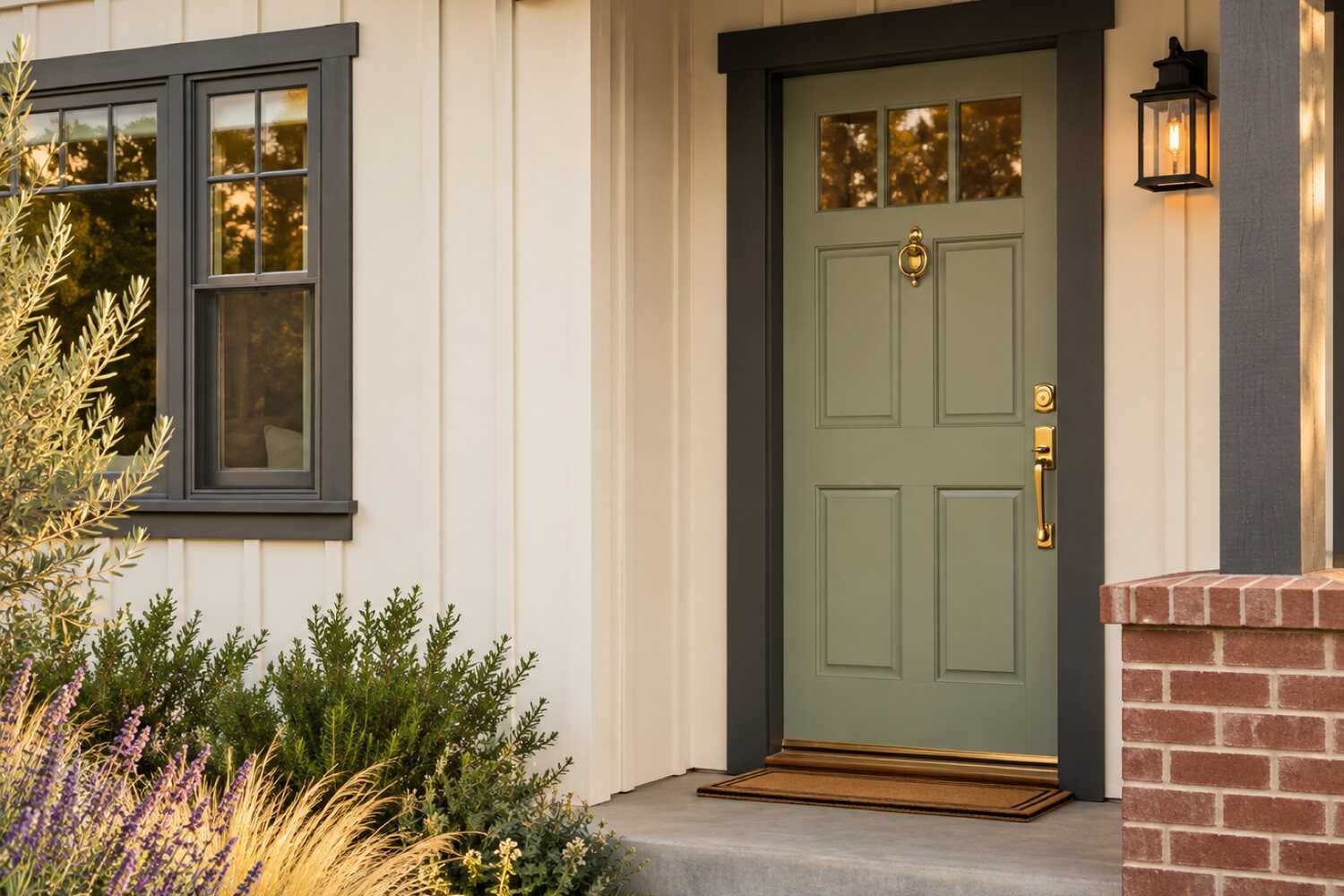
Exterior painting in Roseville, CA.
Roseville painting scopes should follow the actual siding, stucco, trim and existing coatings. Inspect each elevation for preparation and repair needs, and check applicable association colors in west-side communities before ordering. A home’s construction decade does not establish its wall material or repainting schedule.
What exterior painting costs in Roseville
Published 2026 figures put an exterior repaint in Roseville at about $4,000–$6,500 for a smaller or simpler home and $6,500–$12,500 for a typical full repaint (Trico Painting). Larger or more detailed projects run $12,500–$18,000-plus, and HomeBlue's 2,000-square-foot model is $2,400–$5,800. Two-story stucco, foam-trim repair and HOA color approval move the number.
| Scope | Published range | What it usually includes |
|---|---|---|
| Trico smaller or simpler home example | $4,000–$6,500 | Trico Painting’s 2026–2027 Roseville guide gives this planning band for simpler projects. HomeBlue separately gives $2,400–$5,800 for its 2,000-square-foot house model; the two use different scope assumptions. |
| Trico typical full-home repaint example | $6,500–$12,500 | The same contractor’s published band for a typical Roseville repaint. Its example project of about 3,015 square feet is listed at $9,623; that is one house’s prep and surface count, and a Westpark stucco two-story with foam trim lands elsewhere in the band depending on crack repair and the number of colors. |
| Trico larger or more detailed project example | $12,500–$18,000+ | Trico’s upper planning band for larger or more complex work. Confirm preparation, repairs, access, number of colors and finish system in the estimate; these cannot be assumed from floor area alone. |
Ranges are published third-party figures, not 916 Exteriors prices; the written estimate is the only number that applies to your home.
How to compare these ranges
Roseville paint budgets depend on the surfaces and preparation actually included. A stucco repaint in Westpark needs a crack and foam-trim assessment, while older wood siding around Sierra Gardens may need more removal of loose coatings and applicable lead-safe handling.
Check any association palette before ordering, then name each body, trim, fascia and door surface in the proposal. Published house-size models are not measured-wall rates.
Compare primer, finish coats and access allowances on the same basis, and separate rot repairs from painting so concealed damage is not hidden inside a broad repaint figure.
Sources
- CAL FIRE OSFM: current WUI code and local applicability
- City of Roseville Building Inspection Division: Permit exemptions list (effective January 1, 2026)
- Trico Painting: Exterior house painting cost in Roseville, CA (2026–27 guide)
- HomeBlue: Cost to paint the exterior of a house in Roseville, California
- U.S. EPA: Renovation, Repair and Painting Program
Read next: How much does exterior painting cost in Roseville?
What changes the price in Roseville
- Two-story share
- Most 1990s and 2000s Roseville homes are two stories; staging over rear patios and pools adds time on every elevation.
- Foam trim recoating
- Worn foam trim corners and bands on the stucco tracts are re-skinned or rebuilt before paint, priced by the linear foot.
- Stucco crack repair and cure time
- Filling and texturing the corner cracks on a 2000s house adds labor and a curing wait before the body coat.
- HOA color approval
- A palette change in Westpark, Fiddyment Farm, or Sun City Roseville adds a sample-on-house step and can require a premium color.
- Lead-safe prep on pre-1978 homes
- Scraping T1-11 in Sierra Gardens or lap siding downtown means RRP containment and disposal.
- Wood replacement before paint
- Swollen panel bottoms and soft trim on the east side are replaced as line items, not painted over.
Compare your finish options
Choose two options to compare the upkeep, fit and installation details.
| Compare | Acrylic exterior paint (flat or low sheen) | Acrylic exterior paint (satin or semi-gloss) |
|---|---|---|
| Appearance | Soft finish that hides surface texture | More light reflection; shows detail |
| Maintenance | Repaint on a normal cycle; touch-ups blend well | Easier to wash; shows surface flaws |
| Where it fits | Stucco and body siding | Trim, doors, and fascia |
| Installation | Brush, roll, or spray with back-rolling | Careful prep since sheen reveals texture |
View all 4 options and planning notes
Most Sacramento-area repaints use 100 percent acrylic exterior paint: a flat or low-sheen finish on the body, which hides stucco and siding texture, and a satin or semi-gloss on trim, doors, and fascia, which washes clean and shows the detail. Elastomeric coatings suit stucco with hairline cracking but not wood. Solid stain is the choice for rough-sawn wood siding and fences where a film would peel.
| Option | Appearance | Maintenance | Where it fits | Installation notes |
|---|---|---|---|---|
| Acrylic exterior paint (flat or low sheen) | Soft finish that hides surface texture | Repaint on a normal cycle; touch-ups blend well | Stucco and body siding | Brush, roll, or spray with back-rolling |
| Acrylic exterior paint (satin or semi-gloss) | More light reflection; shows detail | Easier to wash; shows surface flaws | Trim, doors, and fascia | Careful prep since sheen reveals texture |
| Elastomeric coating | Thick, uniform finish | Bridges hairline cracks; recoat compatibility matters | Stucco with minor cracking | Heavier application; not for wood siding |
| Solid stain | Opaque color that keeps some wood texture | Weathers by fading rather than peeling | Rough-sawn wood siding and fences | Penetrates rather than films over the surface |
Specific durability claims come from each product's own data sheet. Manufacturer names appear once 916 Exteriors confirms the products it uses.
Planning painting work in Roseville
Open the topics that apply to your property.
Painting a Roseville house differs from the same job in Rocklin, Granite Bay or Citrus Heights. Rocklin's stucco tracts are the same age and zone, but its Whitney Oaks and Clover Valley hillside homes sit on granite slopes. Staging there is harder than on Roseville's flat lots. Granite Bay is unincorporated Placer County with a 1987 median year and heavy oak shade. Its jobs are wood-trim and cedar-sided customs with mildew on the north walls, not foam trim on stucco. Citrus Heights, in climate zone 12 across the Sacramento County line, is 40% 1970s housing, which makes it a T1-11 scrape-and-prime market. In Roseville that wood-prep work is a minority east of I-80.
Compare nearby: Exterior painting in Rocklin, CA · Exterior painting in Granite Bay, CA · Exterior painting in Citrus Heights, CA
Exterior painting for Roseville homes
Exterior painting in Roseville is mostly a stucco job. Roughly seven in ten Roseville homes, 69%, were built in 1990 or later (U.S. Census Bureau, ACS 2020–2024). The two-story tracts in Johnson Ranch, Stoneridge, Highland Reserve, Woodcreek Oaks, Westpark and Fiddyment Farm share the same skin: stucco bodies, foam trim at windows and bands, and painted fiber-cement or hardboard at the gables. What fails on those walls is predictable. Hairline cracks open at window corners, the west body chalks, and the foam trim's thin coating cracks and lets water into the profile.
The scope on a stucco tract starts with a crack map. Patch and texture the corner cracks, re-skin or replace failed foam trim by the linear foot, and let the patches cure before the body coat. The associations in Westpark, Fiddyment Farm, Blue Oaks and Sun City Roseville hold an approved palette, so the color decision and the application go in first. The painting service scope and the regional cost guide show what a two-coat, elevation-by-elevation estimate should list.
East of I-80, the 1960s–70s ranches around Diamond Oaks, Sierra Gardens and Cirby Way are a wood-prep job. T1-11 grooves and hardboard bottom edges hold the last three coats loosely. The work is scraping, priming bare wood and replacing swollen panels before any color. Homes built before 1978 fall under EPA RRP lead-safe practices when paint is scraped or sanded. Downtown, the railroad-era bungalows around Historic Old Town add detailed trim, multiple colors and the Downtown Code's guidelines on some visible changes.
Painting needs no building permit from the City of Roseville; its permit exemptions list painting as finish work. The approvals that do matter are the HOA's on the west side and, downtown, the Planning Division's read on a visible change. Rot found during prep is priced as carpentry. If it reaches rafter tails or framing, that portion needs a permit.
Housing age and what to inspect
Housing age helps plan an inspection. The share of homes in each decade is census data; the notes describe materials and conditions to check at the property.
| Built | Share of homes |
|---|---|
| Before 1940 | 2% |
| 1940–1949 | 1% |
| 1950–1959 | 3% |
| 1960–1969 | 4% |
| 1970–1979 | 7% |
| 1980–1989 | 14% |
| 1990–1999 | 23% |
| 2000–2009 | 25% |
| 2010 and later | 21% |
Roseville: 61,242 housing units, median year built 1998, median owner-occupied value $661,400, 69% owner-occupied. Source: U.S. Census Bureau, American Community Survey 2020–2024 5-Year Estimates, tables B25034 (year structure built), B25035 (median year built), B25077 (median value, owner-occupied), B01003, B25003 (ACS 2024 5-year).
- Prewar through the 1950sbefore 1960
- Just 6% of Roseville's homes predate 1960, and most of them are railroad-era bungalows and cottages around Historic Old Town and the Vernon Street blocks. Crews find redwood lap and shiplap under six or more coats. Alligatoring shows on the south walls, bare wood at the water table, and painted-shut window sashes everywhere. Prep is scraping to a sound edge, oil or bonding primer on bare wood, and a separate trim color on the porch and window casings. Lead-safe RRP practices apply on every one of these homes. The Downtown Code's design guidelines may cover a visible color change.
- 1960s and 1970s1960–1979
- About 11% of Roseville's housing is the 1960s–70s ranch stock in Diamond Oaks, Sierra Gardens and off Cirby Way: T1-11 and hardboard walls painted three or four times since new. The grooves in the T1-11 hold thin paint and check first. The bottom 12 inches of every panel behind a sprinkler head is swollen and peeling. Scope the swollen panels as replacements, prime bare wood the same day it is scraped, and use an acrylic body coat in a flat or low-sheen finish. Pre-1978 homes carry RRP requirements.
- 1980s1980–1989
- Stucco bodies with hardboard lap at gables and side walls are the 1980s pattern in Cirby Ranch, the Maidu area and early Johnson Ranch, about 14% of the housing. The stucco holds paint well; the hardboard does not, and its butt joints and bottom course peel first. Price the hardboard elevations for scraping, priming and joint caulking separately from the stucco body. Check the unflashed transition strip between the two materials while the ladder is up.
- 1990s and 2000s1990–2009
- About 48% of Roseville homes were built from 1990 through 2009 in Johnson Ranch, Stoneridge, Highland Reserve, Woodcreek Oaks, Sun City Roseville and the first Westpark phases. These are two-story stucco with foam trim, and most are on their first or second repaint. The scope is a crack map at the window corners, foam-trim re-skinning by the foot, a bonding primer on repaired areas, and two body coats. The associations in the west-side tracts and Sun City hold approved palettes. Get the color approved before the walls are washed.
- 2010s onward2010–present
- One Roseville home in five, about 21%, dates from 2010 or later, chiefly in Westpark, Fiddyment Farm and the newer West Roseville villages. Most are on their first repaint. The builder's body coat has chalked on the west elevation, the fiber-cement gable accents are sound, and the foam trim has hairline cracks at the miters. Wash, spot-prime the chalked walls, seal the trim miters and apply two coats in the HOA-approved color. Ask for the builder's color codes; many associations keep them on file.
Painting by neighborhood in Roseville
- Westpark
- Westpark is the first West Roseville Specific Plan village, built from 2005 on flat lots west of Fiddyment Road, with two-story stucco, foam trim and a village HOA. Most homes are on their first repaint. The west-facing bodies have chalked, and the foam trim has cracked at the miters. Get the association's palette approval first, then price the trim repair by the foot.
- Sun City Roseville
- Short single-story stucco walls make Sun City Roseville the quickest repaint in the city. Del Webb built the age-restricted community after the 1993 specific plan, and its community association holds the approved color list. Single-story access keeps the job quick. The common repair is crack patching at window corners on the mid-1990s stucco. Submit the color to the association before scheduling.
- Johnson Ranch and Stoneridge
- The tallest stucco walls in east Roseville are in Johnson Ranch (late 1980s and 1990s) and Stoneridge (2000s). They have two-story entries, foam bands and, on the older Johnson Ranch plans, hardboard gables. Staging over rear patios and pools is the cost driver. The hardboard gables need scraping and priming that the stucco does not. Price the elevations by height.
- Highland Reserve
- Highland Reserve grew from a 1997 specific plan in north-central Roseville into late-1990s and 2000s two-story stucco homes with tight side yards. The narrow setbacks limit ladder angles on the side elevations. The foam-trim window surrounds on the sun side have cracked at the miters. Note the access plan on the estimate, and confirm whether the tract's association reviews color.
- Sierra Gardens and Cirby Way
- Three or four coats of paint sit on the T1-11 and hardboard walls of the Sierra Gardens ranches and the 1960s–70s tracts along Cirby Way, with swollen bottom edges behind lawn sprinklers. The job is scrape, replace the swollen panels, prime bare wood and two coats. RRP lead-safe practices apply on pre-1978 homes. Separate the wood replacement from the painting on the estimate.
- Historic Old Town
- Roseville's oldest painted wood is in Historic Old Town and the bungalow blocks of the Downtown Specific Plan area. Redwood lap and shiplap cover railroad-era homes with porch columns and window casings in a second color. Multi-coat build-up and lead paint set the prep. The Downtown Code's design guidelines may apply to a visible change, so confirm with the Planning Division before choosing a new scheme.
Sun, rain, trees and site conditions
Roseville sits in California Energy Commission climate zone 11, a few degrees hotter in summer than Sacramento. Its 100°F-plus afternoons put a west-facing stucco wall above the application limit of most acrylics by noon. Crews paint east walls in the morning and west walls late or in shade, and keep the body coat off a wall that is too hot to touch. The south and west elevations chalk and fade first on the 1990s–2010s tracts. The foam trim on those sides cracks at the miters.
Winter brings about 20 inches of rain between October and April, often in a few atmospheric-river storms. Stucco crack repair needs dry days to cure, so the season runs from late spring through October. Fall is the best window, and it fills once the HOA approvals clear in late summer. East of I-80, the valley oaks over Diamond Oaks, Sierra Gardens and the Dry Creek and Cirby Creek corridors keep north walls damp. Mildew on the shaded T1-11 has to be washed and treated before primer.
Lawn sprinklers that hit the wall are the most common cause of peeling on the east-side wood tracts. They also stain the stucco base on the west side. Move the heads or adjust the arc before the paint goes on. Roseville's permit exemptions list painting as finish work, so no building permit applies. The gates are the HOA palettes in the west-side tracts and Sun City, and the Downtown Code's guidelines on a visible change in Historic Old Town.
Permits and approvals
Repainting does not require a building permit from the City of Roseville: the Building Inspection Division’s permit-exemptions list dated January 1, 2026 names painting, papering, tiling, carpeting, cabinets, counter tops and similar finish work as exempt. The approvals that do apply are the homeowners’ association’s in Westpark, Fiddyment Farm, Blue Oaks, Sun City Roseville and many of the 1990s east-side tracts, where body and trim colors are reviewed against an approved palette, and, downtown, the Downtown Code’s design guidelines (Roseville Municipal Code Chapter 19.31) inside the Downtown Specific Plan area, which includes Historic Old Town. Rot found during prep is a different scope: trim and fascia replacement is not on the exemption list, so the division at 311 Vernon Street is asked whether a small repair needs its own permit, and one is required once the damage reaches rafter tails or framing.
Homes confirmed to have been built before 1978 fall under the EPA's Renovation, Repair and Painting rule when paint is scraped or sanded: the firm must be EPA-certified, provide the Renovate Right pamphlet, and contain and clean up dust. Roseville Electric, the city's utility, is not involved in a repaint unless the service mast or meter enclosure is being painted or moved, in which case the crew keeps clear of the service drop.
Permit authority: City of Roseville Building Division . Whether a permit or review applies, and who pulls it, is written into the estimate.
Seeing something on your own house? Request an estimate for painting in Roseville
Repaint, spot-repair, or repair first?
Peeling paint is sometimes just old paint and sometimes a sign of moisture or failed wood. Preparation depends on which it is.
Not sure which applies? Tell us what you are seeing and request an estimate for painting.
What the scope includes
A complete estimate names the work, materials and exclusions so you can compare proposals.
Keep a copy for your site visit or when comparing estimates.
Included in a written scope
- Pressure washing and scraping of loose or failed coating
- Repair of small wood or stucco defects and replacement of failed caulk
- Priming of bare wood, repairs, and stains
- Masking and protection of windows, fixtures, landscaping, and hardscape
- Finish coats on body and trim as written, with color and sheen confirmed before painting
- Daily cleanup and removal of masking at completion
Clarify before work starts
- Which surfaces are included: body, trim, doors, gutters, fences, and garage door
- How many finish coats and whether primer is a full coat or spot priming
- How rotted wood found during prep is handled and priced
- Whether color testing on the house is part of the scope
How a painting project works
The stages to discuss when planning your project.
Talk through the project
Tell us what you want to repair or update. A few details about the home and what you have noticed are enough to start.
Review the home and options
A site review identifies the work involved, checks the usual trouble spots, and covers the choices that fit your home.
Agree on the scope and schedule
Review what is included, what is not, and how changes are handled before any work is scheduled.
Walk through the result
Review the completed work together, along with the applicable care and warranty information for what was installed.
Painting questions from Roseville homeowners
Do I need HOA approval to repaint the same color in Westpark?
Check before assuming a same-color repaint is exempt from review. Many Roseville associations, Westpark included, ask for body, trim and accent colors on an application even when nothing changes, and palettes get revised over the years, so the original builder color is not always still on the approved list. A same-color match in a different product line is still a submission in most rule sets. Get the approval in writing before paint is ordered, and have the estimate list the exact color names and who is filing the application, the homeowner or the contractor.
How do you handle stucco cracks before painting a 1990s Roseville house?
Hairline cracks on a 1990s Roseville stucco house get brushed clean, filled with an elastomeric patching compound and spot-primed before the body coat goes on; that is standard prep in Highland Reserve and the other 1990s tracts, where the stucco has had decades of summers to shrink. Cracks wider than a hairline, offset across the crack, or paired with rust staining or a damp interior wall get inspected first, because those point at the window flashing or the weep screed and a repaint would only hide them. The proposal should say which cracks are prep and which are repairs, and price the two separately.
Is elastomeric paint right for my Sun City Roseville stucco?
Sometimes, and it is not the default. Elastomeric coatings bridge hairline cracks and shed water well, which suits a Sun City Roseville stucco body that has crazed across a sunny elevation, but they also hold moisture in if the wall gets wet from behind, and once applied they are hard to go back from. On a stucco house with no cracking problem, a quality 100% acrylic stucco paint is the simpler system. Ask for the specific product data, the required film thickness and the prep it needs, and rule out active water entry at windows and weep screeds before choosing either.
Does painting a house in Roseville require a city permit?
No. The City of Roseville’s permit-exemptions list, dated January 1, 2026, names painting, papering, tiling, carpeting, cabinets, counter tops and similar finish work as exempt, so a repaint on its own needs no building permit. Rot repair uncovered during prep is a separate scope; trim and fascia are not on the exempt list, so the Building Inspection Division at 311 Vernon Street is asked, and a permit is required once the repair reaches rafter tails or framing. HOA color approval in Westpark or Sun City Roseville is its own step, and the estimate should keep coating, repairs and approvals on separate lines.
When is the best time of year to paint in Roseville?
Late spring through October, with the summer sequenced around the sun. Stucco crack repair needs dry days to cure, which rules out the November-to-March storm season, and a wall that faces the afternoon sun in July is too hot to paint after about noon. The crew works the east walls in the morning, the west walls late in the day or under shade, and the south walls on the cooler days. Fall is often the best window: warm, dry, and past the worst heat, but it fills up fast once the first HOA approvals come through in August.
Our 1970s Sierra Gardens house has peeling T1-11. Paint or stain?
Paint, in almost every case. T1-11 on a 1970s Sierra Gardens house has been painted for decades, and stain will not penetrate a previously painted surface, so a solid-color stain would sit on the old paint like one more coat. The real work is the prep: scraping and sanding the peeling areas, priming bare wood, and sealing the bottom edge of each panel where water wicks up, with lead-safe practices if the house predates 1978. Panels that are soft or delaminating at the bottom get replaced before coating; no finish restores a deteriorated panel. A quality acrylic body paint over a bonding primer is the standard system.
Tell us about your Roseville painting project.
Share what you have noticed and what you would like to change. We'll review the details and contact you about the next step.
No budget, address, or photos needed to inquire.
Other exterior services in Roseville
- Siding replacement in RosevilleExplore repair and replacement options for your home's exterior walls.
- Window & door replacement in RosevilleFind an updated look and a fit that works for your home.
- Roof replacement in RosevillePlan the next step for a worn or damaged roof.
- Gutter installation in RosevillePlan how rainwater moves from the roof and away from the home.
- Dry rot & trim repair in RosevilleAddress damaged wood and understand the work around it.
Exterior painting in other communities we serve
Sacramento County
- Exterior painting for Sacramento homes
- Exterior painting for Folsom homes
- Exterior painting for Elk Grove homes
- Exterior painting for Citrus Heights homes
- Exterior painting for Carmichael homes
- Exterior painting for Fair Oaks homes
- Exterior painting for Rancho Cordova homes
- Exterior painting for Arden-Arcade homes