
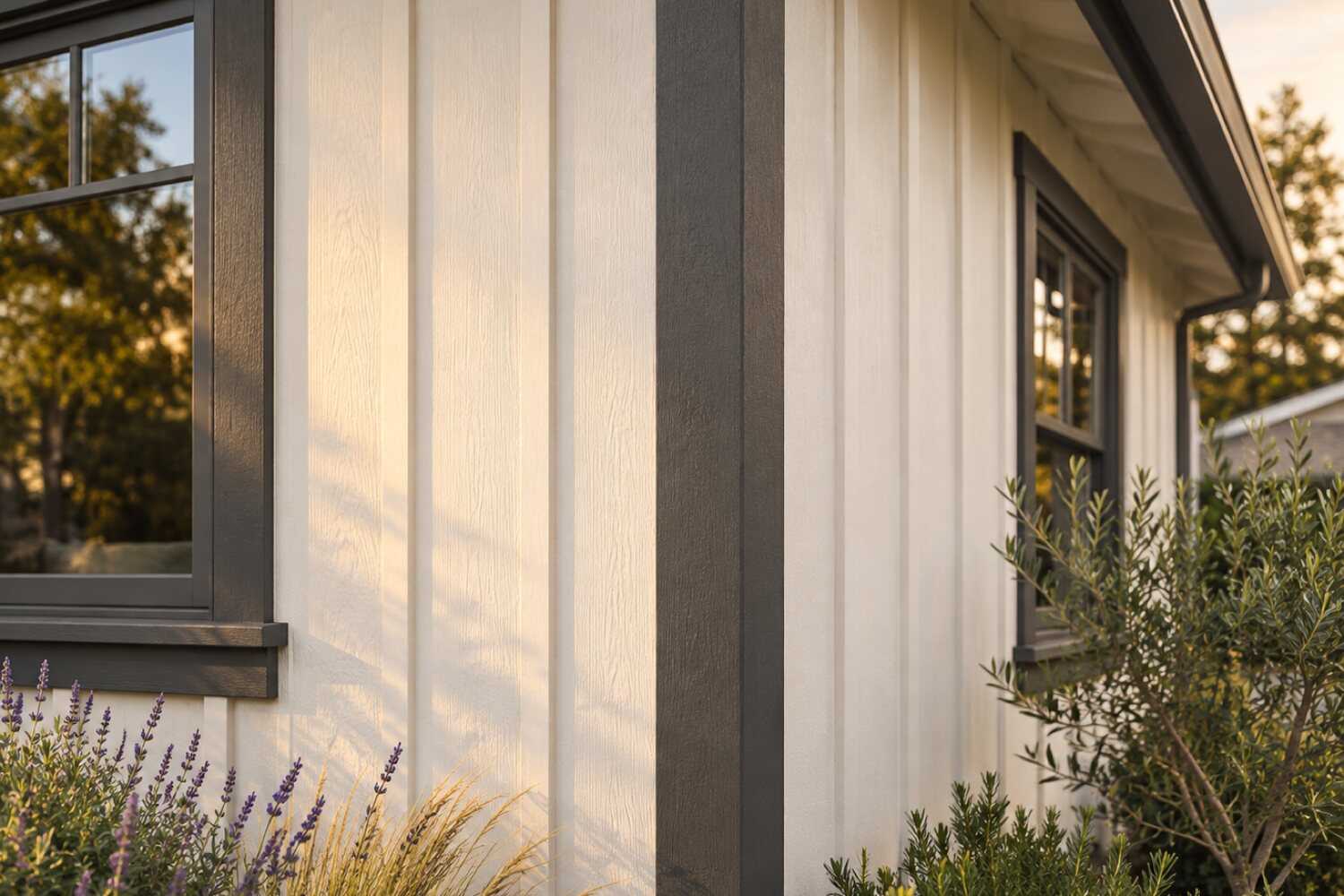
Siding replacement and repair in Rancho Cordova, CA.
Rancho Cordova includes older neighborhoods and newer subdivisions; inspect the actual siding and wall assembly before deciding which elevations need repair or replacement.
What siding replacement costs in Rancho Cordova
Published 2026 figures put siding replacement in Rancho Cordova at roughly $2,789–$17,854 (homeyou); Corkd lists fiber cement lap at $6–$12 per square foot installed and vinyl at $3.50–$8, and Handoff's Sacramento fiber cement figure runs $7.13–$14.92. Lead-safe tear-off on pre-1978 walls, a missing weather barrier under 1960s boards and HOA review in Anatolia move the number.
| Scope | Published range | What it usually includes |
|---|---|---|
| Published siding-replacement range | $2,789–$17,854 | homeyou’s Rancho Cordova siding-replacement range. The page does not say whether the low end is a single garage front or a bottom-course repair, or whether the high end covers a full two-story Lincoln Village house, so read it as the spread of reported jobs rather than a repair-to-replacement scale. |
| Fiber cement lap, installed per sq ft | $6–$12 (Corkd, Rancho Cordova); $7.13–$14.92 (Handoff, Sacramento) | Material and labor per square foot of wall; vinyl runs $3.50–$8 and engineered wood $4–$9 on the same Rancho Cordova table. |
| Whole-house replacement | $2,789–$17,854 | homeyou's typical range for Rancho Cordova siding replacement across reported projects; larger two-story homes sit at the top. |
Ranges are published third-party figures, not 916 Exteriors prices; the written estimate is the only number that applies to your home.
How to compare these ranges
Two things move a Rancho Cordova siding number more than the material. First, lead-safe work on the pre-1978 houses adds containment and cleanup time to any tear-off in Cordova Meadows or Lincoln Village.
Second, what is behind the siding: a 1950s or 1960s home may have a missing or damaged water-resistive barrier or gaps in board sheathing, so the wall is brought up to a modern assembly, not just re-skinned. On the stucco tracts the number is a repair-and-repaint number, not a replacement one.
The figures above are published third-party ranges for Rancho Cordova and the Sacramento region rather than 916 Exteriors prices; the siding cost guide walks through the regional figures in more detail.
Sources
- homeyou: Siding replacement in Rancho Cordova, CA, costs
- Corkd: Rancho Cordova siding replacement costs by material
- Handoff: Cost to install fiber cement siding in Sacramento, CA
- U.S. Census Bureau: ACS 2020–2024 5-year, Rancho Cordova housing by year built
- City of Rancho Cordova: Building and Safety
- U.S. EPA: Renovation, Repair and Painting Program
- Anatolia Homeowners Association: Architectural Control Committee
- CAL FIRE / Office of the State Fire Marshal: Fire Hazard Severity Zones
Read next: How much does siding cost in Rancho Cordova?
What changes the price in Rancho Cordova
- Lead-safe work on pre-1978 homes
- Every 1950s and 1960s house and most 1970s houses in the city fall under the EPA RRP rule; containment, respirators, and cleanup add labor to a tear-off.
- No barrier behind the original siding
- Older ranches were sided straight over studs or board sheathing; adding a water-resistive barrier and window flashing is part of the replacement, not an extra.
- Discontinued 1970s profiles
- T1-11 and hardboard patterns are hard to match; partial walls often become full walls so the change reads clean.
- West-facing garage fronts
- On the older grid the garage elevation takes the worst sun and is often quoted alone; single-elevation work costs more per square foot than a whole house.
- HOA review in the 2000s tracts
- Anatolia and Zinfandel approvals add calendar time and sometimes a required color palette or trim profile.
- Fences and side yards
- Narrow side yards with fences nailed into the siding need fence sections removed and reset.
Compare your siding options
Choose two options to compare the upkeep, fit and installation details.
| Compare | Fiber cement lap or panel | Engineered wood |
|---|---|---|
| Appearance | Wood-like boards, smooth or textured; holds paint well | Wood grain look with fewer natural defects |
| Maintenance | Periodic repainting and caulk checks | Repainting on the finish schedule; keep edges sealed |
| Where it fits | Suits most stud-framed homes; heavy, needs proper flashing | Good for lap and trim; keep away from ground contact |
| Installation | Cut with dust control; clearances and flashing matter | Lighter than fiber cement; follows maker's nailing and gap rules |
View all 5 options and planning notes
Fiber cement is the most common replacement choice on Sacramento-area homes because it holds paint, resists sun and insects, and takes a lap or panel profile; it costs more than vinyl and needs careful flashing. Engineered wood is lighter and cheaper to install with a similar look. Vinyl is the lowest-cost option but moves with heat. Stucco is repaired rather than replaced, and natural wood is the choice for matching an older home.
| Option | Appearance | Maintenance | Where it fits | Installation notes |
|---|---|---|---|---|
| Fiber cement lap or panel | Wood-like boards, smooth or textured; holds paint well | Periodic repainting and caulk checks | Suits most stud-framed homes; heavy, needs proper flashing | Cut with dust control; clearances and flashing matter |
| Engineered wood | Wood grain look with fewer natural defects | Repainting on the finish schedule; keep edges sealed | Good for lap and trim; keep away from ground contact | Lighter than fiber cement; follows maker's nailing and gap rules |
| Vinyl | Factory color, visible panel joints and profiles | Washing; no painting in most cases | Expands with heat; needs room to move in Sacramento summers | Hung loose on the wall; trim and J-channel details show |
| Stucco (repair or recoat) | Continuous plaster finish common on local homes | Crack repair and recoating over time | Existing stucco homes; moisture and cracking need diagnosis first | Patching, lath repair, and finish coats matched to existing texture |
| Natural wood | Real grain, can be stained or painted | Most frequent finish upkeep of the group | Best where it stays dry and can be maintained | Species, grade, and back-priming affect longevity |
General characteristics only; specific product performance comes from the manufacturer's own documentation. Manufacturer names and warranties appear once 916 Exteriors confirms the products it installs.
Planning siding work in Rancho Cordova
Open the topics that apply to your property.
Siding in Rancho Cordova differs from its neighbors on housing era, jurisdiction and lot pattern. Across the American River in Carmichael and Fair Oaks, the permit comes from Sacramento County and the lots are larger. Custom ranches there sit under heavy oak canopy and carry redwood that stays damp on the north side, so a siding job is often a shaded-wall repair. In Folsom the stock is mostly 1990s and 2000s stucco on the foothill edge, and parcels near open land may carry wildfire mapping that affects material choice. Rancho Cordova has neither the canopy nor the slope. It is flat ground at roughly 90 feet, with a city permit office that publishes its own siding application. Half the houses are 1950s–1970s tract wood, and HOA architectural review applies only on the 2000s side of Highway 50.
Compare nearby: Siding replacement in Folsom, CA · Siding replacement in Sacramento, CA · Siding replacement in Carmichael, CA
Siding replacement for Rancho Cordova homes
Rancho Cordova's housing splits almost evenly between two building periods. About 28% of homes date from the 1950s and 1960s and another 22% from the 1970s, so half the city predates 1980; the median year built is 1979 (U.S. Census Bureau, ACS 2020–2024 5-year). That older half sits on the grid between Folsom Boulevard and the American River, in Cordova Meadows, Lincoln Village and the streets off Coloma Road. It was built for Aerojet and Mather Air Force Base families. The other 30% went up after 2000 south of Highway 50, in Anatolia, the Villages of Zinfandel, Sunridge Park and Kavala Ranch, and those houses are stucco with foam trim. A siding call in this city is one of two jobs: replacing tract-era wood on the north side, or repairing accents and transitions on a stucco house on the south side.
On the older grid, crews find redwood or fir lap on the 1950s and 1960s ranches and T1-11 or hardboard on the 1970s houses. Both sit over board sheathing with no weather-resistive barrier behind them. The bottom course often rests within an inch of the slab, and the west-facing garage front has chalked and split. T1-11 panels have wicked water up their exposed bottom edge until the lower foot is soft. Fences on the narrow side yards are frequently nailed straight into the siding. Those findings set the scope: a replacement here is a full wall assembly with housewrap, flashing at every opening and sheathing repaired per sheet, not a re-skin. On any house confirmed to predate 1978, the tear-off is lead-safe work under the EPA rule.
The written siding scope should map each elevation separately, because the sun side and the shaded side of the same Cordova Meadows ranch are rarely in the same condition. It states the removal limit, the barrier and flashing detail, and the replacement product and thickness. It also says how the crew prices and photographs discovered sheathing damage and how it handles fence sections and the SMUD service mast. Homeowners comparing products can read the fiber cement versus vinyl guide for the regional tradeoffs. On the stucco tracts the same document should separate stucco patching and paint blending from any accent-panel replacement so the two are not priced as one number.
Housing age and what to inspect
Housing age helps plan an inspection. The share of homes in each decade is census data; the notes describe materials and conditions to check at the property.
| Built | Share of homes |
|---|---|
| 1940–1949 | 1% |
| 1950–1959 | 11% |
| 1960–1969 | 17% |
| 1970–1979 | 22% |
| 1980–1989 | 11% |
| 1990–1999 | 7% |
| 2000–2009 | 17% |
| 2010 and later | 13% |
Rancho Cordova: 29,313 housing units, median year built 1979, median owner-occupied value $477,600, 58% owner-occupied. Source: U.S. Census Bureau, American Community Survey 2020–2024 5-Year Estimates, tables B25034 (year structure built), B25035 (median year built), B25077 (median value, owner-occupied), B01003, B25003 (ACS 2024 5-year).
- 1950s–1960s homes1950s–1960s (28% of homes)
- The city's first postwar production tract went up at Folsom Boulevard and Zinfandel Drive, and Cordova Meadows followed on the same pattern. These are single-story ranches with horizontal lap over board sheathing, aluminum sliders set without pan flashing, and no housewrap. Sixty years on, crews find the bottom course rotted where it meets the slab or the planter, oil-based paint stacks alligatoring on the south wall, and split boards on the west garage front. Probe the lower twelve inches, the corner boards and the sill line under each slider before pricing. The estimate should separate lead-safe setup, siding, housewrap and flashing, and sheathing repair by the sheet, since the old boards behind the lap are often the real cost.
- 1970s homes1970s (22% of homes)
- The 1970s brought T1-11 plywood and hardboard lap to Lincoln Village and the later Cordova Meadows streets, and many of the models are two stories. T1-11 fails from the bottom up. The exposed end grain at the panel edge wicks sprinkler water and splash, and the grooves channel rain to the same place, so the lower foot goes soft while the face still holds paint. Hardboard swells at the nail heads and butt joints and cups where it faces west. Both patterns are discontinued, so a partial repair rarely matches. The estimate should state whether the fix is a flashed horizontal splice, a full panel, or a full wall in fiber cement, and price second-story staging on its own line.
- 1980s–1990s homes1980s–1990s (18% of homes)
- The 1980s and 1990s share is small, about 18%, and scattered between the old grid and the 2000s tracts. These are the city's first stucco bodies, usually with hardboard on the gables and pop-outs and foam trim arriving late in the period. Crews find the hardboard gables swollen and delaminated at their bottom edge, stucco cracked at window corners, and the weep screed buried under bark or a raised bed. Siding work on these houses is gable and pop-out replacement in fiber cement plus stucco patching at the transitions. The scope should say how the new lap ties into the existing weather barrier and how the crew textures and paints the stucco patch to blend.
- 2000s and after homes2000s and after (30% of homes)
- Anatolia, the Villages of Zinfandel, Sunridge Park, Kavala Ranch and Capital Village are stucco with foam trim, with fiber-cement or hardboard lap limited to porch gables and accent panels. The stucco is sound for the most part. The failures are foam trim delaminating at its top edge, hairline cracks along control joints, and accent lap on a west gable that has cupped. Anatolia and the Villages of Zinfandel require architectural approval for any change in material, profile or color, and Capital Village's association reviews its townhomes. Get the builder's product record where it exists, confirm the accent material before ordering, and keep the stucco repair, the accent replacement and the HOA submission as separate lines.
Siding by neighborhood in Rancho Cordova
- Cordova Meadows
- Cordova Meadows is the largest block of 1950s and 1960s Aerojet-era ranch housing in the city: single-story, wood lap and hardboard over board sheathing, under a sixty-year street-tree canopy. The shaded north walls hold moisture through spring and the sun-facing garage fronts split, so the two sides of one house need separate findings. Expect no barrier behind the boards. The scope prices housewrap and flashing as part of the wall, sheathing repair by the sheet, and lead-safe containment on every tear-off.
- Lincoln Village
- Lincoln Village's 1960s and 1970s houses carry T1-11 and hardboard on the walls, and a good share of the plans are two-story. The soft bottom foot of a T1-11 panel and the swollen butt joints on hardboard lap are the standard findings, and the discontinued profiles mean a patch reads as a patch. The estimate should decide wall by wall between a flashed splice at the bottom and a full elevation in fiber cement. Staging for second-story work belongs on its own line.
- The Coloma Road streets
- The streets off Coloma Road are the closest in the city to the American River Parkway, where valley oaks and cottonwoods keep north and east walls in shade for most of the day. Crews find mildew under the paint, damp bottom courses and rot at the corner boards on the shaded side, while the street side looks fine. Inspect the shaded elevations first and plan pruning or protection for the canopy before staging. Keep the shaded-wall repair separate from a cosmetic recoat on the rest.
- Anatolia and the Villages of Zinfandel
- Anatolia and the Villages of Zinfandel are 2000s stucco tracts on flat, treeless lots south of Highway 50, both under HOA architectural review. Elliott Homes started the Zinfandel side at the south end of Zinfandel Drive in 2000. Siding work here is accent-panel replacement, foam-trim repair and stucco patching at the transitions, not a re-side. Clear the buried weep screed while the wall is open, submit the material and color to the association before ordering, and blend the paint on the full elevation so the patch does not show.
- Capital Village and Sunridge Park
- Capital Village is Craftsman-styled small-lot homes and townhomes with porch columns, brackets and lap-sided gables that an association reviews; Sunridge Park next to it is plain 2000s stucco with no HOA. On the Capital Village side the work is in the decorative wood: gable lap, column wraps and trim boards that hold water at their top edges. In Sunridge Park it is foam trim and stucco cracks. Price the decorative carpentry by the piece, confirm what the townhome association covers versus the owner, and keep the two neighborhoods' scopes distinct.
Sun, rain, trees and site conditions
Rancho Cordova sits in Title 24 climate zone 12 on flat valley floor at roughly 90 feet of elevation. July highs run in the low-to-mid 90s with several days over 100°F every summer. South and west walls take that heat straight on, and on the treeless 2000s tracts nothing shades them. Caulk at the window flanges, paint on the west garage front and foam trim on a west gable fail first. On the older grid the canopy helps the sun side and hurts the north side, where lap siding dries slowly after winter.
Winter brings about 18 inches of rain between November and March, often in a few atmospheric-river storms that run for days. Water that reaches a failed bottom edge in one of those storms has time to soak into T1-11 end grain or behind unflashed lap. The flat lots drain slowly, so a bottom course near grade sits wet for weeks. Check irrigation heads that hit the wall, planter soil piled against the siding, and downspouts that dump at the base of a wood elevation before choosing the repair.
Wildfire mapping is a parcel question here, not a citywide one. Rancho Cordova has mapped fire-hazard areas near open land, and Building & Safety decides which adopted wall or vent provisions apply to a given alteration. Confirm the address before assuming a fire-rated assembly is required. Everywhere else in the city the siding scope follows moisture, sun and the condition of what is under the boards.
Permits and approvals
Rancho Cordova’s Building & Safety division lists a residential siding permit application among its forms, so siding replacement inside the city is permitted work, and describing it as like-for-like is not an exemption. For a repair-only scope, confirm the submission and inspection steps with the division before the boards come off. The proposal names the permit applicant and allows for the exposed-wall inspection before the new siding conceals the sheathing and barrier. HOA or other architectural approval is separate from the city permit.
Rancho Cordova incorporated in 2003. Any permit history on a 1960s or 1970s house before that year is in Sacramento County's records, not the city's, which matters when a buyer or an insurer asks whether an earlier siding job was permitted.
On houses confirmed to predate 1978, the EPA Renovation, Repair and Painting rule applies to most siding tear-offs on the older grid: a certified firm, containment, and lead-safe cleanup. In Anatolia and the Villages of Zinfandel, the HOA architectural committee approves exterior material and color changes before work begins. A Sunridge Park house may have no association review; check the parcel’s recorded restrictions before ordering material. SMUD is the electric utility; if the service mast or the meter panel is on a wall being re-sided, the scope notes how it is worked around.
Permit authority: City of Rancho Cordova Building & Safety . Whether a permit or review applies, and who pulls it, is written into the estimate.
Seeing something on your own house? Request an estimate for siding in Rancho Cordova
Is repair enough?
Not every worn wall needs new siding. What matters is how far the damage goes and whether the layer behind it is still doing its job.
Not sure which applies? Tell us what you are seeing and request an estimate for siding.
What the scope includes
A complete estimate names the work, materials and exclusions so you can compare proposals.
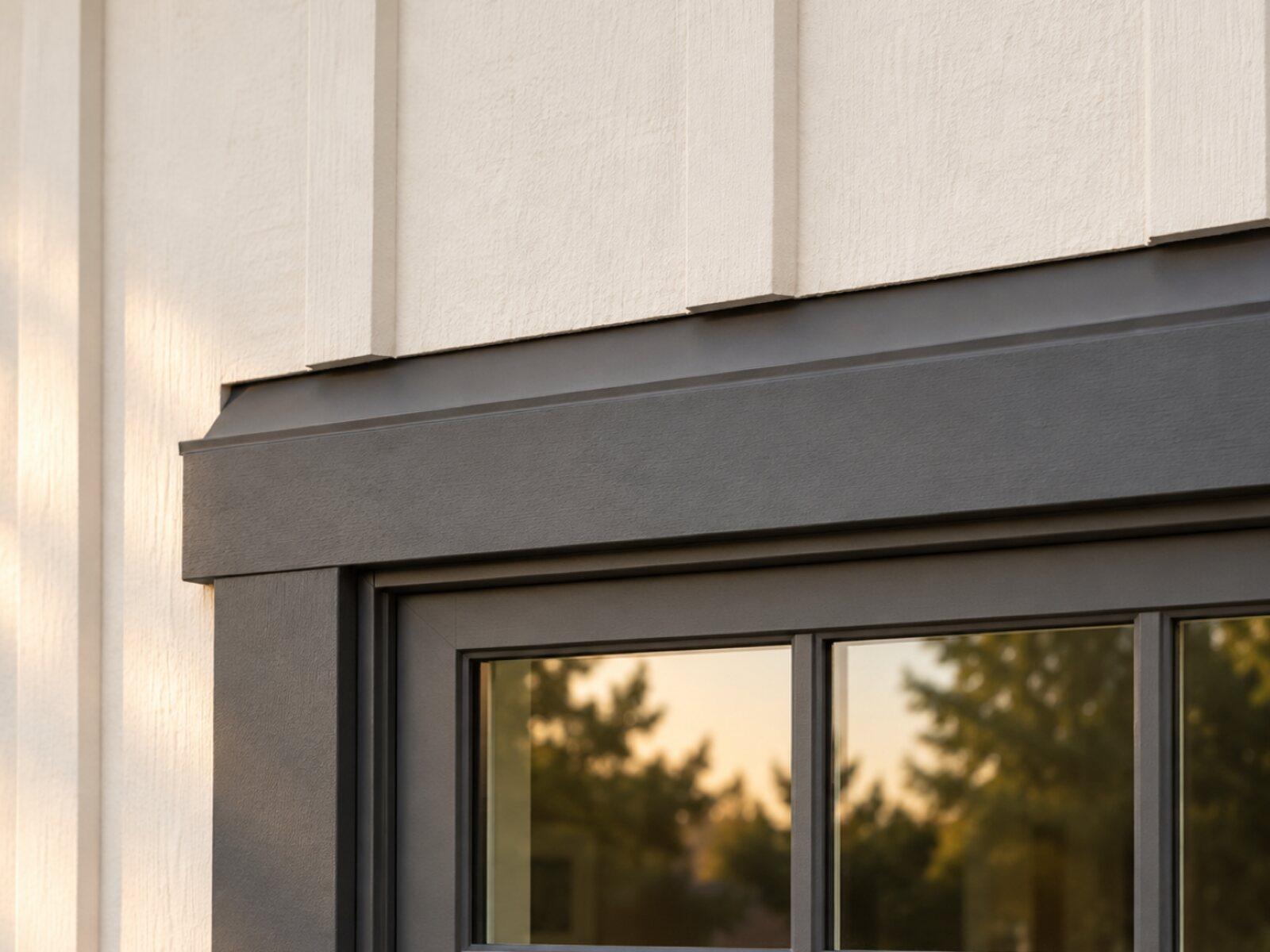
Keep a copy for your site visit or when comparing estimates.
Included in a written scope
- Removal and disposal of the existing siding where replacement is planned
- Inspection of sheathing and framing once walls are open, with any repairs written as a separate line
- Water-resistive barrier, flashing at windows, doors, and penetrations
- New siding and trim installed to the product's published instructions
- Caulking, priming, and finish paint where the product needs it
- Site protection during work and cleanup at the end of each day
Clarify before work starts
- Whether hidden damage is priced up front or as it is found
- Which trim, corners, and transitions are replaced versus reused
- Whether painting is part of this scope or a separate one
- How a change in material or color after the estimate is handled
How a siding project works
The stages to discuss when planning your project.
Talk through the project
Tell us what you want to repair or update. A few details about the home and what you have noticed are enough to start.
Review the home and options
A site review identifies the work involved, checks the usual trouble spots, and covers the choices that fit your home.
Agree on the scope and schedule
Review what is included, what is not, and how changes are handled before any work is scheduled.
Walk through the result
Review the completed work together, along with the applicable care and warranty information for what was installed.
Siding questions from Rancho Cordova homeowners
Does siding replacement need a permit in Rancho Cordova?
Yes for replacement, and ask before assuming a repair is exempt. The City of Rancho Cordova Building & Safety division publishes a residential siding permit application, so re-siding a Cordova Meadows ranch or a Lincoln Village T1-11 wall is permitted work with an exposed-wall inspection before the new siding covers the sheathing. A small like-for-like patch may fall below the threshold, but the division decides that, not the wording on the bid. The estimate names who pulls the permit and how sheathing or framing found once the boards are off changes the scope and the inspection sequence. HOA approval in Anatolia or Zinfandel is a separate step.
My 1960s Cordova Meadows house has original redwood siding. Replace or repair?
Repair can be reasonable when the retained siding and wall assembly are sound and the damaged area can be joined correctly. Inspect the actual boards, coating, barrier, and flashing before deciding. A wider replacement may be appropriate for broader deterioration or a drainage defect that needs more access, but neither remaining service life nor the extent of damage follows from the neighborhood or build date.
How do you handle T1-11 on a 1970s Lincoln Village house?
Start at the bottom edge, because that is where Lincoln Village T1-11 fails: the exposed plywood end grain wicks sprinkler and splash water while the face still holds paint. The crew probes every panel bottom, maps the soft ones, and fixes the water source first. Where damage stops within the bottom foot or two, the panel is cut back to sound wood and a new section spliced in behind a flashed horizontal joint. Where it runs higher or the pattern cannot be matched, the wall is replaced so the change reads clean. Splices are priced by the foot, full walls by the square foot, with the finish match agreed first.
Is lead paint a concern on Rancho Cordova siding jobs?
EPA RRP applies to covered paid work that disturbs painted surfaces in pre-1978 housing, with exceptions and testing provisions described by the program. Confirm the specific building date and scope before demolition. The Census decade totals do not establish that half the city falls below the exact 1978 cutoff. For covered work, certification, containment, cleanup, and required advance information belong in the written plan.
Do I need HOA approval to change my siding in Anatolia?
Yes. Anatolia’s Architectural Control Committee requires written approval for exterior modifications, which includes a change of siding material, profile, or color, and says its review can take up to 45 days, so the submission goes in before material is ordered. The Villages of Zinfandel has its own committee with the same kind of review. Elsewhere in the city, read the recorded restrictions on the parcel; a tract without dues can still carry recorded design rules. The city permit and the HOA approval are separate steps, and the written schedule shows both with their lead times.
Why is stucco repair different from siding replacement on the newer tracts?
Because the failure and the fix sit in different layers. On the 2000s stucco tracts south of Highway 50 the usual defects are hairline cracks at window corners, opened foam-trim joints, and staining at a buried weep screed; the repair is patching, re-sealing the trim, clearing the screed, and repainting to the HOA’s approved color, with lath and plaster only where the plate has gone soft. Board siding on the old grid fails at joints, bottom edges, and nail lines and is replaced by the board or the wall. Stucco repair is priced by the defect, siding by the square foot, so the bids do not compare line for line.
Tell us about your Rancho Cordova siding project.
Share what you have noticed and what you would like to change. We'll review the details and contact you about the next step.
No budget, address, or photos needed to inquire.
Other exterior services in Rancho Cordova
- Window & door replacement for Rancho Cordova homesFind an updated look and a fit that works for your home.
- Roof replacement for Rancho Cordova homesPlan the next step for a worn or damaged roof.
- Exterior painting for Rancho Cordova homesRefresh the finish, starting with the preparation underneath.
- Gutter installation for Rancho Cordova homesPlan how rainwater moves from the roof and away from the home.
- Dry rot & trim repair for Rancho Cordova homesAddress damaged wood and understand the work around it.