
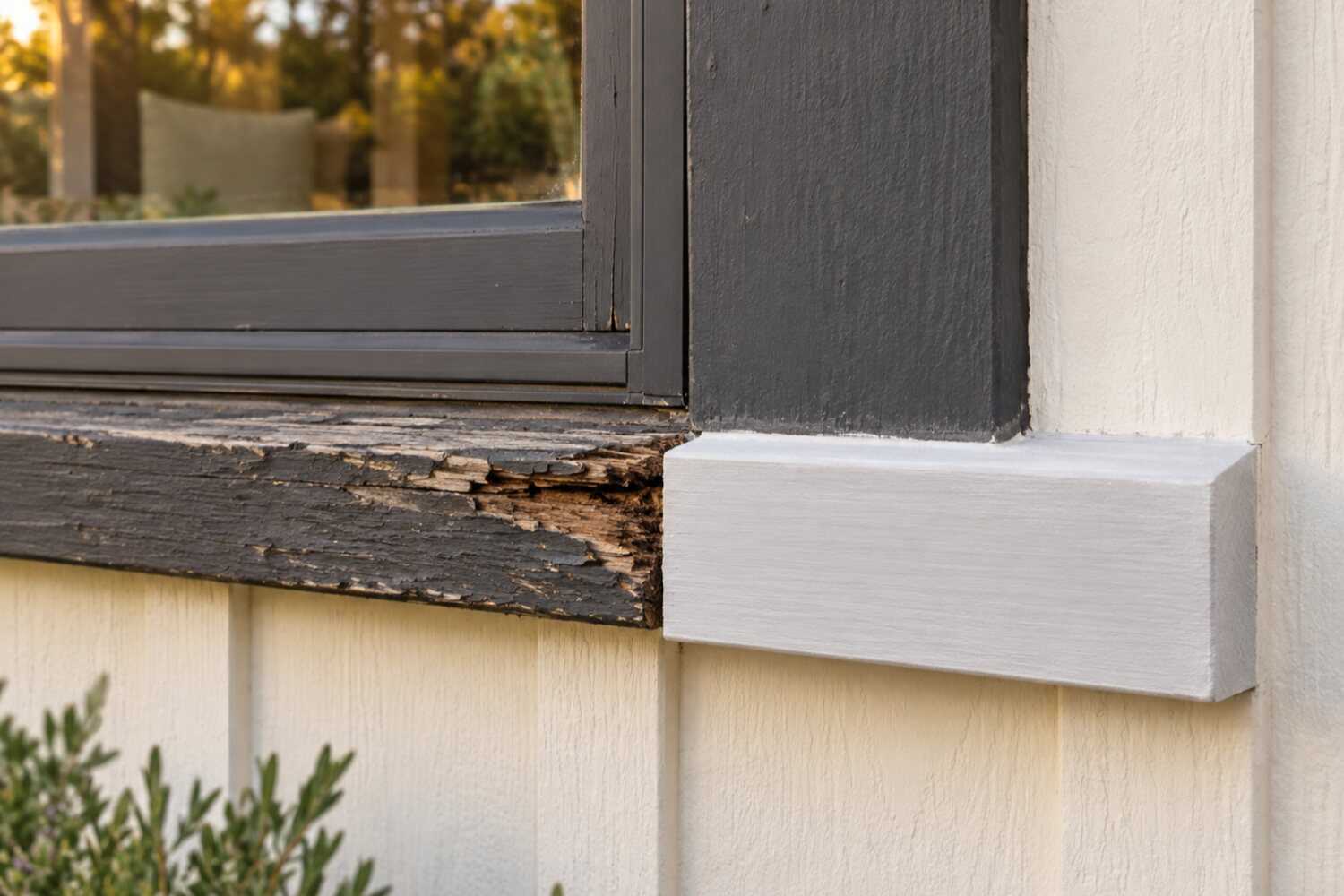
Dry rot and exterior trim repair in Carmichael, CA.
On a Carmichael property, inspect suspect wood near gutters, planting beds and irrigation before defining a rot repair. Shade or an older construction date can prompt investigation, but neither establishes damage.
What dry rot & trim repair costs in Carmichael
Published Sacramento-region figures put dry rot repair for Carmichael at $140–$800 for a small trim or fascia section and $500–$2,351 for a typical project, rising to $2,500–$6,500 and up for structural framing (Vertex Maintenance, citing Angi); Good Life Inspections puts severe repair at $5,000–$10,000 and up. Rafter tails, Del Dayo beam ends and location count move the number.
| Scope | Published range | What it usually includes |
|---|---|---|
| Small trim, fascia, or sill section (Sacramento) | $140–$800 | Published Sacramento range for cutting out a rotted section, splicing in new material, priming, and painting; trim by the foot runs about $15–$40 per linear foot. A second Sacramento tracker puts minor repairs at $500–$1,500. |
| Typical whole project (Sacramento) | $500–$2,351 | Published Sacramento typical range, average near $1,425 (Angi 2026 data as cited locally): several boards or one wall section plus paint. Moderate repairs across siding, door frames, or larger sections are published at $2,000–$5,000. |
| Structural framing, beam ends, or sheathing (Sacramento) | $2,500–$6,500 and up | Published Sacramento range for studs, rim joists, sheathing, temporary support, and permit; a second tracker puts severe or structural repair at $5,000–$10,000 and up. |
Ranges are published third-party figures, not 916 Exteriors prices; the written estimate is the only number that applies to your home.
How to compare these ranges
The cited repair and inspection companies publish Sacramento-region categories, which provide a reference for a Carmichael inspection rather than a property-specific quote. Establish whether deterioration is confined to trim or extends into sheathing, a beam end, rafter tail or other structural member.
The structural scope may require design, support and County review, so a category's upper endpoint is not a promised ceiling. Record every visible location and the moisture source: a leaking joint, splash-back, gutter overflow or grade contact can require different corrective work.
Do not infer the number of affected spots from a Colony address. Verify the year and applicable lead-safe procedures where qualifying work disturbs pre-1978 paint.
Agree on measurement and written approval for concealed damage before opening the assembly. The dry rot signs guide explains what to document before requesting an estimate.
Read next: How much does dry rot repair cost in Carmichael?
What changes the price in Carmichael
- Structural rafter tails and beam ends
- Open-eave ranches and Del Dayo post-and-beam houses put the repair in the permitted, top tier with temporary support and inspection.
- Number of locations
- Colony-era houses commonly have many small spots: sills, corner boards, tails, bottom courses. Setup and finish repeat at each.
- Lead-safe removal on pre-1978 homes
- Identify which painted trim and adjoining surfaces the repair will disturb. Confirm the year and any EPA RRP requirements, including how individual repair areas will be contained and cleaned.
- Water-source correction
- Beam caps, kick-out and Z-flashing, drip edges, grade lowering, and sprinkler changes are often the larger half of the scope.
- Matching old profiles
- Redwood lap reveals, board-and-batten spacing, and midcentury trim take more time to match than standard finger-joint stock.
- Sheathing behind the damage
- T1-11 bottom edges and long-wet bottom courses often hide damaged sheathing, priced per sheet once opened.
Compare repair materials
Choose two options to compare the upkeep, fit and installation details.
| Compare | Primed finger-joint wood trim | Fiber cement trim |
|---|---|---|
| Appearance | Smooth, paint-grade profile that matches most existing trim | Smooth or wood-grain; holds paint |
| Maintenance | Repaint on the normal cycle; keep end cuts sealed | Repaint; resists rot and insects |
| Where it fits | Most trim and fascia replacements | High-exposure trim, corner boards, and fascia |
| Installation | Back-prime and seal cuts; keep off the ground | Heavier; requires proper fasteners and gaps |
View all 4 options and planning notes
Primed finger-joint wood is the usual replacement for painted trim because it matches existing profiles and takes paint well; fiber cement trim costs more and resists rot and insects on the most exposed pieces; cellular PVC is the choice where wood touches the ground or stays wet. Epoxy consolidation saves a historic profile with limited damage, but only after the water source is fixed. None of them stays dry without correct flashing.
| Option | Appearance | Maintenance | Where it fits | Installation notes |
|---|---|---|---|---|
| Primed finger-joint wood trim | Smooth, paint-grade profile that matches most existing trim | Repaint on the normal cycle; keep end cuts sealed | Most trim and fascia replacements | Back-prime and seal cuts; keep off the ground |
| Fiber cement trim | Smooth or wood-grain; holds paint | Repaint; resists rot and insects | High-exposure trim, corner boards, and fascia | Heavier; requires proper fasteners and gaps |
| Cellular PVC trim | White, smooth; can be painted light colors | Very low; expands with heat | Ground contact and constant-wet locations | Needs expansion gaps and compatible adhesives |
| Epoxy consolidation | Original piece retained and filled | Paint; inspect for movement | Historic or hard-to-match profiles with limited damage | Only when the remaining wood is stable and the source is fixed |
Which material is proposed for each location is written in the estimate, along with the flashing or sealing change that stops the water.
Planning dry rot & trim work in Carmichael
Open the topics that apply to your property.
Dry rot repair in Carmichael differs from the neighbors in what the wood is and where it sits. Citrus Heights, 40% 1970s tract, is mostly T1-11 bottom edges and hardboard trim in the sun, with the city as permit authority. Arden-Arcade's 1950s ranches share Carmichael's redwood tails and sills and the county permit, with somewhat less canopy. Rancho Cordova's newer stock across the river has less exposed wood to rot at all. Carmichael's job is the open-eave redwood ranch and the post-and-beam modern under mature trees on big irrigated lots, where structural members, not just trim, are the common finding.
Compare nearby: Dry rot & trim repair in Fair Oaks · Dry rot & trim repair in Arden-Arcade · Dry rot & trim repair in Citrus Heights
Dry rot & trim repair for Carmichael homes
Dry rot in Carmichael is a redwood-and-shade problem. About 40% of the housing is 1950s and 1960s custom ranches on the Colony parcels, in Del Dayo and along the Wilhaggin edge. They were built with exposed rafter tails, wide fascia, redwood lap or board-and-batten and wood window sills. In Del Dayo, beam ends carry the roof past the wall. The 1970s tracts, 27%, add T1-11 bottom edges and hardboard trim. All of it sits under a canopy of oaks, redwoods and camphors that keeps north and east walls damp from November into spring.
The places crews find rot here are consistent. Rafter tails on the open-eave ranches, from the end grain in, where the roof edge drips on them. Fascia behind sagging 1970s sectional gutters. The outside corners of 1950s wood sills, and the bottom of corner boards where they meet a brick planter. The stops and sills under Del Dayo's big glass. Beam ends where they leave the wall. And the bottom foot of T1-11 and the sheathing behind it wherever a sprinkler reaches the wall. The visible soft spot is nearly always smaller than the damage.
The repair scope separates trim from structure. A fascia splice or a sill patch is finish carpentry; a rafter tail, a beam end or sheathing behind the siding is structural. Sacramento County's permit list includes termite and dry rot repair, with minor work exempt under the residential code. The estimate names each location, its role, the moisture source that caused it, the fix for that source and the unit rate for what a controlled opening finds. The signs of dry rot guide shows what to photograph before asking for one.
Housing age and what to inspect
Housing age helps plan an inspection. The share of homes in each decade is census data; the notes describe materials and conditions to check at the property.
| Built | Share of homes |
|---|---|
| Before 1940 | 1% |
| 1940–1949 | 3% |
| 1950–1959 | 18% |
| 1960–1969 | 22% |
| 1970–1979 | 27% |
| 1980–1989 | 15% |
| 1990–1999 | 6% |
| 2000–2009 | 5% |
| 2010 and later | 2% |
Carmichael: 33,048 housing units, median year built 1972, median owner-occupied value $579,500, 52% owner-occupied. Source: U.S. Census Bureau, American Community Survey 2020–2024 5-Year Estimates, tables B25034 (year structure built), B25035 (median year built), B25077 (median value, owner-occupied), B01003, B25003 (ACS 2024 5-year).
- Postwar homes1940s–1950s (about 21% of homes)
- The 1950s Colony ranches were built from old-growth redwood, which resists rot everywhere except end grain and ground contact. That is where crews find it: rafter tail ends under the drip line, sill corners, the bottoms of corner boards behind a brick planter, and the bottom course where sprinklers hit it. The wood above is usually sound and stays. A tail is cut back and sistered or replaced and capped; a sill corner with a profile worth saving is epoxied; a corner board is spliced. Painted surfaces on these houses predate 1978, so removal is lead-safe work.
- 1960s construction1960s (about 22% of homes)
- The 1960s bring Carmichael's post-and-beam houses into the picture. In Del Dayo the roof beams pass through the wall and stop under the overhang, and their ends drink water through the end grain. A soft beam end can crush and let the roof edge sag. The stops and sills under the floor-to-ceiling glass rot because water sits on them. On the ranches, resawn plywood siding from this decade delaminates at the bottom edge and takes the sheathing with it. Beam ends and sheathing are structural, permitted through the county, and the estimate prices them apart from trim.
- 1970s build-out1970s (about 27% of homes)
- The 1970s tract houses rot at the T1-11 bottom edge and at the fascia behind the original sectional gutters. T1-11 wicks from its cut bottom edge, and the sheathing behind the bottom foot is often soft by the time the panel shows it. Fascia rots where gutter seams have leaked for decades. Hardboard trim swells and crumbles at its ends. Repairs here are panel-bottom replacement with Z-flashing, fascia replacement before the new gutter, and sheathing priced per sheet once the panel is off. Houses built before 1978 get lead-safe removal.
- Later tracts and infill1980s–1990s (about 21% of homes)
- Later houses and the corridor condominiums, from the 1980s and 1990s, have less redwood and more engineered material. Hardboard lap swells at every bottom edge, finger-jointed trim fails at the joints, and 1990s foam trim on stucco cracks and lets water behind it. Decks and patio covers from these decades add ledgers and post bases to the inspection. Condominium repairs are association work. The structural question is the ledger and any post base in soil; those go through the county, and the estimate names them separately.
Dry Rot & Trim by neighborhood in Carmichael
- Carmichael Colony
- The Colony parcels are Carmichael's open-eave redwood ranch country, 1950s and 1960s houses on big lots with lawns and sprinklers up to the wall. The findings are many small ones: tail ends, sill corners, corner-board bottoms, a run of fascia. Each is a separate setup, so the estimate is a location list with a unit rate for each kind of repair and for what an opened wall shows.
- Del Dayo
- In Del Dayo the post-and-beam moderns put the roof beams through the wall, and their ends are Carmichael's most consequential rot: soft end grain under the overhang that carries roof load. The scope here is beam-end repair with temporary support, a cap or flashing over each end, and stop and sill rebuilding under the glass, permitted through Sacramento County as structural work.
- Wilhaggin edge
- Repeated remodels are the pattern on the large custom ranches where Carmichael meets Wilhaggin, so a rot repair often uncovers an addition's ledger or a patched-over transition between original redwood and later hardboard. The estimate maps each elevation's materials and the joints between them, because the joint is usually where the water got in, and prices the ledger as structural.
- Ancil Hoffman Park area
- Carmichael's deepest shade is off California Avenue beside Ancil Hoffman Park, under valley oaks and live oaks that keep wood damp into May. Rot here is on the north and east: tails, fascia and bottom courses that never dry. The repair scope adds drip edges, clears litter from the eaves, and specifies a finish that tolerates shade, since replacing the board without changing the drying does not hold.
- Fair Oaks Boulevard corridor
- Carmichael's rental stock along Fair Oaks Boulevard, 1960s–80s apartment and condominium buildings, has two-story T1-11 walls, wood stair stringers, landings and rail posts, and shared eaves. Rot repair here is an association or owner project: stair and landing framing is structural and permitted, the work is scheduled around tenants, and the estimate is per building.
- North Carmichael off Madison Avenue and Dewey Drive
- Tract houses on Carmichael's north side, built in the 1960s and 1970s, rot in the sun as much as the shade. The usual spots are T1-11 bottom edges, hardboard trim ends and fascia behind sectional gutters, on lots with fewer big trees than the river side. Repairs here are the standard panel-bottom, trim-end and fascia scope, with sheathing behind the T1-11 priced per sheet.
Sun, rain, trees and site conditions
Carmichael is climate zone 12 on the valley floor, and the rot pattern follows its two seasons. Summer heat on south and west walls opens every joint, splits the caulk and checks the end grain on tails and sills. Winter's 18 inches of rain, mostly in atmospheric-river storms between November and March, then runs into those openings. Wood that gets wet and dries again survives; wood that stays wet under a canopy does not.
The canopy is Carmichael's rot engine. Valley oaks and live oaks along the parkway, redwoods and camphors on the Colony lots keep north and east walls, tails and fascia damp for days after each storm. They also hold litter against the wood. Termites and carpenter ants follow the same moisture into redwood that rot has already softened, which is why insect signs get a licensed wood-destroying-organism inspection before the carpentry.
Water from the ground and the hose finish it. Slow-draining terrace soil keeps a downspout puddle against the bottom course for days. Sprinklers on the big lawns hit the same corner board every summer morning, and beds mulched up to the siding put wood in contact with soil. The repair that holds fixes the source: drip edges over tails, caps on beam ends, gutters that reach an outlet, heads turned, grade pulled back. The estimate names those corrections beside the wood.
Permits and approvals
Carmichael is unincorporated, so rot repair is permitted through Sacramento County Building Permits & Inspection, and the County's list of projects that need a permit names the work directly: "Termite / Dryrot repair." That line carries an asterisk to the CRC 105.2 exemptions, which leave room for ordinary repairs, so ask the County where a short fascia or sill splice falls; cutting a rafter tail, a beam end, a load-bearing post or the framing behind a sill is on the permit side of that line, and the County can ask for a drawing or an engineer's detail first. The estimate names the contractor as applicant, lists the inspection stages, and keeps the priced repair separate from the per-foot allowance for what is found once the wall is open.
There is no city design review in Carmichael, but a recorded CC&R on the tract can still govern a visible trim profile or a switch from redwood to fiber cement, so check the property's records before the material is ordered. With 71% of Carmichael housing built before 1980, most Colony and Del Dayo repairs will disturb pre-1978 paint; confirm the construction year, and where the house qualifies the painted fascia, sills and trim come off under EPA RRP containment and cleanup. Where mud tubes, frass or galleries show up alongside the rot, a licensed structural pest control inspection is a separate trade in California and should be ordered before the carpentry is finalized, with the estimate carrying that report as its own line.
Permit authority: Sacramento County Building Permits & Inspection . Whether a permit or review applies, and who pulls it, is written into the estimate.
Seeing something on your own house? Request an estimate for dry rot & trim in Carmichael
Repair the board or fix the cause?
Replacing a rotted board without stopping the water means replacing it again. Every repair starts with finding where the moisture came from.
Not sure which applies? Tell us what you are seeing and request an estimate for dry rot & trim.
What the scope includes
A complete estimate names the work, materials and exclusions so you can compare proposals.
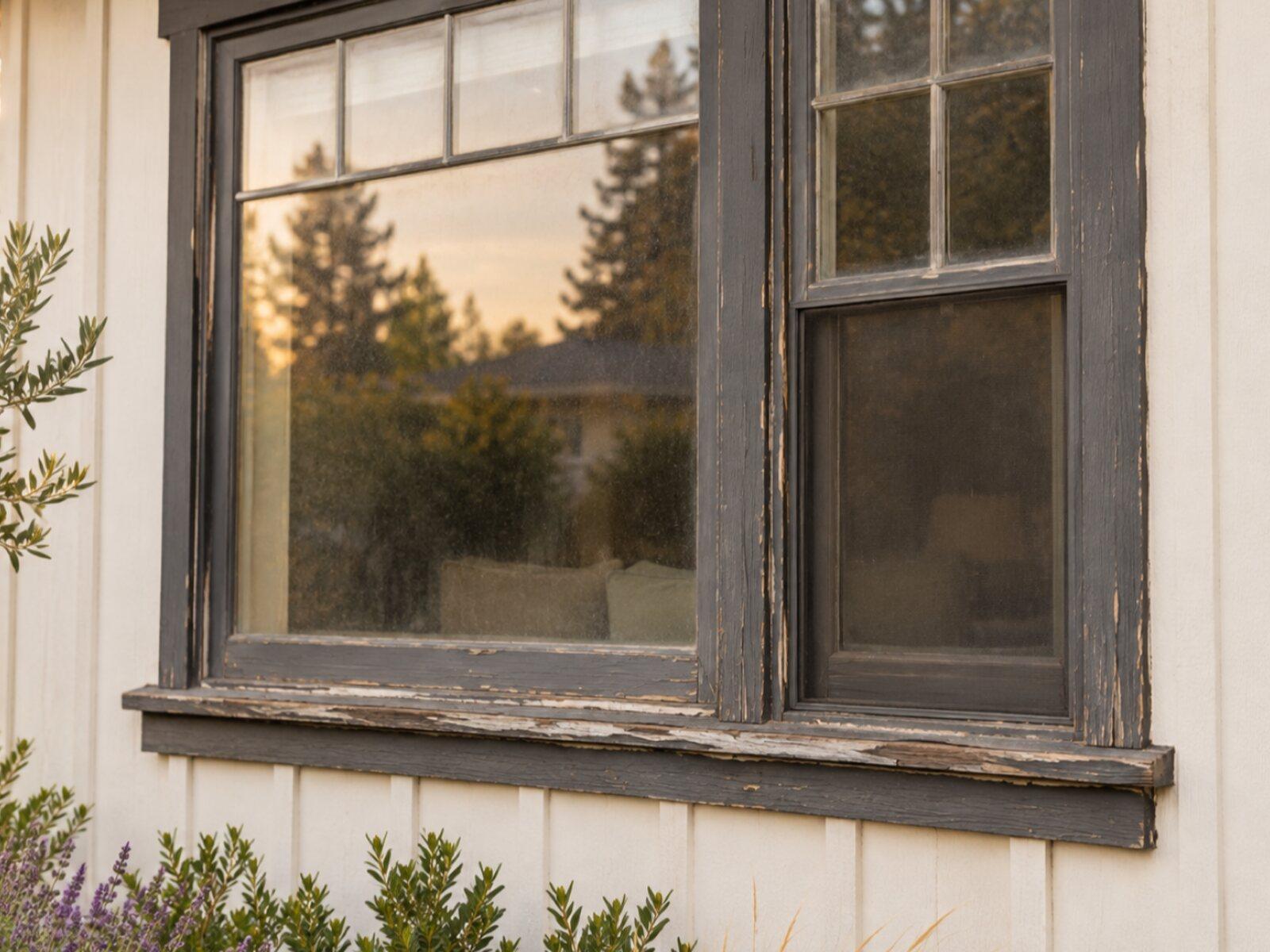
Keep a copy for your site visit or when comparing estimates.
Included in a written scope
- Probing and mapping of visible damage around the affected area
- Removal of decayed wood back to sound material
- Correction of the water path: flashing, drip caps, caulk joints, or grading, as identified
- New material installed, primed, and sealed at cuts and joints
- Finish paint on repaired areas where included, matched to existing color
- Protection and cleanup
Clarify before work starts
- How damage that extends past the visible area is priced once opened
- Whether paint on the repaired area is a match-in or a full section repaint
- Which flashing or siding changes are part of the repair
- Whether a pest inspection or report is involved
How a dry rot & trim project works
The stages to discuss when planning your project.
Talk through the project
Tell us what you want to repair or update. A few details about the home and what you have noticed are enough to start.
Review the home and options
A site review identifies the work involved, checks the usual trouble spots, and covers the choices that fit your home.
Agree on the scope and schedule
Review what is included, what is not, and how changes are handled before any work is scheduled.
Walk through the result
Review the completed work together, along with the applicable care and warranty information for what was installed.
Dry Rot & Trim questions from Carmichael homeowners
Does dry rot repair in Carmichael need a permit?
Usually, yes. Carmichael is unincorporated, and Sacramento County Building Permits & Inspection puts "Termite / Dryrot repair" on its published list of projects that need a permit, with a pointer to the CRC 105.2 exemptions for ordinary repairs. A short splice in a fascia board may sit inside that exemption; a rafter tail, beam end, post or sill framing that gets cut does not, and the County may want a drawing before issuing the permit. The contractor pulls it and schedules the inspections. The bid should list what is being replaced, name the applicant, and set a written approval step for damage found once the trim comes off.
The ends of the roof beams on my Del Dayo house are soft. Is that serious?
Yes, because those beams carry the roof. Beam ends rot from the end grain where they pass the wall or sit under the overhang, and a soft end can crush and let the roof edge sag. The repair cuts the end back to sound wood, scarfs or sisters a new section on, caps the end with metal or flashing so the end grain stays dry, and refinishes it. It is permitted structural work through Sacramento County, and it is cheaper before the end has crushed than after.
Why do my Carmichael rafter tails keep rotting after I replace them?
Because the water source was not changed. Rafter tails on an open-eave ranch present end grain to whatever runs off the roof edge, and without a drip edge above them and a sealed or capped end, the new tail drinks water the same way the old one did. A repair that holds adds a drip edge at the roof edge, seals or caps the tail ends, corrects a gutter that overflows onto them, and paints the end grain. The estimate names that change, not just the tail count.
Is it rot or termites on my Carmichael house?
Often both, because both follow moisture. Rot leaves wood soft and crumbly along the grain; subterranean termites leave mud tubes and galleries, and carpenter ants leave clean galleries and sawdust-like frass, both common in redwood that rot had already softened under Carmichael's shade. If there are any insect signs, a licensed wood-destroying organism inspection is recommended before the repair, since treatment is a separately licensed trade in California and buyers and lenders commonly ask for the report at resale anyway.
Can the original redwood sills and trim on my 1950s Colony house be saved?
Sometimes. A sill or trim piece with a profile worth keeping and limited damage can be cut back to sound wood, hardened and filled with a two-part epoxy, primed, and painted. It only works after the water source is fixed, and it is more labor than replacement. For ordinary lap, fascia, and corner boards, splicing in new primed wood at a clean line is faster and more reliable, and the old-growth redwood above the damage is left in place because it is usually sound.
How much of the damage can you see before the repair starts?
The soft spot is usually smaller than the damage, because rot travels along the grain and behind the paint. On Carmichael houses the common hidden findings are sheathing behind a T1-11 bottom edge, a rafter tail that is soft farther back than the visible end, and a beam end that is worse inside the wall than outside. The estimate prices the visible repair and states a unit rate for what is found once opened, per foot of fascia or per sheet of sheathing; anything more is photographed, measured, and approved by you before more wood comes out.
Tell us about your Carmichael dry rot & trim project.
Share what you have noticed and what you would like to change. We'll review the details and contact you about the next step.
No budget, address, or photos needed to inquire.
Other exterior services in Carmichael
- Carmichael siding replacementExplore repair and replacement options for your home's exterior walls.
- Carmichael window & door replacementFind an updated look and a fit that works for your home.
- Carmichael roof replacementPlan the next step for a worn or damaged roof.
- Carmichael exterior paintingRefresh the finish, starting with the preparation underneath.
- Carmichael gutter installationPlan how rainwater moves from the roof and away from the home.