
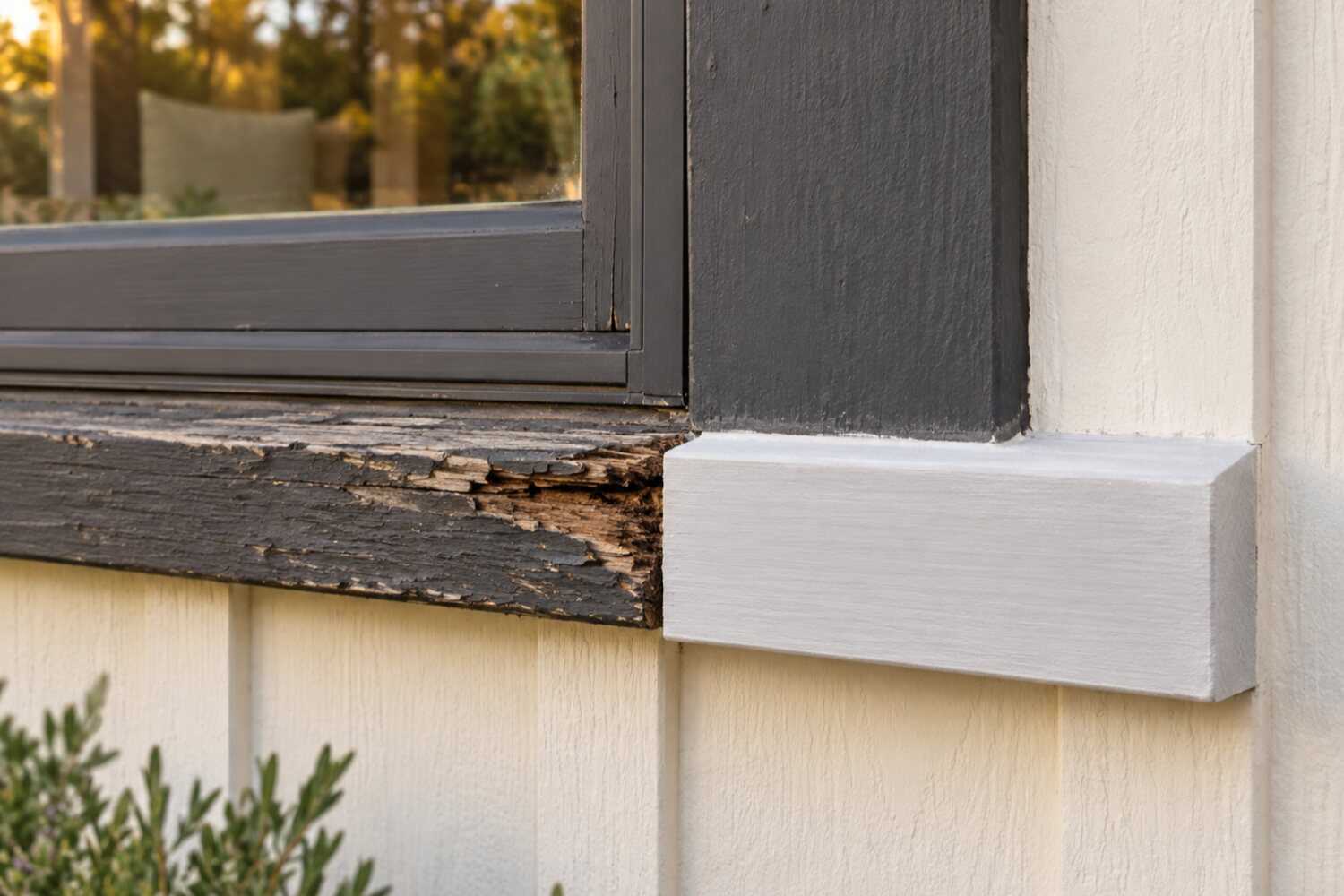
Dry rot and trim repair in Roseville, CA.
A Roseville wood-repair estimate should map the affected pieces and identify their moisture source. Check exposed trim on older east-side homes and wood at openings or patio connections on other properties, then distinguish decorative repairs from structural work before setting the scope.
What dry rot & trim repair costs in Roseville
Published 2026 figures put small dry rot and trim repairs in the Sacramento region at about $140–$800 and typical projects at $500–$2,351 (Vertex Maintenance, citing Angi). Structural repairs run $2,500–$6,500-plus, and Good Life Inspections lists severe damage at $5,000–$10,000-plus. In Roseville, the number of small locations, patio cover posts and fascia behind tile move the figure.
| Scope | Published range | What it usually includes |
|---|---|---|
| Vertex small wood-repair benchmark, Sacramento region | $140–$800 | Vertex Maintenance’s published range for small trim, fascia and sill repairs, with trim replacement listed separately at $15–$40 per linear foot. For a soft garage-jamb bottom in Westpark or a short run of fascia behind a gutter in Diamond Oaks, this is the band, provided the estimate says whether the sprinkler or flashing fix, primer and paint, and ladder access are in it. |
| Vertex cited typical-project estimate, Sacramento region | $500–$2,351; cited average about $1,425 | Vertex attributes this range to Angi’s 2026 data. It is an average across many houses, not a board count; a 1970s T1-11 home east of I-80 with rot at several panel bottoms can run past it while a single post base on a west-side lot sits below it, and the site inspection sets the actual damage and method. |
| Vertex structural-repair benchmark, Sacramento region | $2,500–$6,500+ | Vertex’s published structural category, with Good Life Inspections separately listing severe damage at $5,000–$10,000+; the two are different publishers’ tiers, not one range. In Roseville this is the patio-cover post, rafter-tail or sheathing job that goes through a City permit, so the estimate carries structural design, permit, temporary support, access and finish restoration as its own lines. |
Ranges are published third-party figures, not 916 Exteriors prices; the written estimate is the only number that applies to your home.
How to compare these ranges
These are Sacramento-region benchmarks, and Roseville has no published city-specific repair average. What sets the number here is where the rot is and what is behind it.
On the 1970s wood-sided homes around Cirby Way and Sierra Gardens, rot at T1-11 panel bottoms and fascia is often wider than the soft spot suggests, so the estimate carries unit prices or a change-order process for wood found after the wall is opened. On the west-side stucco tracts, rot is usually a point failure at a garage jamb, a patio post base or a veneer weep, and the price is mostly the one piece plus the water-source fix.
Structural members add a City of Roseville permit and inspection; pre-1978 painted trim adds lead-safe handling; suspected termites add a separate pest inspection. Every scope should end with how the wall or eave gets closed, flashed and painted.
Sources
- CAL FIRE OSFM: current WUI code and local applicability
- City of Roseville Building Inspection Division: Permit exemptions list (effective January 1, 2026)
- Vertex Maintenance: Dry rot repair cost in Sacramento (typical jobs vs. framing)
- Good Life Inspections: Dry rot repair cost in 2026 (Sacramento)
- California Structural Pest Control Board
- U.S. EPA: Renovation, Repair and Painting Program
Read next: How much does dry rot repair cost in Roseville?
What changes the price in Roseville
- Second-story fascia behind tile
- Reaching a soft fascia run under a tile-roof valley in Johnson Ranch or Stoneridge means staging and sometimes lifting the first course of tile.
- Patio cover posts and beams
- A rotted post base on a Sun City or Westpark cover needs temporary support and a standoff base; a rotted beam turns the job structural.
- Irrigation and downspout correction
- Moving a drip line off the wall or rerouting a downspout is a line in the scope, and it is what keeps the new wood dry.
- Number of locations
- Roseville's stucco-tract rot is small but repeated: garage jamb, side-door trim, two posts, one fascia corner, each with setup time.
- HOA paint and profile match
- Replacement trim on the west side is painted to the association-approved trim color, and a visible profile change may need an application.
- Lead-safe work on the east side
- Removing painted trim and fascia on the 1970s streets means RRP containment and disposal.
Compare repair materials
Choose two options to compare the upkeep, fit and installation details.
| Compare | Primed finger-joint wood trim | Fiber cement trim |
|---|---|---|
| Appearance | Smooth, paint-grade profile that matches most existing trim | Smooth or wood-grain; holds paint |
| Maintenance | Repaint on the normal cycle; keep end cuts sealed | Repaint; resists rot and insects |
| Where it fits | Most trim and fascia replacements | High-exposure trim, corner boards, and fascia |
| Installation | Back-prime and seal cuts; keep off the ground | Heavier; requires proper fasteners and gaps |
View all 4 options and planning notes
Primed finger-joint wood is the usual replacement for painted trim because it matches existing profiles and takes paint well; fiber cement trim costs more and resists rot and insects on the most exposed pieces; cellular PVC is the choice where wood touches the ground or stays wet. Epoxy consolidation saves a historic profile with limited damage, but only after the water source is fixed. None of them stays dry without correct flashing.
| Option | Appearance | Maintenance | Where it fits | Installation notes |
|---|---|---|---|---|
| Primed finger-joint wood trim | Smooth, paint-grade profile that matches most existing trim | Repaint on the normal cycle; keep end cuts sealed | Most trim and fascia replacements | Back-prime and seal cuts; keep off the ground |
| Fiber cement trim | Smooth or wood-grain; holds paint | Repaint; resists rot and insects | High-exposure trim, corner boards, and fascia | Heavier; requires proper fasteners and gaps |
| Cellular PVC trim | White, smooth; can be painted light colors | Very low; expands with heat | Ground contact and constant-wet locations | Needs expansion gaps and compatible adhesives |
| Epoxy consolidation | Original piece retained and filled | Paint; inspect for movement | Historic or hard-to-match profiles with limited damage | Only when the remaining wood is stable and the source is fixed |
Which material is proposed for each location is written in the estimate, along with the flashing or sealing change that stops the water.
Planning dry rot & trim work in Roseville
Open the topics that apply to your property.
Dry rot repair in Roseville differs from Rocklin, Granite Bay and Citrus Heights in where the water comes from. Rocklin's hillside tracts in Whitney Oaks and Clover Valley rot at stepped foundations and retaining-wall returns where slope runoff hits the wall. Roseville's flat lots rot at sprinkler heads and blocked underground drains. Granite Bay is unincorporated Placer County with a 1987 median year, oak-shaded acre lots and cedar-sided customs. Its repairs are large siding and deck-ledger jobs under a county permit. Citrus Heights, in climate zone 12, is 40% 1970s T1-11 stock where rot runs the length of a panel bottom. In Roseville that pattern is limited to the east-side ranches; the stucco majority rots in small, repeated trim pieces.
Compare nearby: Dry rot & trim repair in Rocklin, CA · Dry rot & trim repair in Granite Bay, CA · Dry rot & trim repair in Citrus Heights, CA
Dry rot & trim repair for Roseville homes
Dry rot in Roseville is small and repeated more often than it is large. Sixty-nine percent of Roseville's homes went up in 1990 or later (U.S. Census Bureau, ACS 2020–2024). On those stucco tracts in Johnson Ranch, Stoneridge, Highland Reserve, Westpark and Fiddyment Farm, the wood that rots is the trim. The list is familiar: garage door jambs where the weatherstrip holds water, the side-door casing behind a downspout, the fascia behind a tile-roof valley, and the bottom of a patio cover post set on the slab. Each is a half-day repair; a house may have five of them.
East of I-80, the 1960s–70s ranches around Diamond Oaks, Sierra Gardens and Cirby Way rot in bigger pieces. Open rafter tails, 2× fascia behind sectional gutters, T1-11 panel bottoms and window sills on wood-sided walls all take water from the same sources. Those are lawn sprinklers, a gutter that overflows at a corner, and the valley oaks that keep north walls damp. The dry rot service scope and the signs-of-dry-rot guide show how to tell a trim repair from a structural one before the wall is opened.
Downtown, the railroad-era bungalows around Historic Old Town keep their original porch columns, beams and redwood sills. Rot there is usually at the porch and at the water table where siding meets grade. Those repairs are carpentry with lead-safe practices. A visible profile change in the Downtown Specific Plan area may fall under the Downtown Code's guidelines.
Decorative trim needs no permit from the City of Roseville; a rotted post, beam or rafter tail is structural and does. The estimate should say which is which, fix the water source alongside the wood, and set unit prices for the next location found behind the finish. Use the estimate comparison guide to check that two bids describe the same repair boundary.
Housing age and what to inspect
Housing age helps plan an inspection. The share of homes in each decade is census data; the notes describe materials and conditions to check at the property.
| Built | Share of homes |
|---|---|
| Before 1940 | 2% |
| 1940–1949 | 1% |
| 1950–1959 | 3% |
| 1960–1969 | 4% |
| 1970–1979 | 7% |
| 1980–1989 | 14% |
| 1990–1999 | 23% |
| 2000–2009 | 25% |
| 2010 and later | 21% |
Roseville: 61,242 housing units, median year built 1998, median owner-occupied value $661,400, 69% owner-occupied. Source: U.S. Census Bureau, American Community Survey 2020–2024 5-Year Estimates, tables B25034 (year structure built), B25035 (median year built), B25077 (median value, owner-occupied), B01003, B25003 (ACS 2024 5-year).
- Prewar through the 1950sbefore 1960
- Roseville's pre-1960 housing is about 6% of the total, most of it railroad-era bungalows and cottages around Historic Old Town and near the Union Pacific yard. Rot there lives at the porch: column bases on the deck, beam ends in the wall, and the redwood sill and water table where the siding runs close to grade. Splice or replace with matching profiles and set new column bases on standoffs. Correct the grade or the porch drainage that fed the rot. RRP lead-safe practices apply, and the Downtown Code's guidelines may cover a visible profile change.
- 1960s and 1970s1960–1979
- Rot runs in long pieces on the 1960s–70s ranches in Diamond Oaks, Sierra Gardens and off Cirby Way, about 11% of the housing. Open rafter tails and 2× fascia sit behind sectional gutters, T1-11 panel bottoms behind sprinkler heads, and window sills in wood-sided walls. A soft fascia usually means the tails behind it are soft too. Price tail sistering per tail and fascia per foot. Check whether the T1-11 is structural before cutting the bottom 12 inches away. Pre-1978 homes carry lead-safe requirements.
- 1980s1980–1989
- The 1980s tracts in Cirby Ranch, the Maidu area and early Johnson Ranch are about 14% of the housing. They brought hardboard lap at gables and side walls, wood trim on stucco, and wood patio covers. Hardboard rots at the butt joints and the bottom course. The wood trim rots at the unflashed strip where stucco meets siding, and the patio cover posts rot at the slab. Scope each as its own line, and give the post bases a standoff so the new wood stays out of the water.
- 1990s and 2000s1990–2009
- From 1990 through 2009 Roseville added about 48% of its housing in Johnson Ranch, Stoneridge, Highland Reserve, Woodcreek Oaks, Sun City Roseville and the first Westpark phases. On these stucco homes the rot is a list of small wood pieces. Garage door jambs, side-door casings, fascia behind tile valleys, the bottom of a patio cover post, and the sill under a hardboard gable accent are the usual entries. Each is a short repair. The estimate should count the locations, price them per piece, and fix the sprinkler, downspout or weatherstrip that fed each one.
- 2010s onward2010–present
- Homes from 2010 onward make up about 21% of Roseville and sit mostly in Westpark, Fiddyment Farm and the newer West Roseville villages. Builders used fiber-cement trim and accents on most of them, so wood rot is rare. It shows at the few wood pieces left: the garage door jamb, a rear patio cover, a deck ledger on a two-story plan, and the wood behind a stone veneer with a failed weep. Collect the builder's product records first. Check the balcony and ledger flashing before assuming the damage stops at the trim.
Dry Rot & Trim by neighborhood in Roseville
- Westpark and Fiddyment Farm
- Fiber-cement trim on most homes and stone veneer at the entries make Westpark and Fiddyment Farm, the West Roseville Specific Plan villages built since 2005, a low-rot area with specific exceptions. Rot here is usually a wood garage door jamb at the slab, a patio cover post, or framing behind a veneer weep that the landscaping buried. Probe the veneer base and the jamb bottoms. Match the HOA-approved trim color on the repair.
- Sun City Roseville
- Wood fascia under concrete tile and a rear patio cover on most lots make Sun City Roseville a fascia-and-post market. Del Webb built the age-restricted, single-story community after the 1993 specific plan. The fascia behind a tile valley and the patio cover posts and beams are the usual repairs. Lifting the first course of tile to reach the fascia is normal. Coordinate the gutter removal, and check the community association's trim color.
- Johnson Ranch and Stoneridge
- Fascia behind tile valleys is the Johnson Ranch and Stoneridge repair. The late-1980s and 1990s Johnson Ranch plans and the 2000s Stoneridge plans carry the most of it in east Roseville, and the older Johnson Ranch plans add hardboard gable accents. Second-story fascia under a valley is the common repair and needs staging and a tile lift. Price the tile handling with the carpentry. Check the gable accent's bottom edge while the staging is up.
- Sierra Gardens and Cirby Way
- Open rafter tails and T1-11 bottoms on the wood-sided Sierra Gardens ranches and the 1960s–70s tracts along Cirby Way rot behind sprinkler heads and under overflowing sectional gutters. A soft fascia here means soft tails behind it; price the tails per tail. Confirm whether the panel is structural before cutting away the bottom course, and apply RRP lead-safe practices on pre-1978 paint.
- Diamond Oaks
- Shade is the story in Diamond Oaks: the 1960s–70s ranch tract sits under mature valley oaks that keep north walls and eaves damp into spring. Rot there runs along the shaded fascia and the north-wall panel bottoms. The oak litter in the gutters is usually the water source. Separate the visible fascia repair from the rafter tails behind it, and clear the gutters as part of the fix.
- Historic Old Town
- Porch columns, beams and redwood sills on railroad-era homes make Historic Old Town and the Downtown bungalow blocks Roseville's oldest wood. Rot lives at the column bases, the beam ends and the water table at grade. Replace with matching profiles, set new bases on standoffs, and apply lead-safe practices. The Downtown Code's design guidelines may cover a visible profile change.
Sun, rain, trees and site conditions
Roseville is in California Energy Commission climate zone 11, and its dry rot follows the water. About 20 inches of rain fall between October and April, much of it in a few atmospheric-river storms. Those storms overtop gutters at tile-roof valleys and soak the fascia and the trim below. Summer heat above 100°F then opens the caulk at every trim joint on the west and south walls, so the next storm gets in further. The damage shows in July, when the wood has dried enough to crumble.
Irrigation is the year-round source. Lawn sprinklers that hit the wall keep T1-11 panel bottoms and stucco-base trim wet on the east-side ranches every summer morning. Drip lines against a garage door jamb do the same on the west-side tracts. East of I-80, the valley oaks over Diamond Oaks and Sierra Gardens shade north walls and eaves, and so do the Dry Creek, Linda Creek and Cirby Creek corridors. The floodplain lots near the creeks stay damp for weeks after a storm.
West Roseville's flat former farmland has no canopy and dries fast. Rot there is a point failure at a jamb, a post base or a buried veneer weep, not a wet wall. Fungal rot is not termite damage. Where insect activity is suspected, a licensed structural pest control inspection is a separate step from the carpentry, and the two stay apart in the estimate.
Permits and approvals
Dry rot repair in Roseville splits into two permit answers. Decorative trim, a window sill or a length of fascia is finish carpentry; it is not on the Building Inspection Division’s permit-exemptions list dated January 1, 2026, which names painting and similar finish work only, so a small repair is confirmed with the division at 311 Vernon Street rather than assumed exempt. A load-bearing patio post, a rafter tail, a header or roof sheathing is structural, and that repair needs a building permit with inspection before the wall or eave is closed. The estimate names each member, the repair method and which inspection applies. Where insect damage is suspected, a licensed structural pest control inspection runs separately from the carpentry and its permit.
Association rules in Westpark, Fiddyment Farm, Blue Oaks and Sun City Roseville generally cover visible trim; matching the existing profile and paint is the simplest case, while a profile or color change goes on an application. Downtown, a property inside the Downtown Specific Plan area, which includes Historic Old Town, falls under the Downtown Code’s design guidelines (Roseville Municipal Code Chapter 19.31) for a visible change in trim profile. Roseville’s pre-1980 census grouping includes homes on both sides of the EPA Renovation, Repair and Painting cutoff, so the build year of a Sierra Gardens house or one off Cirby Way is confirmed for the address before painted trim is cut or sanded; on a pre-1978 home the firm must be EPA-certified and contain the dust.
Permit authority: City of Roseville Building Division . Whether a permit or review applies, and who pulls it, is written into the estimate.
Seeing something on your own house? Request an estimate for dry rot & trim in Roseville
Repair the board or fix the cause?
Replacing a rotted board without stopping the water means replacing it again. Every repair starts with finding where the moisture came from.
Not sure which applies? Tell us what you are seeing and request an estimate for dry rot & trim.
What the scope includes
A complete estimate names the work, materials and exclusions so you can compare proposals.
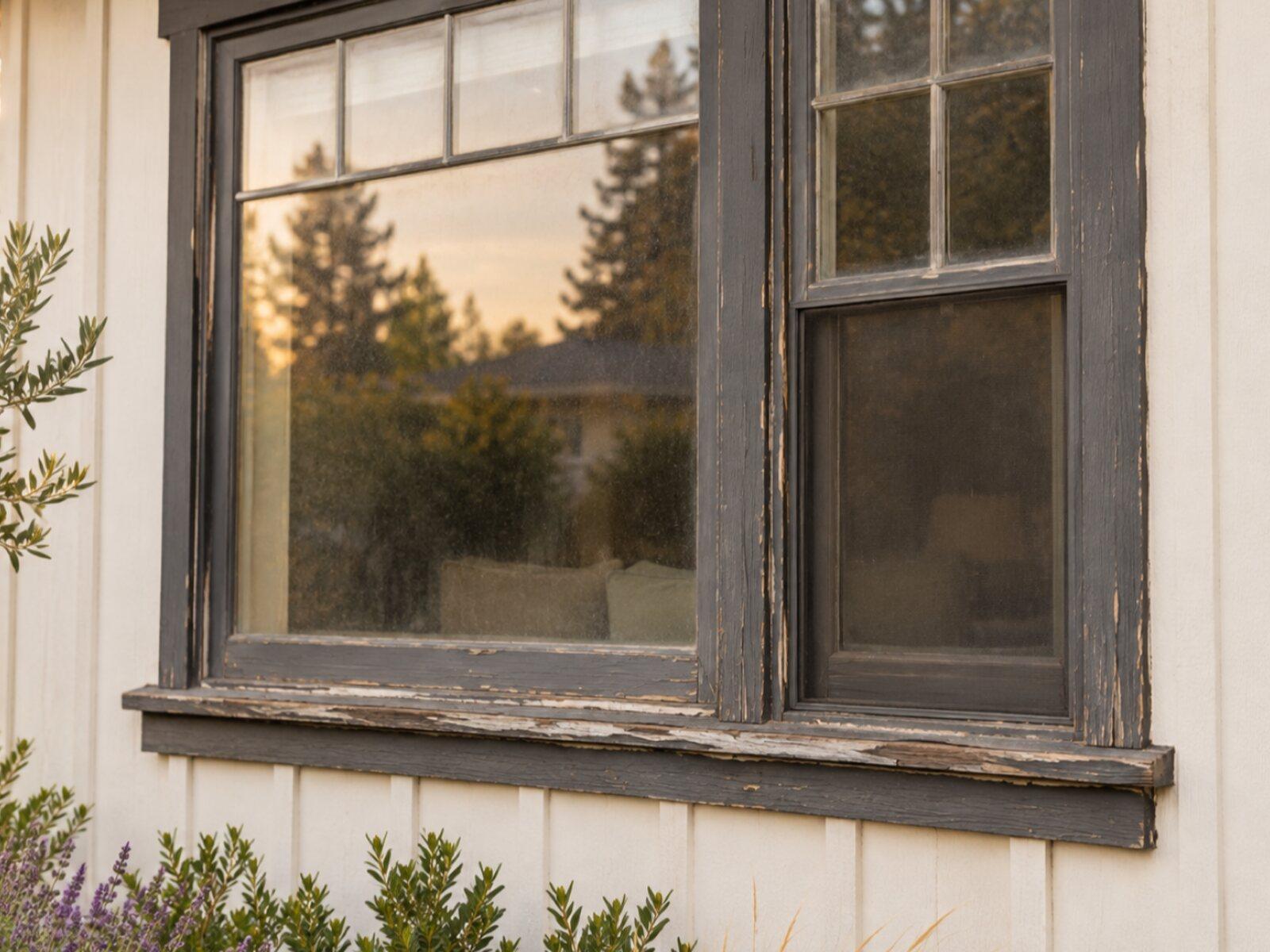
Keep a copy for your site visit or when comparing estimates.
Included in a written scope
- Probing and mapping of visible damage around the affected area
- Removal of decayed wood back to sound material
- Correction of the water path: flashing, drip caps, caulk joints, or grading, as identified
- New material installed, primed, and sealed at cuts and joints
- Finish paint on repaired areas where included, matched to existing color
- Protection and cleanup
Clarify before work starts
- How damage that extends past the visible area is priced once opened
- Whether paint on the repaired area is a match-in or a full section repaint
- Which flashing or siding changes are part of the repair
- Whether a pest inspection or report is involved
How a dry rot & trim project works
The stages to discuss when planning your project.
Talk through the project
Tell us what you want to repair or update. A few details about the home and what you have noticed are enough to start.
Review the home and options
A site review identifies the work involved, checks the usual trouble spots, and covers the choices that fit your home.
Agree on the scope and schedule
Review what is included, what is not, and how changes are handled before any work is scheduled.
Walk through the result
Review the completed work together, along with the applicable care and warranty information for what was installed.
Dry Rot & Trim questions from Roseville homeowners
My Westpark garage door trim is soft at the bottom. Is that dry rot?
Probably, and it is the most common dry rot call on the west side. Garage door jambs and the trim beside them sit in the splash zone of the driveway, the bottom end grain wicks water, and the caulk joint against the stucco opens after a few summers. Press an awl into the soft area: wood that crumbles or takes the point easily is rotted, and the rot usually runs higher than the paint shows. The repair is to cut the jamb back to sound wood, splice in a new section with the end grain sealed, reset the weatherstrip and caulk, then correct whatever is wetting it.
Does a dry rot repair in Roseville need a permit?
It depends on the member, and the City of Roseville draws the line at structure. Trim, fascia and sills are finish carpentry; they are not on the Building Inspection Division’s permit-exemptions list dated January 1, 2026, which names painting and similar finish work only, so a small repair is confirmed with the division at 311 Vernon Street rather than assumed exempt. A load-bearing patio post, a rafter tail or roof sheathing is structural work and needs a permit with inspection before it is covered. Ask the contractor to name each member and which permit answer applies to it. HOA review in Westpark or Sun City Roseville is separate.
The fascia behind the gutter on my Johnson Ranch house is soft. Can you replace it without removing the tile?
Often, yes. On a Johnson Ranch tile roof the fascia sits below the drip edge, so a carpenter can drop the gutter, cut out the rotted length and splice in new fascia from below without lifting tile, as long as the rot stops at the fascia. If probing shows the rafter tails or the roof sheathing behind it are soft, the first course of tile and the eave metal have to come off to reach them, and that repair becomes a permitted structural job. The proposal should say which case it is once the gutter is dropped, and price the tile handling as a separate item if it is needed.
What material do you use for replacement trim on a Sun City Roseville home?
For non-structural trim on a Sun City Roseville stucco house, the usual choice is a primed finger-jointed or composite trim board matched to the existing profile, or fiber-cement trim where the piece takes direct weather; cellular PVC is the option where trim touches grade or sits in a sprinkler zone. Fascia and rafter tails that carry load stay wood, sized to match, because the substitutes are not structural. Whatever the product, the cut ends get primed, the fasteners are corrosion-resistant, the manufacturer’s clearances to roof and grade are kept, and the sprinkler or flashing that caused the rot gets corrected in the same visit.
Do I need a termite inspection before the repair?
Only if there are signs of insects, or a sale is involved. Fungal dry rot and termite damage look different up close: rot is brown, cubical and crumbly, while subterranean termite galleries run with the grain and carry mud, and drywood termites leave clean galleries and small pellets. A carpenter can usually tell the two apart but cannot issue a pest report; in California only a licensed structural pest control operator does that. If galleries, mud tubes or pellets turn up when the wood is opened, the pest inspection runs as its own step and the carpentry estimate stays a carpentry estimate.
Why does rot show up in summer in Roseville when it barely rains?
Because the wood got wet in winter and summer heat makes the damage show. Roseville gets about 20 inches of rain, nearly all between October and April, and water that reached a panel bottom or post base in a January storm sits there while the fungus works; by July the paint blisters and the piece feels soft. Lawn irrigation is the other summer source; on the east side a sprinkler head aimed at the wall keeps the siding bottom damp all season. The repair includes moving the water, whether that is a sprinkler arc, a gutter outlet or a missing kickout flashing, not just the new wood.
Tell us about your Roseville dry rot & trim project.
Share what you have noticed and what you would like to change. We'll review the details and contact you about the next step.
No budget, address, or photos needed to inquire.
Other exterior services in Roseville
- Roseville siding replacementExplore repair and replacement options for your home's exterior walls.
- Roseville window & door replacementFind an updated look and a fit that works for your home.
- Roseville roof replacementPlan the next step for a worn or damaged roof.
- Roseville exterior paintingRefresh the finish, starting with the preparation underneath.
- Roseville gutter installationPlan how rainwater moves from the roof and away from the home.
Dry rot & trim repair in other communities we serve
Sacramento County
- Dry rot & trim repair for Sacramento homes
- Dry rot & trim repair for Folsom homes
- Dry rot & trim repair for Elk Grove homes
- Dry rot & trim repair for Citrus Heights homes
- Dry rot & trim repair for Carmichael homes
- Dry rot & trim repair for Fair Oaks homes
- Dry rot & trim repair for Rancho Cordova homes
- Dry rot & trim repair for Arden-Arcade homes