
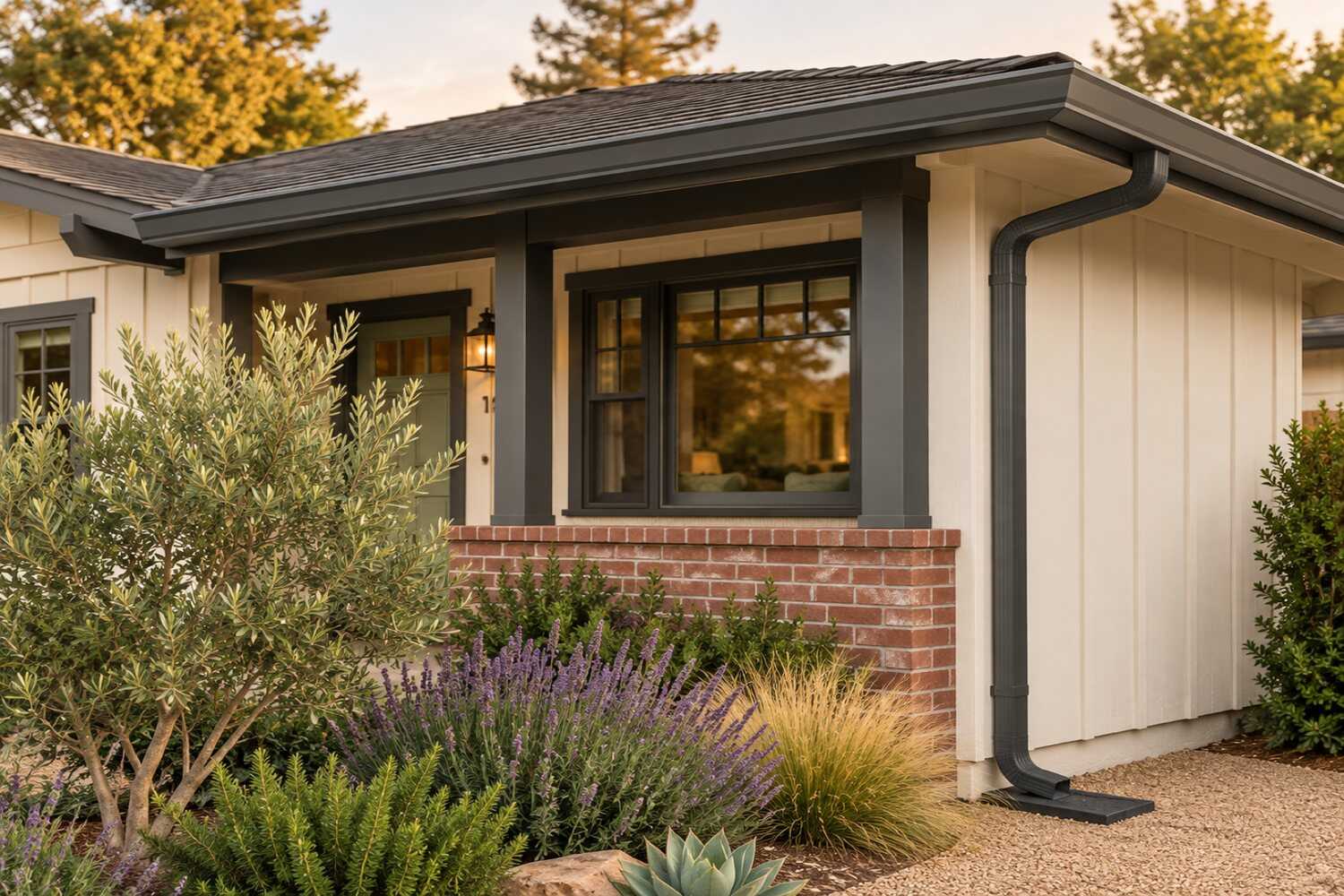
Gutter installation and gutter guards in Citrus Heights, CA.
At a Citrus Heights home, inspect gutter seams, fascia, outlets and discharge routes together. The measured drainage problem determines whether cleaning, repair, added capacity or replacement is the appropriate scope.
What gutter installation costs in Citrus Heights
Published figures put gutter installation in Citrus Heights at $403–$3,509 (Today's Homeowner) and $571–$5,272 (homeyou), with gutter guards at $7–$11 per linear foot on homeyou's city page. Soft fascia on 1970s eaves, side and rear eaves that never had gutters and downspout routing on small flat lots move the number.
| Scope | Published range | What it usually includes |
|---|---|---|
| Published local installation range | $403–$3,509 | Today's Homeowner's Citrus Heights gutter-installation range. It is a broad project benchmark with no stated profile or footage; on a 1970s tract house that has gutters only on the front eave, the added side and back runs are what move a job from the low end toward the high end. |
| Separate published local project range | $571–$5,272 | homeyou's Citrus Heights installation range. The page gives no footage, story count or fascia condition for either endpoint, so the high figure is not automatically a two-story or full-perimeter price; the measured runs and the soft-fascia footage are what place a house in it. |
| Guards, installed per linear foot | $7–$11 | homeyou's Citrus Heights guard-installation rate per linear foot. Under this city's canopy the product matters more than the rate: micro-mesh under the pines and oaks, screen under the mulberries, so the footage of each type is listed per run. |
Ranges are published third-party figures, not 916 Exteriors prices; the written estimate is the only number that applies to your home.
How to compare these ranges
The two headline ranges above are broad because gutter jobs in Citrus Heights vary in three ways the publishers cannot see. First is footage: the 1970s builders put sectional gutters on the front eave and often nothing on the sides and back, so a job that adds runs to bare eaves has more feet than a like-for-like replacement.
Second is fascia: fifty-year-old wood and hardboard fascia is repaired or replaced per foot before a hanger goes in, and that wood work is not in a gutter headline. Third is discharge: on small flat lots with five-foot side yards, and on Arcade and Cripple Creek lots where the back yard is saturated all winter, each downspout is routed to the front, to a yard drain or to the street, and a downspout that enters a buried line the builder installed is checked before it is reused.
Material, profile, downspout size, guard type per run and the destination of each outlet are written into the scope so the published ranges can be checked against the actual house.
Sources
- Today's Homeowner: Gutter installation companies and costs in Citrus Heights, CA
- homeyou: Gutter installation in Citrus Heights, CA, costs
- homeyou: Gutter guard installation in Citrus Heights, CA, costs
- City of Citrus Heights: Permit requirements and exemptions
- City of Citrus Heights: CHB1805 Policy for permitting requirements for residential remodels, alterations, repairs and additions (PDF)
- City of Citrus Heights: Tree preservation and protection regulations
Read next: How much does gutter installation cost in Citrus Heights?
What changes the price in Citrus Heights
- Soft fascia
- Fifty-year-old wood and hardboard fascia on the 1970s and 1980s houses is repaired or replaced per foot before a hanger goes in.
- Eaves that never had gutters
- Side and back eaves on the tracts are added as new runs with their own downspouts, which raises the footage above a like-for-like replacement.
- Downspout routing on small lots
- Extensions to the front yard, tie-ins from upper to lower roofs on two-story houses, and drain connections on creek-side lots are priced per downspout.
- Six-inch runs
- Lower roofs on the 1980s two-story stucco houses, which catch the upper roof's water, and long single-outlet runs on the 1970s ranches get the larger profile.
- Guard type per run
- Micro-mesh under pines and oaks, screens under broad-leaf trees; the guard is chosen per run and priced per foot.
- Tile roof edges
- The 1980s and 1990s tile roofs need a gutter apron and a guard that does not lift the first course.
Compare gutters and guards
Choose two options to compare the upkeep, fit and installation details.
| Compare | Seamless aluminum gutters | Steel or copper gutters |
|---|---|---|
| Appearance | Continuous runs; many baked-on colors | Heavier profile; copper weathers to a patina |
| Maintenance | Cleaning; check outlets and hangers | Similar cleaning; copper needs compatible fasteners |
| Where it fits | Most homes; 5-inch or 6-inch profile sized to the roof | Design-led homes or heavy-debris settings |
| Installation | Formed on site to exact length; hidden hangers | Higher material cost; specialty fabrication |
View all 5 options and planning notes
Seamless aluminum, formed on site to the exact run length, is the standard replacement gutter in the region and the best value; steel and copper cost more and suit specific homes. Among guards, micro-mesh keeps out needles and seeds and is the usual choice under oak and pine, perforated screens are cheapest and pass small debris, and reverse-curve hoods can overshoot in the heavy winter storms that Sacramento gets.
| Option | Appearance | Maintenance | Where it fits | Installation notes |
|---|---|---|---|---|
| Seamless aluminum gutters | Continuous runs; many baked-on colors | Cleaning; check outlets and hangers | Most homes; 5-inch or 6-inch profile sized to the roof | Formed on site to exact length; hidden hangers |
| Steel or copper gutters | Heavier profile; copper weathers to a patina | Similar cleaning; copper needs compatible fasteners | Design-led homes or heavy-debris settings | Higher material cost; specialty fabrication |
| Micro-mesh guards | Low-profile screen that follows the gutter | Occasional brushing; fine debris can film the mesh | Trees with needles, seeds, and small leaves | Fastened to the gutter and tucked under shingles or to fascia |
| Perforated or screen guards | Visible panel over the gutter | Larger openings pass small debris; periodic clearing | Broad-leaf trees | Simplest to install and remove |
| Reverse-curve guards | Solid hood with a slot at the front | Can overshoot in heavy rain; slot needs clearing | Moderate debris, gentler roof pitches | Usually tied to the roof edge; check roofing warranty terms |
Guard performance depends on the trees over the roof and the roof pitch; no guard makes a gutter maintenance-free.
Planning gutters work in Citrus Heights
Open the topics that apply to your property.
Gutter work in Citrus Heights is about adding runs and rebuilding fascia, which is not the job next door. Antelope's 1990s houses came with continuous aluminum on every eave and mostly need cleaning or a guard. Fair Oaks and Orangevale have larger lots where a downspout can discharge to grade and heavier oak canopy that decides the guard. Roseville has its own storm-drain standards and permit office. In Citrus Heights the lots are small and flat, the 1970s houses have eaves that never had gutters, and the fascia under the sectional runs is soft. The City's own drainage plans show which quadrants lack defined storm drainage. The estimate answers where each downspout ends.
Compare nearby: Gutter installation in Fair Oaks, CA · Gutter installation in Carmichael, CA · Gutter installation in Roseville, CA
Gutter installation for Citrus Heights homes
Gutters in Citrus Heights are usually a half-finished system. About 40% of the city's homes are 1970s tract houses and 21% are from the 1980s (ACS 2020–2024). The builders around Sunrise Mall and Greenback Lane hung sectional aluminum on the front eave and often nothing on the sides and back. Fifty winters of roof runoff have landed at the bottom of the T1-11 under those eaves. That is why the wet bottom course on siding and dry-rot estimates in this city so often traces back to a missing gutter.
The site review measures every eave, gutter or not, and follows each downspout to where the water actually goes. On the small flat lots here that is often the neighbor's fence line or the slab, and the fix is an extension to the front or a tie-in to a yard drain. The City took over the storm-drain system from Sacramento County in 2010. Its first drainage master plan started with the north-central and northeast quadrant because that part of the city lacked defined drainage; yards there stay wet, and downspout discharge has to be planned, not assumed.
Fascia is the other half. The hangers on 1970s sectional gutters were spiked into wood or hardboard fascia that has softened at the corners and the outlets, so the runs sag and pool. A new continuous gutter needs solid fascia behind every hanger, and the estimate prices the fascia repair per foot before the aluminum is ordered. Guards are chosen per run from the tree over it: oaks, pines and fruitless mulberry drop different debris.
The written scope names the profile, the footage of new runs and replacement runs, the downspout count and each discharge point, the fascia allowance and the guard type per run. The gutter guard guide covers what each guard type still needs from the owner.
Housing age and what to inspect
Housing age helps plan an inspection. The share of homes in each decade is census data; the notes describe materials and conditions to check at the property.
| Built | Share of homes |
|---|---|
| Before 1940 | 1% |
| 1940–1949 | 2% |
| 1950–1959 | 8% |
| 1960–1969 | 11% |
| 1970–1979 | 40% |
| 1980–1989 | 21% |
| 1990–1999 | 10% |
| 2000–2009 | 6% |
| 2010 and later | 2% |
Citrus Heights: 34,946 housing units, median year built 1977, median owner-occupied value $454,600, 61% owner-occupied. Source: U.S. Census Bureau, American Community Survey 2020–2024 5-Year Estimates, tables B25034 (year structure built), B25035 (median year built), B25077 (median value, owner-occupied), B01003, B25003 (ACS 2024 5-year).
- Postwar construction1950s–1960s (about 19% of homes)
- Open eaves mark the postwar houses. The 1950s and 1960s account for about 19% of Citrus Heights homes, ranches on the acre lots along Sylvan Road, Old Auburn Road and behind Auburn Boulevard. Many have open rafter-tail eaves with no fascia board, so a gutter needs rafter-mounted hangers or a new fascia, and the exposed tails are often rotted at the ends. Larger lots give a downspout room to discharge to grade away from the house. The estimate states the mounting method per eave, prices rafter-tail repair per piece and separates new runs from replacements.
- 1970s build-out1970s (about 40% of homes)
- Front-eave-only gutters came with the 1970s tract houses, about 40% of the city's homes; the builders gave most of them sectional aluminum on the street side and nothing else. Side and rear eaves drained straight onto the T1-11 below, and the front runs hang on spike-and-ferrule hangers in fascia that has gone soft at the corners. Crews find back-pitched runs pooling at the inside corners, outlets dumping at the slab and a rear patio cover collecting the whole back roof. The scope adds continuous runs to the bare eaves, repairs fascia per foot and routes every downspout to a stated discharge point.
- 1980s construction1980s (about 21% of homes)
- The 1980s hold about 21% of Citrus Heights housing, with more two-story plans and concrete tile roofs. Upper-roof downspouts on those houses land on the lower roof and double the load on a five-inch gutter below. The tile edge needs a gutter apron so water does not run behind the trough. Six-inch runs where the roof area calls for them and upper downspouts tied into the lower gutter are the usual corrections, priced per run with the staging for the second story.
- Later tracts and infill1990s–2000s (about 16% of homes)
- Buried drains came with the 1990s and 2000s houses, about 16% of the city's homes, in stucco infill and the Stock Ranch tract along Arcade Creek. They also came with continuous aluminum and buried downspout drains that are now 20 to 30 years old and often clogged or crushed. The gutters are usually fine; the call is a drain that backs up at the first storm. The estimate separates clearing or replacing the buried line from the visible gutter work and, on Stock Ranch creek lots, notes the floodplain edge where discharge cannot go.
Gutters by neighborhood in Citrus Heights
- Birdcage Heights
- Front-eave-only gutters are most common in Birdcage Heights, the 1970s tract country south of Greenback Lane between San Juan Avenue and Fair Oaks Boulevard. The single-story houses there have a rear patio cover that catches the back roof. The estimate there adds side and rear runs, prices fascia per foot and routes the rear downspouts forward on lots too small to discharge at the back.
- Rusch Park area
- The streets around Rusch Community Park on Auburn Boulevard near Antelope Road straddle neighborhood Areas 2 and 6. The City's first Drainage Master Plan phase, finished in 2012, covered Areas 6 and 7 because that quadrant lacked defined storm drainage. Yards there hold water into spring, so a downspout to grade beside the house feeds the plate. The scope routes discharge to the street side or a drain and states it per downspout.
- Sylvan Old Auburn Road
- Sylvan Old Auburn Road, the deep-lot district around Sylvan Corners, has 1950s and 1960s houses with open eaves and mature trees over the roof. The City's 2016 master plan for Areas 8, 9 and 10 covers its drainage. Rafter-mounted hangers, rafter-tail repair and a guard matched to the tree overhead are the recurring lines there.
- Arcade Creek corridor
- Native oaks over the Arcade Creek lots between Van Maren Lane and Sylvan Road fill the runs with leaves and catkins every fall, and the creek-side yard is saturated all winter. Micro-mesh guards under the oaks and downspouts routed toward the street instead of the creek side are the usual plan, with the City's floodplain rules checked before any drain is added near the bank.
- Stock Ranch
- Buried drains from construction serve Stock Ranch, the Ryland Homes tract along Stock Ranch Road built after 2003, so the calls are clogged or crushed underground lines, not the gutters themselves. The estimate traces each buried drain to its outlet before quoting and treats the open-space floodplain lots at the creek edge as no-discharge zones.
- Park Oaks
- Park Oaks, the southwest corner between Greenback Lane, Dewey Drive and Manzanita Avenue, has Brooktree Creek along its edge and some of the flattest ground in the city. Nothing there drains far on its own. Downspouts there go to extensions or drains, never to a splash block against the slab, and the scope states the destination for each.
Sun, rain, trees and site conditions
Rain in Citrus Heights comes as a few atmospheric-river storms between November and March, about 18 inches in a normal year. A gutter sized for a drizzle overflows at the inside corners in the first one. Summer is dry and hot, which bakes the sealant at sectional seams and warps the plastic downspout fittings, so by the first storm the seams leak too. Capacity is sized from the roof area feeding each run, and six-inch runs go where that area calls for them.
The ground is flat at about 167 feet and the lots are small, so a downspout that ends at the slab keeps the plate and the bottom of the siding wet all winter. The City's drainage master plans found that the north-central and northeast quadrant lacked defined storm drainage, and the corridors along Arcade, Cripple and Brooktree creeks carry FEMA floodplain lines the City enforces. Discharge is planned per downspout, to the street, a drain or an extension, and stated in the scope.
Trees decide the guard. The City protects native oaks over six inches, and they drop acorns and catkins that need micro-mesh; pines drop needles that pass a screen; fruitless mulberry drops broad leaves a screen handles. The guard is chosen per run, not per house, and no guard makes a gutter under the older trees maintenance-free. Trimming a limb over two inches for access needs a tree permit and an arborist.
Permits and approvals
Gutters are not on the City of Citrus Heights Building & Safety Division's permit list, and its CHB0600 project table marks landscaping and drainage as exempt, so a like-for-like gutter replacement on sound fascia needs no permit. Two things on the same house can: cutting out rotted rafter tails or other framing behind the fascia is permitted structural work under the division's repair policy CHB1805, and that policy also lists adding, replacing or relocating a drain leader or drainage piping as permit-required work, so a downspout that ties into a buried line is confirmed with the division before it is cut in. The estimate states which parts of the scope, if any, are applied for through the Building Permit & Inspections Customer Portal.
Most Citrus Heights tracts have no HOA, so gutter profile, color and downspout routing are the owner's choice; the condominium and planned-unit developments along the main corridors are the exception. On a house confirmed built before 1978, prying painted fascia to repair it brings the EPA Renovation, Repair and Painting rule into that part of the work. The roof-edge, fascia and gutter sequence is written so a repaired eave can be seen before the new gutter covers it.
Permit authority: City of Citrus Heights Building & Safety Division . Whether a permit or review applies, and who pulls it, is written into the estimate.
Seeing something on your own house? Request an estimate for gutters in Citrus Heights
Repair, reseal, or replace?
Gutters fail at seams, hangers, and outlets before the runs themselves wear out. The fix depends on where the problem is.
Not sure which applies? Tell us what you are seeing and request an estimate for gutters.
What the scope includes
A complete estimate names the work, materials and exclusions so you can compare proposals.
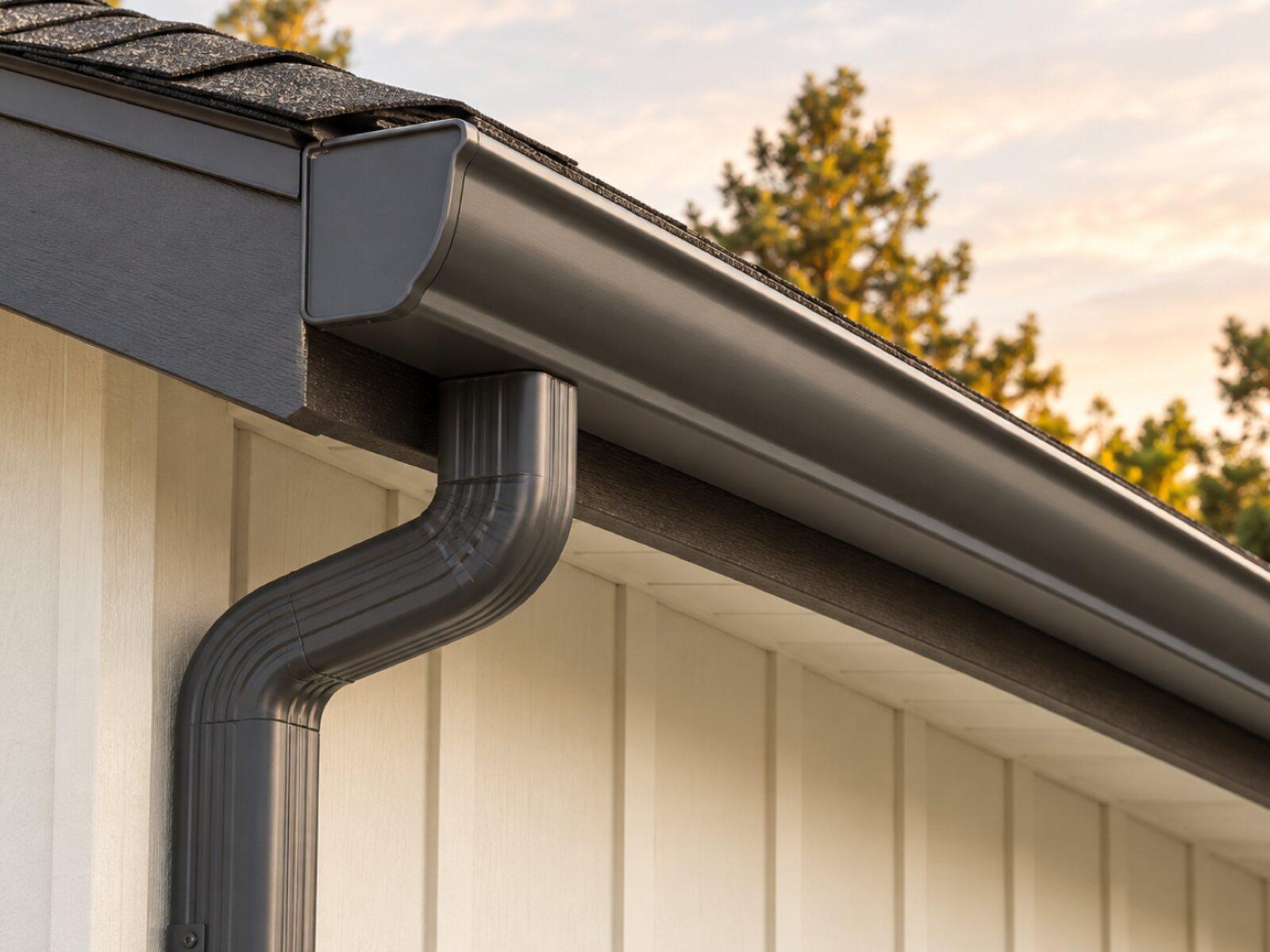
Keep a copy for your site visit or when comparing estimates.
Included in a written scope
- Removal and disposal of existing gutters and downspouts where replacement is planned
- Inspection of fascia, with repair or replacement written as its own line
- Seamless gutters formed on site, pitched to outlets, and hung on hidden hangers
- Downspouts placed for drainage, with extensions or splash blocks where water must be moved from the foundation
- Guards installed as specified, if selected
- Cleanup and removal of old material
Clarify before work starts
- How many downspouts and where each one discharges
- Whether fascia repair or painting is included
- Which guard style is quoted and how it is cleaned
- Whether underground drains are part of the scope
How a gutters project works
The stages to discuss when planning your project.
Talk through the project
Tell us what you want to repair or update. A few details about the home and what you have noticed are enough to start.
Review the home and options
A site review identifies the work involved, checks the usual trouble spots, and covers the choices that fit your home.
Agree on the scope and schedule
Review what is included, what is not, and how changes are handled before any work is scheduled.
Walk through the result
Review the completed work together, along with the applicable care and warranty information for what was installed.
Gutters questions from Citrus Heights homeowners
Do I need a permit to replace gutters in Citrus Heights?
Usually not for the gutters themselves. Gutters are not on the City of Citrus Heights Building & Safety Division's permit list, and its project table marks landscaping and drainage exempt, so replacing runs on sound fascia needs no permit. Two things on the same job can: cutting out rotted rafter tails or framing behind the fascia is structural repair under the city's policy CHB1805, and that policy also lists drain-leader and drainage piping changes as permit-required, so a downspout tied into a buried line is confirmed with the division before it is cut in. The estimate states which parts, if any, are applied for through the online portal.
Half of my house has no gutters. Is that normal here?
On a 1970s Citrus Heights tract house, yes. The builders put sectional gutters on the front eave and often nothing on the sides and back, and the T1-11 or hardboard siding below those eaves has taken fifty winters of roof runoff at its bottom edge. Adding runs to those eaves, with downspouts routed away from the wall, is usually the least expensive fix for the wet bottom course that shows up on siding and dry rot estimates in this city. The scope lists the new runs and the existing ones separately.
Where should the downspouts go on a small lot?
Not at the foundation and not at the fence. Citrus Heights lots are small and nearly flat, with five-foot side yards, so a side-yard downspout to grade soaks either your foundation or your neighbor's. The usual answers are an extension along the side yard to the front, a tie-in to an existing yard drain, or, on lots along Arcade and Cripple Creeks where the back yard is saturated all winter, routing to the street side. The estimate names each downspout and where it discharges, and outlets that currently dump at the house are relocated as part of the plan.
Which gutter guard works under the trees in Citrus Heights?
It depends on the tree over each run, and the answer can differ on one house. Pines and liquidambars, common in the 1970s tracts, drop needles and seed balls that pass through a screen and need micro-mesh. Fruitless mulberries drop broad leaves that a screen handles. Native oaks along the creeks and on the older Sylvan lots drop acorns and catkins, which again call for micro-mesh. No guard makes a gutter maintenance-free in this canopy; the gutter guard guide covers what each type still needs.
Should I replace the gutters when the roof is done?
On a 1970s Citrus Heights house, usually yes. The reroof replaces the drip edge at every eave, which means the gutters come off or get worked around, and sectional gutters hanging on soft fascia are not worth putting back. Combining the two jobs lets the fascia be repaired and the drip edge and gutter be set together. It is quoted as a separate line beside the roofing scope; see roof replacement in Citrus Heights.
My gutters overflow at the corners even when they are clean. Why?
Usually pitch and capacity. The sectional gutters on the 1970s houses were hung level or back-pitched by spike-and-ferrule hangers that have loosened in soft fascia, so water pools at the inside corners instead of reaching the outlet. On the 1980s two-story stucco houses the lower gutters also take the upper roof's water through a downspout that lands on the lower roof, doubling the load on a five-inch run. New continuous gutters pitched to the outlets, six-inch runs where the roof area calls for them, and upper downspouts tied into the lower gutter are the fixes, and the estimate states the size and downspout count per run.
Tell us about your Citrus Heights gutters project.
Share what you have noticed and what you would like to change. We'll review the details and contact you about the next step.
No budget, address, or photos needed to inquire.
Other exterior services in Citrus Heights
- Siding replacement for Citrus Heights homesExplore repair and replacement options for your home's exterior walls.
- Window & door replacement for Citrus Heights homesFind an updated look and a fit that works for your home.
- Roof replacement for Citrus Heights homesPlan the next step for a worn or damaged roof.
- Exterior painting for Citrus Heights homesRefresh the finish, starting with the preparation underneath.
- Dry rot & trim repair for Citrus Heights homesAddress damaged wood and understand the work around it.