
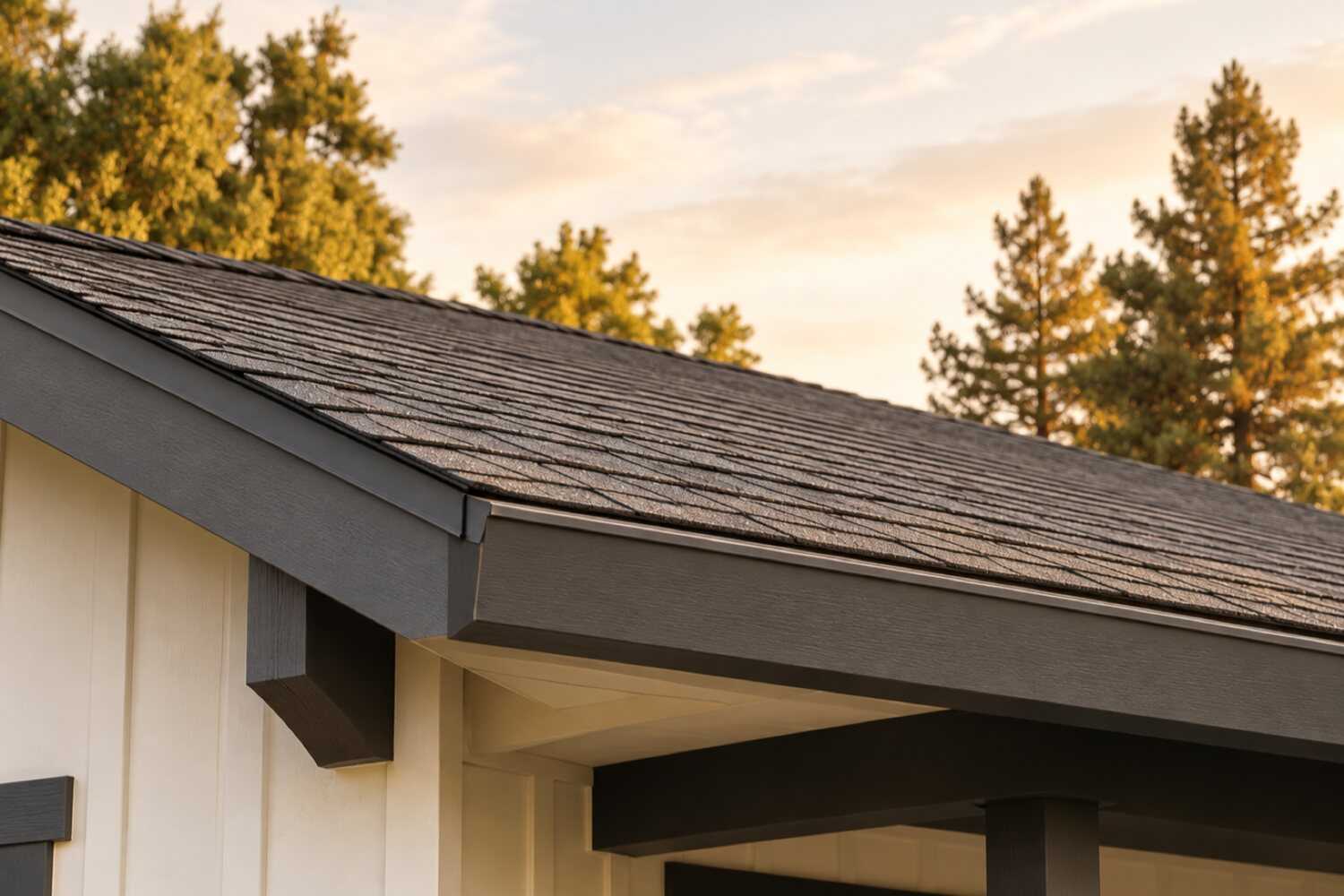
Roof replacement and repair in Roseville, CA.
A Roseville roof estimate should distinguish the installed material from the condition of its supporting assembly. Where tile is present, assess whether it can be reused; where shingles are present, inspect the covering and deck. Measure the roof and define repairs before selecting a replacement scope.
What roof replacement costs in Roseville
Published 2026 figures put a composition reroof in Roseville at about $7,500–$11,700 for a 1,500-square-foot roof (HomeBlue) and $10,000–$16,000 for architectural shingles on a 2,000-square-foot home (Clark's Gables). Concrete tile runs $16,000–$28,000 in the same guide. Tile lift-and-relay, solar detach-and-reset and two-story valleys move the number.
| Scope | Published range | What it usually includes |
|---|---|---|
| HomeBlue asphalt example: 1,500 sq ft roof | $7,500–$11,700 | HomeBlue’s Roseville roof-area estimate. homeyou separately gives $6,058–$7,824 for its roughly 1,282-square-foot shingle calculation. Confirm removal, decking and flashing provisions before comparing either with a bid. |
| Clark’s Gables architectural-shingle example | $10,000–$16,000 | The roofer’s 2025 guide uses a 2,000-square-foot home example. RoofVista separately publishes $13,000–$22,000 for its 2,200-square-foot regional example. These are separate models, and home size is not necessarily measured roof area. |
| Clark’s Gables concrete-tile example | $16,000–$28,000 | The same guide’s 2,000-square-foot home example. RoofVista separately lists $24,000–$40,000 for its 2,200-square-foot tile scenario. Neither figure should be substituted for a tile lift-and-relay quote. |
Ranges are published third-party figures, not 916 Exteriors prices; the written estimate is the only number that applies to your home.
How to compare these ranges
An existing tile roof in Johnson Ranch needs its own inspection to determine whether the tile can be reused. Request a relay alternative with underlayment, flashing, handling and breakage defined if reuse is practical.
On composition roofs near Cirby Way, establish layer count and decking condition before comparing replacement bids. Roof area, pitch, access and included work differ across the published examples; their spread cannot be assigned to pitch alone.
Solar detach/reset work and required energy or fire ratings should be documented separately. Price the actual measured roof, with unit allowances for concealed decking, before selecting a package.
Sources
- CAL FIRE OSFM: current WUI code and local applicability
- City of Roseville Building Inspection Division: Permit exemptions list (effective January 1, 2026)
- HomeBlue: Roof replacement cost in Roseville, California
- homeyou: Roof replacement in Roseville, CA, costs
- Clark's Gables Roofing: How much does a new roof cost in Roseville, CA (2025 guide)
- RoofVista: Roof replacement cost Sacramento 2026 planning ranges
- California Energy Commission: Building Energy Efficiency Standards (Title 24, Part 6)
Read next: How much does roof replacement cost in Roseville?
What changes the price in Roseville
- Tile lift, stacking, and breakage
- Relaying a 1990s tile roof means handling every tile twice; broken pieces around HVAC and satellite mounts are replaced at a per-tile rate.
- Two-story pitch and valleys
- Johnson Ranch and Stoneridge roofs have more valleys, hips, and headwalls per square than the single-story ranches and take longer to flash.
- Solar detach and reset
- Arrays on the 2010s West Roseville homes come off and go back on, with Roseville Electric interconnection paperwork as part of the job.
- Skip sheathing and layer count
- Downtown gables and 1970s ranches often need a solid deck or a two-layer tear-off, both priced per sheet or per layer.
- Cool-roof-rated product
- Meeting the climate zone 11 reflectance minimums can narrow the product and color choices and change the material price.
- HOA color and material rules
- West Roseville associations approve roofing color, and a tile-to-shingle change may not be allowed, which limits the lower-cost option.
Compare your roofing options
Choose two options to compare the upkeep, fit and installation details.
| Compare | Composition (asphalt) shingle | Concrete or clay tile |
|---|---|---|
| Appearance | Most common local look; many colors and profiles | Distinctive profile; common on stucco homes |
| Maintenance | Periodic inspection; debris and gutter cleaning | Underlayment eventually needs renewal beneath the tile |
| Where it fits | Sloped roofs; wide product range | Structure must carry the weight |
| Installation | Tear-off, underlayment, flashing, ridge and ventilation details | Often re-laid over new underlayment rather than replaced |
View all 4 options and planning notes
Composition shingle is the most common roof in the region and the least expensive to replace; it suits any sloped roof and comes in many grades. Concrete or clay tile is heavier, costs more, and is usually relaid over new underlayment rather than replaced. Standing-seam metal costs the most, lasts the longest, and suits ranch and modern styles. Low-slope sections, common over additions and porches, need a membrane rather than shingles.
| Option | Appearance | Maintenance | Where it fits | Installation notes |
|---|---|---|---|---|
| Composition (asphalt) shingle | Most common local look; many colors and profiles | Periodic inspection; debris and gutter cleaning | Sloped roofs; wide product range | Tear-off, underlayment, flashing, ridge and ventilation details |
| Concrete or clay tile | Distinctive profile; common on stucco homes | Underlayment eventually needs renewal beneath the tile | Structure must carry the weight | Often re-laid over new underlayment rather than replaced |
| Standing-seam metal | Clean vertical lines; wide color range | Low; fastener and sealant checks over time | Sloped roofs; suits modern and ranch styles | Panel fabrication and detailing require specialty work |
| Low-slope membrane | Flat or near-flat sections, usually not visible from the street | Keep drains clear; inspect seams | Porches, additions, and flat sections | Different materials and crews than sloped roofing |
Fire ratings, wind ratings, and warranty terms are published by each manufacturer and confirmed per product, not assumed here. Manufacturer names appear once 916 Exteriors confirms the products it installs and the licensing that applies.
Planning roofing work in Roseville
Open the topics that apply to your property.
Roofing in Roseville is not the same job as in Rocklin, Granite Bay or Citrus Heights. Rocklin shares the tile-heavy 1990s–2000s stock and climate zone 11 but is PG&E territory, so solar detach-and-reset paperwork goes to a different utility. Its hillside tracts also add steep driveways and crane access that Roseville's flat lots avoid. Granite Bay's 1970s–80s custom homes, 41% of its housing, sit under heavy oak canopy with shake-to-composition conversions and county permits from Placer County. Citrus Heights, in climate zone 12 across the Sacramento County line, is 40% 1970s ranch stock. Composition over skip sheathing is the rule there; in Roseville it is the exception east of I-80.
Compare nearby: Roof replacement in Rocklin, CA · Roof replacement in Granite Bay, CA · Roof replacement in Citrus Heights, CA
Roof replacement for Roseville homes
Roseville is a concrete-tile city. About 69% of its homes were built in 1990 or later (U.S. Census Bureau, ACS 2020–2024). The two-story tracts in Johnson Ranch, Stoneridge, Highland Reserve, Woodcreek Oaks and Sun City Roseville were roofed almost entirely in concrete tile over a single layer of felt underlayment. The tile is still sound at 25–35 years; the felt under it is not. The typical Roseville reroof is a lift-and-relay: stack the tile, replace the underlayment, flashings and battens, and set the same tile back.
East of I-80, the 1960s–70s ranches around Diamond Oaks, Sierra Gardens and Cirby Way tell a different story. Many started with shake and were converted to composition in the 1980s or 1990s. They still have skip sheathing or a thin overlay under the shingles. Tear-off there means a deck inspection, often solid sheathing, and sometimes a second layer to remove. The roofing service page and the regional cost guide show how a bid should price those unknowns per sheet and per layer.
In Westpark and Fiddyment Farm, the 2005-and-later homes carry concrete tile or architectural composition. A large share have a rooftop solar array interconnected through Roseville Electric. The array comes off and goes back on as a separate line with new flashed mounts. The reroof permit from the City of Roseville Building Division is where the underlayment inspection gets scheduled before the roof is closed.
Every reroof in climate zone 11 also raises the cool-roof question under Title 24, Part 6, and every product proposed should be Class A. Downtown, a visible change of roofing material on a Historic Old Town property can fall under the Downtown Code's guidelines. Check with the Planning Division before ordering.
Housing age and what to inspect
Housing age helps plan an inspection. The share of homes in each decade is census data; the notes describe materials and conditions to check at the property.
| Built | Share of homes |
|---|---|
| Before 1940 | 2% |
| 1940–1949 | 1% |
| 1950–1959 | 3% |
| 1960–1969 | 4% |
| 1970–1979 | 7% |
| 1980–1989 | 14% |
| 1990–1999 | 23% |
| 2000–2009 | 25% |
| 2010 and later | 21% |
Roseville: 61,242 housing units, median year built 1998, median owner-occupied value $661,400, 69% owner-occupied. Source: U.S. Census Bureau, American Community Survey 2020–2024 5-Year Estimates, tables B25034 (year structure built), B25035 (median year built), B25077 (median value, owner-occupied), B01003, B25003 (ACS 2024 5-year).
- Prewar through the 1950sbefore 1960
- Roughly 6% of Roseville's housing predates 1960, most of it railroad-era bungalows and cottages around Historic Old Town and the blocks near the Union Pacific yard. Their gable roofs are steep and simple. The decks, though, are 1×6 or 1×8 skip sheathing under two or three composition layers, and the chimneys are unlined brick. The usual scope is a tear-off to the deck, solid sheathing, new step and counter flashing at the chimney, and a Class A composition or metal roof. In the Downtown Specific Plan area, confirm whether a visible material change needs Planning review.
- 1960s and 1970s1960–1979
- Low-pitched gable and hip roofs, wide eaves and open rafter tails mark the 1960s–70s ranches in Diamond Oaks, Sierra Gardens and off Cirby Way, about 11% of the housing. Most began as shake or rock-and-tar and now carry composition over a thin overlay or skip sheathing. A reroof here starts with the deck. Price solid sheathing per sheet, a second-layer tear-off per layer, and rafter-tail replacement where the fascia is soft. Low-slope patio and porch sections need their own membrane system, not shingles.
- 1980s1980–1989
- The 1980s brought concrete tile to Roseville's higher-end tracts in early Johnson Ranch and the Maidu area, with composition on the rest. This era is about 14% of the housing. The 1980s tile roofs are the oldest tile in the city, and their felt underlayment is past its life. A leak at a valley or a headwall is an underlayment failure, not a tile failure. Scope a lift-and-relay with new battens and flashings. Note tile availability too, because some 1980s profiles are discontinued.
- 1990s and 2000s1990–2009
- About 48% of Roseville was built from 1990 through 2009: Johnson Ranch, Stoneridge, Highland Reserve, Woodcreek Oaks, Sun City Roseville and the first Westpark phases. Concrete tile on two-story hip roofs with multiple valleys is the standard. The underlayment on the 1990s homes is at end of life. The failure shows as a stain under a valley or below a chimney cricket. Relay pricing should count the tile lift and re-set by the square, the valley metal and headwall flashings by the foot, and a breakage allowance by the tile.
- 2010s onward2010–present
- The 2010-and-later homes, about 21% of Roseville, are concentrated in Westpark, Fiddyment Farm and the newer West Roseville villages. Their tile and architectural composition roofs have years left. The calls are for storm damage, a leaking solar mount or a skylight. Many carry solar arrays interconnected through Roseville Electric, so any roof work under the array is a detach-and-reset with new flashed mounts. Confirm the shingle or tile product and its warranty terms before a repair, and match the HOA-approved color.
Roofing by neighborhood in Roseville
- Johnson Ranch
- Johnson Ranch is east Roseville's late-1980s and 1990s two-story tract off Eureka Road, roofed in concrete tile over felt that is now 30 years old. Its executive plans have more hips, valleys and headwalls per square than the single-story tracts. That is where the underlayment fails first. Scope a lift-and-relay with valley metal and headwall flashings priced by the foot.
- Sun City Roseville
- Nearly every home in Sun City Roseville has a single-story concrete-tile roof with simple hips and low walls. Del Webb built the age-restricted community from the mid-1990s after the 1993 specific plan. Ground-level access makes the tile lift faster than on a two-story tract, but the same 30-year felt is under it. The community association reviews any change in roofing material or color.
- Westpark and Fiddyment Farm
- Westpark and Fiddyment Farm date from the 2004 West Roseville Specific Plan onward, so their tile and architectural composition roofs are young. A large share carry solar arrays interconnected through Roseville Electric. The work here is repairs around solar mounts, skylights and flashing, not full reroofs. Any array detach-and-reset is a separate line with new flashed mounts and a system recommission.
- Sierra Gardens and Cirby Way
- Low-slope hip roofs converted from shake to composition decades ago cover the Sierra Gardens ranches and the 1960s–70s tracts along Cirby Way, often over skip sheathing. Tear-off usually finds a deck that needs solid sheathing and rafter tails that need sistering at the eave. Price the sheathing per sheet and the tail work per foot. Give the patio cover its own membrane line.
- Diamond Oaks
- Mature valley oaks hang over Diamond Oaks, the 1960s–70s ranch tract around the city's golf course, and drop leaves and twigs into every valley from October on. Its low-slope composition roofs hold that debris, and moss on the north slopes is common. Include a valley clean-out and a look at the deck under the wettest valley. Confirm any oak pruning with the City before staging a lift under a limb.
- Woodcreek Oaks
- Woodcreek Oaks is the 1990s–2000s tract around the city's Woodcreek Oaks golf course in north-central Roseville. It has concrete tile over felt on two-story hip roofs and preserved oak stands along the course. Underlayment failure at valleys and chimney crickets is the common call, and the oak litter speeds it up. Scope a relay by the square and add a debris allowance for the shaded slopes.
- Historic Old Town
- Historic Old Town and the adjacent bungalow blocks in the Downtown Specific Plan area have steep gable roofs on railroad-era homes, with skip sheathing and multiple composition layers. A reroof is a tear-off to the deck with solid sheathing and new chimney flashing. The Downtown Code's design guidelines can apply to a visible change in roofing material, so confirm with the Planning Division before ordering.
Sun, rain, trees and site conditions
Roseville is in California Energy Commission climate zone 11 at about 164 feet, where the valley floor starts to rise into the Placer County foothills. Summer highs top 100°F every year and run a few degrees above Sacramento's. Composition shingles on west- and south-facing slopes lose granules and curl years before the north slopes do. Concrete tile shrugs off the heat; the felt under it does not. It dries out and cracks at the same west-facing valleys. A steep-slope reroof here may trigger Title 24's cool-roof minimums, which narrow the color choices more than they raise the price.
Winter delivers about 20 inches of rain from October to April, much of it in a few atmospheric-river storms with wind from the south. Those storms drive water up under tile at headwalls and into valleys clogged with oak leaves. East of I-80, the valley oaks over Diamond Oaks and Woodcreek Oaks keep roofs shaded and loaded with litter. So do the Dry Creek, Linda Creek and Cirby Creek corridors. West Roseville's flat lots have no canopy yet and dry out in a day.
Roseville sees no hail to speak of and no freeze-thaw cycling. The damage is UV, heat and then rain finding the failed seal. The city's 4,000-plus acres of preserved open space and oak woodland border many west and north tracts, and wildfire hazard mapping is parcel-specific. Confirm with the Building Division whether any wildland-urban interface requirement applies to the address. Every product proposed here should carry a Class A rating regardless.
Permits and approvals
Reroofing requires a building permit from the City of Roseville; reroofs are not on the Building Inspection Division’s permit-exemptions list dated January 1, 2026, which names painting and similar finish work only. The permit is issued at 311 Vernon Street, and it is how the underlayment and flashing inspection gets scheduled before the roof is closed; the licensed roofing contractor pulls it for the work it performs. Under Title 24, Part 6, a steep-slope residential reroof in climate zone 11 may trigger the cool-roof requirements (aged solar reflectance and thermal emittance minimums, with exceptions the California Energy Commission lists), so the product's rating should be on the estimate. Class A fire-rated roofing is standard for every product proposed here regardless of zone.
If the electrical service mast runs through the roof, Roseville Electric, the city's own utility, is the one to coordinate the disconnect and reconnect, and a rooftop solar array interconnected through Roseville Electric is detached and reset as a separate line. HOA architectural review applies to roofing color and material in Westpark, Fiddyment Farm, Blue Oaks, Sun City Roseville, and many east-side tracts, and a switch from tile to composition is not automatic. Downtown, a property inside the Downtown Specific Plan area, which includes Historic Old Town, falls under the Downtown Code’s design guidelines (Roseville Municipal Code Chapter 19.31) for a visible change in roofing material.
Permit authority: City of Roseville Building Division . Whether a permit or review applies, and who pulls it, is written into the estimate.
Seeing something on your own house? Request an estimate for roofing in Roseville
Repair or replace?
A roof with years left can still leak at one bad flashing. A roof at the end of its life may look fine from the street. The decision rests on condition, not just age.
Not sure which applies? Tell us what you are seeing and request an estimate for roofing.
What the scope includes
A complete estimate names the work, materials and exclusions so you can compare proposals.
Keep a copy for your site visit or when comparing estimates.
Included in a written scope
- Tear-off and disposal of existing roofing to the sheathing where replacement is planned
- Inspection of sheathing, with replacement priced as a separate line per sheet
- Underlayment, drip edge, and flashing at walls, chimneys, vents, and valleys
- New roofing installed to the product's published instructions
- Ridge, ventilation, and pipe boots as specified
- Magnetic nail sweep of the yard and driveway and daily cleanup
Clarify before work starts
- How sheathing replacement is priced and approved during the job
- Whether gutters are removed and reinstalled or replaced as part of the work
- How skylights, solar mounts, and satellite dishes are handled
- Permit requirements and who is responsible for inspection scheduling
How a roofing project works
The stages to discuss when planning your project.
Talk through the project
Tell us what you want to repair or update. A few details about the home and what you have noticed are enough to start.
Review the home and options
A site review identifies the work involved, checks the usual trouble spots, and covers the choices that fit your home.
Agree on the scope and schedule
Review what is included, what is not, and how changes are handled before any work is scheduled.
Walk through the result
Review the completed work together, along with the applicable care and warranty information for what was installed.
Roofing questions from Roseville homeowners
Does a reroof in Roseville need a permit, and who pulls it?
Yes. The City of Roseville's Building Inspection Division at 311 Vernon Street issues reroof permits for the whole city, and the inspection of underlayment and flashing happens before the tile or shingle goes on. The licensed roofing contractor should pull the permit for the work it performs; a homeowner who signs the permit becomes the owner-builder and takes on that responsibility under California law. If the house is in Westpark, Fiddyment Farm, Blue Oaks, or Sun City Roseville, the HOA's architectural approval of the color and material is a separate step that should be finished before material is ordered.
Should I replace the tile on my Johnson Ranch or Sun City house, or just the underlayment?
On most Johnson Ranch and Sun City Roseville roofs the tile is fine and the underlayment is what has aged out. Concrete tile lasts decades; the felt beneath it on a 1990s roof is the part that goes brittle, and that is where leaks start. The usual answer is a lift-and-relay: the tile comes off, new underlayment and flashings go on, and the same tile goes back with a breakage allowance for replacements. A roofer decides that from the roof, not the calendar, after checking for cracked or delaminating tile, flashing condition and soft decking. If the tile itself is failing, a new covering gets priced instead.
Does Roseville's climate zone 11 require a cool roof?
It may. Under Title 24, Part 6, a steep-slope residential reroof in climate zone 11 can trigger the state's cool-roof minimums for aged solar reflectance and thermal emittance, subject to exceptions the California Energy Commission lists, and low-slope sections are treated separately. In practice many concrete tile colors and a range of lighter architectural shingles already carry the needed rating, so the requirement narrows the color choices more than it raises the price. The estimate should name the product and its rating, and the city's plan check will confirm whether it applies to your roof.
My 1970s Sierra Gardens house has T-lock shingles. Do I have to replace them?
Not automatically, but repairs get hard. T-lock shingles have not been manufactured for years, so a damaged section on a 1970s Sierra Gardens roof cannot be patched with a matching product; a roofer can sometimes salvage shingles from an inconspicuous slope, and beyond that the fix is a replacement. Some insurers treat T-lock roofs as unrepairable at renewal, but that is a policy question for the carrier, not something to assume from the shingle name. Have a roofer confirm the product, the remaining life of the surrounding shingles and the deck condition, and have any replacement proposal list deck, flashing and ventilation work as separate items.
Will the HOA in Westpark let me switch from tile to composition?
Not automatically. West Roseville associations generally review roofing material and color as an architectural change, and some communities hold to the original tile look on street-facing elevations. Submit the product sample and color with the application before the estimate is finalized, and ask the committee specifically about a tile-to-shingle change rather than assuming a color approval covers it. The structural side is easier: a roof framed for tile carries composition without modification, though the reverse is not true.
What happens with my solar panels during a reroof?
They come off and go back on. On the 2010s homes in Fiddyment Farm and Westpark the array is interconnected through Roseville Electric, and the detach and reset involves the array's installer or a licensed solar contractor, new flashed mounts set into the new roof, and a recommissioning of the system. That work is written as a separate line in the roofing scope with its own schedule, and the estimate should say who is responsible for the electrical disconnect and reconnection and whether any utility notification is needed.
Tell us about your Roseville roofing project.
Share what you have noticed and what you would like to change. We'll review the details and contact you about the next step.
No budget, address, or photos needed to inquire.
Other exterior services in Roseville
- Siding replacement in Roseville, CAExplore repair and replacement options for your home's exterior walls.
- Window & door replacement in Roseville, CAFind an updated look and a fit that works for your home.
- Exterior painting in Roseville, CARefresh the finish, starting with the preparation underneath.
- Gutter installation in Roseville, CAPlan how rainwater moves from the roof and away from the home.
- Dry rot & trim repair in Roseville, CAAddress damaged wood and understand the work around it.
Roof replacement in other communities we serve
Sacramento County
- Roof replacement for Sacramento homes
- Roof replacement for Folsom homes
- Roof replacement for Elk Grove homes
- Roof replacement for Citrus Heights homes
- Roof replacement for Carmichael homes
- Roof replacement for Fair Oaks homes
- Roof replacement for Rancho Cordova homes
- Roof replacement for Arden-Arcade homes